Millefolium (Achillea) 4CH, 5CH, 7CH, 9CH, 15CH, 30CH Boiron Homeopathy
French Name: ACHILLEE MILLEFEUILLE (The name Achillea millefolium becomes Millefolium)
Registered medication: EH00685
Origin: Plant-based
Korsakovian dilutions available in 200K, 1,000K, and 10,000K, in tubes and single doses, and marketed as compounded preparations pending evaluation.
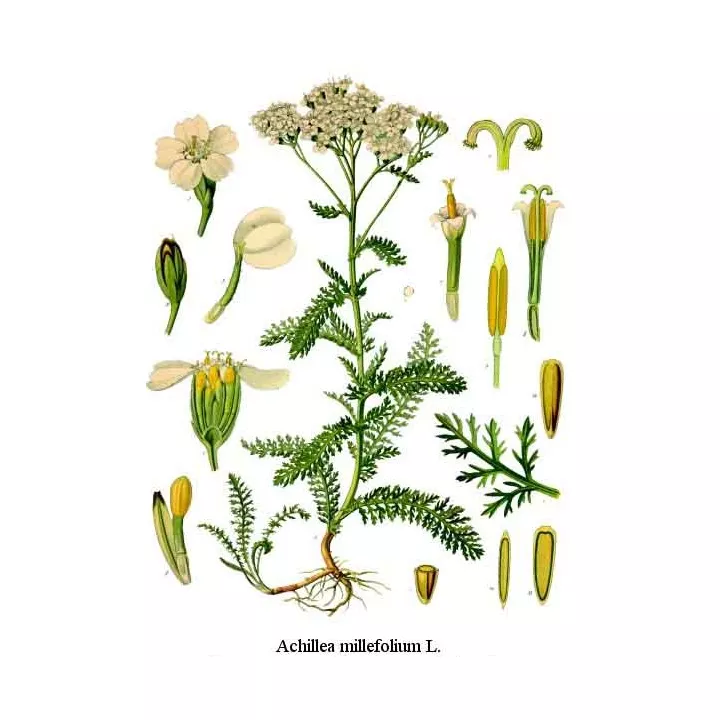
Yarrow, known by its scientific name Achillea millefolium, is a perennial herb that plays a key role in traditional and homeopathic medicine. This plant, characterized by its small white flowers clustered in corymbs and its finely dissected leaves, is appreciated not only for its delicate beauty but also for its many medicinal properties.
The Phytotherapeutic Profile of Millefolium
The homeopathic remedy Millefolium is prepared from the aerial parts of Yarrow. In homeopathy, this remedy is primarily used for its powerful hemostatic properties—that is, its ability to stop bleeding. Whether for frequent nosebleeds, excessively heavy menstrual flow, or even internal hemorrhages, Millefolium is a powerful ally that helps regulate delicate circulatory imbalances.
Therapeutic Applications of Millefolium
- Effective Hemostatic Agent: Millefolium is particularly renowned for its ability to quickly reduce bleeding. It works by promoting clotting and strengthening the resilience of blood capillaries.
- Treatment of Digestive Disorders: Beyond its effects on blood circulation, Millefolium is also beneficial for the digestive system. It helps relieve stomach cramps and gas, and regulates bile imbalances, thereby promoting better digestion.
- Oral and Dental Care: Millefolium can also be used to treat oral conditions, including gingivitis and bleeding gums. Its astringent and antiseptic properties make it an excellent supplement for oral and dental care.
- ENT Conditions: This homeopathic remedy also helps combat conditions affecting the ears, nose, and throat, such as recurrent nosebleeds, by reducing inflammation and stabilizing blood vessels.
- Gynecological Health: Millefolium is often recommended for women suffering from painful or excessively heavy periods. It helps normalize menstrual flow and reduce pain associated with menstrual cycles.
Indications for Millefolium (Achillea) in Homeopathy
Homeopathic remedies can be used to treat a variety of symptoms. The homeopathic physician selects the appropriate dilution and dosage based on the patient’s health condition and characteristic symptoms.
Use of Millefolium in Stomatology
In dentistry, Millefolium is valued for its beneficial effects on several conditions:
- Toothaches and gum ulcers: It quickly soothes toothaches and aids in the healing of ulcerated gums.
- Tongue swelling: It reduces inflammation of the tongue, which is often associated with various oral conditions.
- Dry mouth and intense thirst: Millefolium can relieve the sensation of a dry mouth while controlling excessive fluid intake caused by intense thirst.
Gynecological Indications for Millefolium
Millefolium also has specific applications in gynecology:
- Leucorrhea (white discharge): It helps reduce this often uncomfortable and embarrassing discharge.
- Antispasmodic for painful menstruation: It relieves menstrual cramps, making periods less painful.
- Various Menstrual Disorders: This remedy is used to regulate early, heavy, or prolonged menstruation and can prevent complications leading to miscarriage.
- Postpartum: It is effective in stopping excessive bleeding after childbirth, promoting better recovery for the mother.
Effects on Male Conditions
In men, Millefolium is effective in treating inflammation and swelling of the genital organs, such as:
- Swelling of the testicles and penis: It effectively reduces inflammation and swelling.
- Semen-related issues: It addresses the absence of semen during orgasm and spermatorrhea (involuntary discharge of semen).
- Genital warts and gonorrhea: Millefolium helps treat these infections, reducing symptoms and promoting healing.
ENT Applications of Millefolium
In the field of otolaryngology, Millefolium is particularly effective for:
- Nosebleeds: It quickly stops bleeding and restores normal function.
- Nasal Congestion: It clears a stuffy nose, allowing for easier breathing.
- Ear Blockage: It alleviates discomfort such as noises or the sensation of air escaping from the ear.
- Throat sores and pain: Millefolium is used to relieve pain and heal throat sores.
- Tension headaches: It treats intense head pain that feels throbbing or as if blood is rushing to the head.
Why Choose Millefolium?
Choosing Millefolium means opting for a natural treatment that respects the body’s balance and needs. Its versatility and effectiveness make it a top choice for those seeking healthy alternatives to conventional medications, with renewed confidence in nature’s healing powers. For anyone exploring natural health approaches, Millefolium is a discovery worthy of attention and consideration.
Complementary Treatments:
Millefolium is often used in conjunction with other homeopathic remedies to optimize therapeutic results:
- Aconitum Napellus Boiron: Used for first aid in cases of sudden fever or emotional shock.
- Arnica Montana Boiron: Essential for physical trauma without open wounds.
- China Rubra Boiron: Effective against fatigue and the effects of fluid loss.
- Ferrum Phosphoricum Boiron and Hamamelis Virginiana Boiron: Used for problems related to capillary fragility and bleeding.
- Phosphorus Boiron: Recommended for nosebleeds and lung problems.
- Secale Cornutum Boiron and Ustilago: Specifically for heavy and prolonged menstrual bleeding.
Directions for Use and Instructions for Millefolium (Achillea)
Twist the tube to dispense the desired number of granules into the cap, then place the granules under the tongue.
It is recommended not to touch the homeopathic granules with your fingers.
The globules from single-dose tubes are taken all at once by allowing them to dissolve slowly under the tongue. If a specific dose is not available, take 10 granules of the same dilution.
Use a mint-free toothpaste (such as Homéodent Boiron, a toothpaste compatible with taking homeopathic granules).
Recommended Dosages for Millefolium: Treatment of ENT, Stomatological, and Gynecological Conditions
Various Formulations of Millefolium
Millefolium can be administered in several forms, tailored to the specific symptoms and conditions being treated:
- Infusion: An infusion made from the dried aerial parts of yarrow can be prepared and consumed 2 to 3 times a day.
- Mother tincture: For Millefolium mother tincture, it is recommended to dilute 5 ml in a small amount of cold or lukewarm water, or even in fruit juice. This preparation should be taken three times a day, preferably between meals.
- Yarrow liquid extract: These forms are also effective and can be taken as directed by a healthcare practitioner or according to the specific needs of the symptoms.
- Granules: For acute conditions, such as trauma, it is recommended to take 5 granules of Millefolium 5 CH, alternating with Arnica 5 CH, every 10 minutes for one hour.
Specific Uses of Millefolium
- Traumas: For cases of trauma, the combined use of Millefolium with 5 granules of Arnica montana is particularly effective for quickly reducing symptoms.
- Pelvic Cramps: In gynecology, for menstrual cramps, a sitz bath prepared with an infusion or dilution of Millefolium can provide significant relief.
- Epistaxis (Nosebleed): Using Millefolium 5 CH in granule form is recommended to control and stop bleeding quickly.
Packaging and Quantity of Millefolium (Achillea)
Millefolium, also known as Yarrow, is a medicinal plant used in homeopathy primarily for its hemostatic and circulation-enhancing properties. This plant-based medicine is listed in the French and European Pharmacopoeias and is available in doses, tubes, and for compounding.
Origin and Properties
Millefolium is prepared from Yarrow, an herb traditionally used to stop external and internal bleeding and to treat various circulatory disorders. In homeopathy, it is used to harness these same properties, helping to treat hemorrhages and regulate blood circulation without the side effects often associated with conventional medications.
Available Formulations
Dosages and Tubes:
- Potencies: Available in 9 CH and 15 CH, for use tailored to the intensity and nature of symptoms.
- Tubes: Offered in dilutions of 4 CH, 5 CH, 7 CH, 9 CH, 15 CH, and 30 CH, allowing for precision in treatment and adaptation to the patient’s specific needs.
Compounded Preparations:
- Millefolium can also be prepared in Hahnemannian dilutions starting at 2 CH. This compounding method offers flexibility and customization of treatment, which are essential for optimally addressing various conditions related to bleeding and circulation.
Precautions for Use
Warning
Contains sucrose.
Store Millefolium (Achillea) homeopathic remedies away from light, heat, and moisture.
Administering Millefolium (Achillea) homeopathic granules to infants and children
Dissolve the homeopathic granules in 100 ml of water. Since the granules take a long time to dissolve, you should prepare the mixture in advance.
Millefolium (Achillea) Homeopathy and Pregnancy
Millefolium (Achillea) homeopathic remedies have no chemical toxicity, no contraindications, no interactions with other medications, and no adverse effects related to the amount ingested.Pregnant women can use these remedies without any known risk to themselves or their unborn child, but it is best to seek advice.
Frequency of Homeopathic Use
For acute conditions, it is recommended to take Millefolium (Achillea) homeopathic remedies every hour until symptoms improve.
For chronic conditions, remedies in low dilutions (>9CH) are taken 1 to 2 times a day, while constitutional remedies are taken once a week or even once a month. This decision is up to the homeopath.
What to Do If There Is No Improvement Within 24 Hours
Certain conditions cannot be treated with homeopathy through self-medication alone. Their severity requires medical advice, which can be provided by a homeopathic physician. This physician will determine whether your condition can be treated with homeopathy alone or whether your treatment should be supplemented with allopathic medicine.