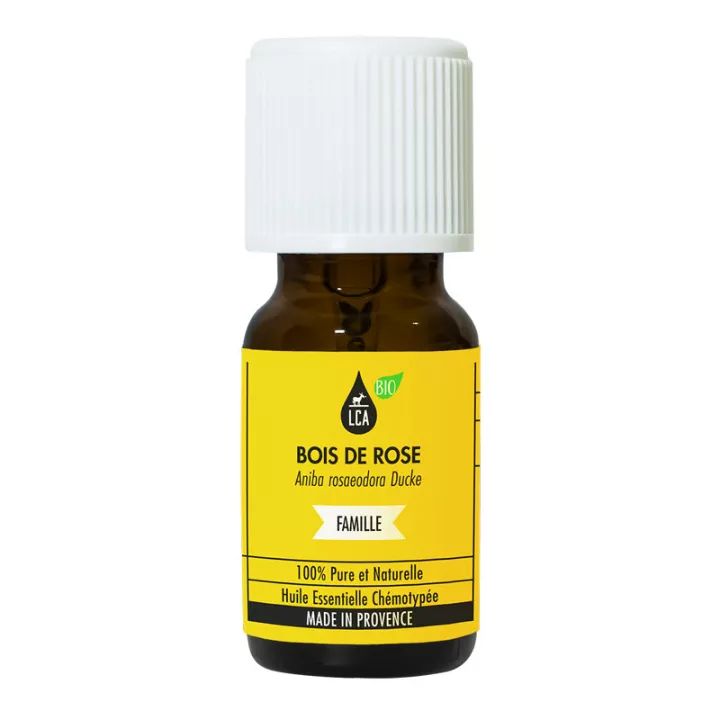
What is LCA Organic Rosewood Essential Oil used for?
Organic Rosewood Essential Oil is obtained by distilling the wood of theAniba rosaeodora Ducke tree, a member of the Lauraceae family. Unfortunately, this wood is harvested directly from primary forests without any real sustainable resource management. Due to its overharvesting, it has, over time, become a protected species... If you must use this essential oil, please do so responsibly.
LCA Organic Rosewood Essential Oil may be useful for:
- Various ENT infections (ear infections, sinusitis, laryngitis),
- bronchopulmonary infections,
- Pediatric bronchopulmonary infections: nasopharyngitis, bronchitis, influenza
- Urinary and gynecological infections: cystitis, vaginitis, leukorrhea, vulvitis
- Skin, nail, and gynecological fungal infections
- Depression, burnout, nervous exhaustion
- Acne, pressure sores, wrinkles
- Canker sores, bronchiolitis, laryngitis, cystitis, impetigo, psoriasis, burns, eczema, skin aging
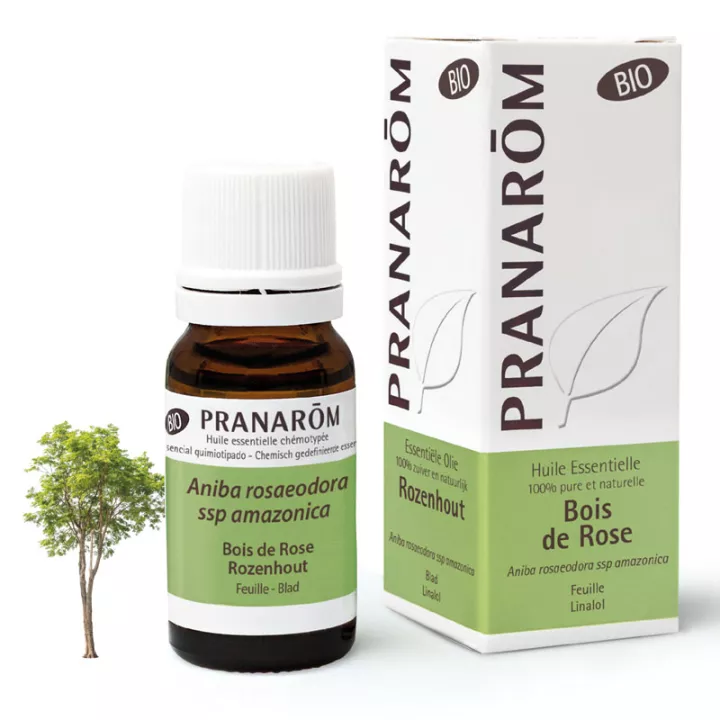
Rosewood, with the Latin name Aniba rosaeodora var. amazonica, is a medium-sized tree found in theAmazon rainforest,particularly in Brazil and French Guiana. Itsnameis said toderive from thecolor of its wood, which ranges frompink to reddish-pink. It is one of the woods most commonly used, among other things, in marquetry to decorate furniture or paintings. In addition tocabinetmaking, it is also used inmedicineandperfumery. Due to its industrial exploitation—particularly for the extraction of linalool—thisprecious treehas becomevery rare andis nowprotected.
Rosewood essential oil has numerous benefits, such as:
- Anti-infectious: Rosewood essential oil’s highconcentration of linalool, a monoterpene alcohol, gives it broad-spectrum anti-infectious properties that target bacteria, viruses, fungi, and parasites.
- Astringent tonic, skin regenerator:Rosewood essential oil tightens the mucous membranes and firms the skin tissues. By firming the tissues, it is ideal for a wide range of skin care treatments.
Therapeutic Properties
Rosewood essential oil, also known by its botanical name Aniba rosaeodora, is a precious natural product with multiple therapeutic properties. Extracted from the leaves and branches of the Rosewood tree, this organic essential oil offers a wide range of benefits for health and well-being.
Antispasmodic Properties
Rosewood essential oil is known for its antispasmodic properties, primarily attributed to its linalool content. Linalool works by inhibiting the release of acetylcholine, thereby reducing muscle contractions. It also interferes with calcium channels at the neuromuscular junction, producing an effective local anesthetic effect.
Analgesic and Anti-Inflammatory Properties
The linalool present in Rosewood oil gives this essential oil analgesic and anti-inflammatory properties. It binds to various receptors, such as muscarinic, opioid, and dopaminergic receptors, thereby exerting an analgesic effect similar to that of opioids. In addition, linalool acts on N-methyl-D-aspartate (NMDA) receptors, reducing inflammation and relieving pain.
Antimicrobial and Antiparasitic Properties
Studies have shown that rosewood essential oil possesses antimicrobial and antiparasitic properties. It exhibits antibacterial activity against certain bacterial strains such as Campylobacter jejuni, Escherichia coli, Listeria monocytogenes, and Staphylococcus aureus. In addition, it is effective against certain parasites such as Giardia lamblia and lice.
Skin Properties
Rosewood essential oil is particularly beneficial for the skin. It is used to care for dull, tired, fragile, or irritated skin, thanks to its skin- and mucous membrane-regenerating properties. It helps firm skin tissue, restore elasticity, and promote healing. Its local analgesic action also makes it a wise choice for relieving skin discomfort.
Effects on the Central Nervous System
The linalool contained in rosewood essential oil exerts a complex effect on the central nervous system. It acts as a stimulant, promoting learning and memory, while also having sedative effects that reduce motor activity and promote sleep. In addition, it exhibits anticonvulsant properties by reducing the release of glutamate, an excitatory neurotransmitter.
Other Properties
In addition to its primary properties, rosewood essential oil offers a range of other health benefits. It promotes lymphatic drainage, stimulates the immune system, acts as an aphrodisiac and sexual tonic, reduces stress, and regulates emotions. Furthermore, it has hypotensive, sedative, antioxidant, and anticancer properties, stimulating various cytokines and inducing an immune response.
We also offerCajeput essential oil from LCA, a laboratory specializing in aromatherapy, at the best price in our online pharmacy.
Directions for Use and Dosage
Organic Rosewood essential oil must be diluted for use on the skin: dilute to 20% in a vegetable oil (20% essential oil with 80% vegetable oil).
Share your feedback on the usage instructions and dosage for LCA Rosewood Essential Oil with our partner “Verified Reviews” after your purchase.
Precautions
- Oral use is only permitted for adults and children over 6 years of age.
- Be aware of potential gynecomastia-inducing effects with prolonged use.Linaloolexhibits antiandrogenic activity and weak estrogenic activity by binding to estrogen receptors.Linalool inhibitstestosterone production. This essential oil should therefore be avoided for long-term use by males due to its endocrine-disrupting properties.
- The essential oil is potentially allergenic
What is its composition?
- linalool: 70–95%
- geraniol < 3%
- benzyl benzoate < 2%
- Limonene < 1%
Botanical name: Aniba Rosaeodora
Part of the plant used: Wood
Extraction method: Full steam distillation
Packaging
5 ml bottle.