What is a nervous tic, and how can you tell it apart from other involuntary movements?
A nervous tic is a sudden, rapid, repetitive, and non-rhythmic movement or sound resulting from involuntary muscle contractions, but which can be temporarily suppressed by a voluntary effort—often at the cost of increasing tension followed by relief when the tic occurs. This ability to temporarily suppress them distinguishes them from tremors and choreic movements. Most tics in children are benign and temporary. If they persist or become severe, a medical evaluation is necessary. Discover our stress and behavior supplements, our anti-stress product lines, and our energy and vitality formulas.
- Simple motor tics: blinking (the most common) — shrugging — facial grimaces — head jerks — nose movements — pulling in the stomach — compulsively touching objects
- Complex motor tics: jumping — spinning in circles — elaborate hand gestures — repetitive self-touching behaviors — copropraxia (involuntary obscene gestures, rare)
- Simple vocal tics: sniffing — throat-clearing — coughing — grunting — snorting
- Complex vocal tics: repetition of words or syllables — echolalia (repeating others’ words) — coprolalia (involuntary obscene speech — present in only 10–15% of Tourette’s cases, contrary to popular belief)
- Distinction from tremors and other movements: a tic can be temporarily suppressed (unlike a tremor) — preceded by a warning sensation (irresistible urge, tension) — non-rhythmic (unlike a tremor) — see our page on tremors for comparisons
Tourette Syndrome and Clinical Forms of Tics
- Transient childhood tic: the most common type — present in 10–25% of school-aged children — duration < 12 months — often a single type of tic — spontaneous resolution in 90% of cases before adulthood — simple monitoring without treatment in the majority of cases
- Persistent (chronic) tic disorder: motor OR vocal tics (not both) lasting > 12 months — onset before age 18 — varying in type and severity — often subsides during adolescence
- Gilles de la Tourette Syndrome (GTS): multiple motor tics AND at least one vocal tic, present for > 12 months, beginning before age 18 — prevalence 0.5–1% of the population — high heritability (70–80%) — common comorbidities: ADHD (60%), OCD (50%), anxiety, sleep disorders — see our page on behavioral disorders
- Diagnosis: pediatric or neurological evaluation — no specific laboratory tests — clinical diagnosis based on observation and medical history — assessment of comorbidities (ADHD, OCD) essential in Tourette syndrome
- Natural course: tics peak around ages 10–12 and often decrease significantly during adolescence — 50–60% of children with TGS experience marked improvement in their tics by adulthood — in adults, tics are often less intense and better controlled
Aggravating factors and modulating micronutrients
- Triggers to identify: intense emotional stress (the main aggravating factor) — fatigue and lack of sleep — excitement (intense positive emotional states can also worsen symptoms) — caffeine and stimulants — certain medications (antiemetics, lithium, high-dose ADHD stimulants) — streptococcal infections (PANDAS — tics appearing or worsening after strep throat)
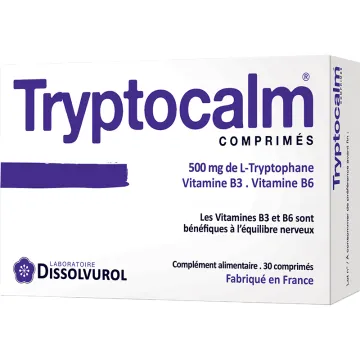
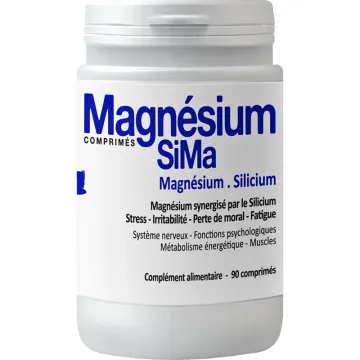
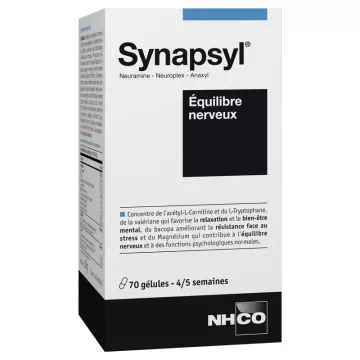
- Magnesium: role in regulating neuromuscular excitability — studies in children with tics show significantly lower magnesium levels — the combination of magnesium and vitamin B6 has been studied in pediatric tics (Mousain-Bosc study) — bisglycinate 100–200 mg/day for children, 300–400 mg/evening for adults — always under medical supervision for children
- Vitamin B6: a cofactor in the synthesis of neurotransmitters involved in tic circuits (dopamine, GABA) — the combination of B6 and magnesium has been documented in pediatric tics — do not exceed the recommended doses (risk of neuropathy with prolonged high doses)
- Omega-3 EPA and DHA: reduce neuroinflammation and support the development and functioning of brain circuits involved in tics — positive studies in comorbid ADHD (common in SGT) — 1–2 g EPA+DHA per day
- Zinc: a cofactor for many enzymes in the nervous system — reduced levels have been found in some studies in children with tics — may modulate dopaminergic activity — 10–15 mg/day of elemental zinc — blood tests recommended before supplementation
Treatments, behavioral therapies, and resources
- Habit Reversal Training (HRT): the gold standard behavioral treatment for tics — identify the premonitory sensation → replace the tic with an incompatible behavior (opposite movement, controlled breathing) — effectiveness documented in meta-analyses (30–40% reduction in tics) — partially covered by MonPsy — must be conducted with a trained psychologist
- Exposure and Response Prevention Therapy (CBIT): a modern extension of HRT — acknowledges the premonitory sensation and exposes the patient to it without performing the tic → gradual habituation — validated for TGS in children and adults — effectiveness comparable to medication for mild to moderate tics
- Meditation and stress management: reduce the intensity of stress-related tics — cardiac coherence (365, 3 times a day) before known stressful situations — yoga and deep breathing — sinceanxiety is a major aggravating factor, managing it is central to treatment
- Medications (if severe, disabling tics): haloperidol, pimozide, aripiprazole (proven efficacy but side effects) — clonidine or guanfacine (if ADHD is present) — by prescription from a neurologist or child psychiatrist only — never as a first-line treatment for mild to moderate tics
- Resources: French Foundation for Research on Tourette Syndrome (FFRST — tourette-france.com) — French Association for Gilles de la Tourette Syndrome (AFSGT) — pediatrics or neuropediatrics for diagnosis — MonPsy for behavioral therapy (partially covered by insurance)