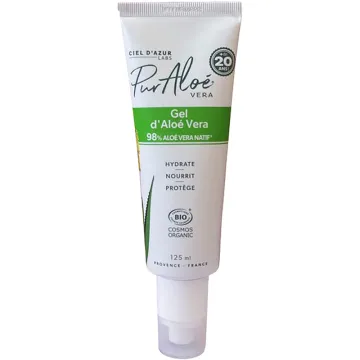
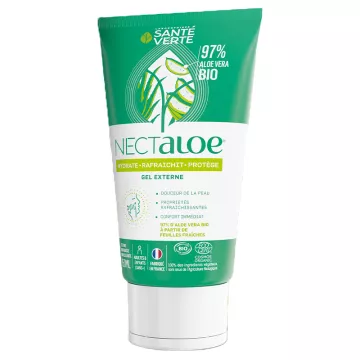
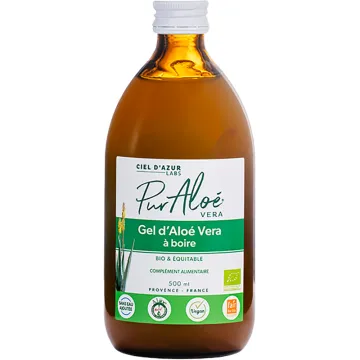
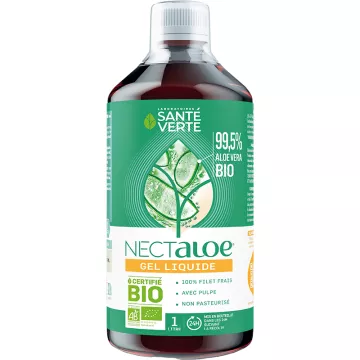
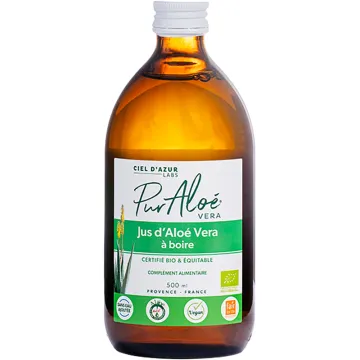
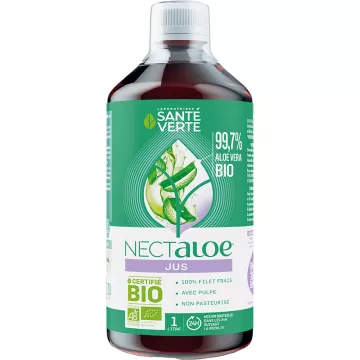
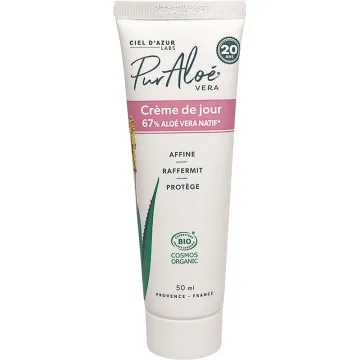
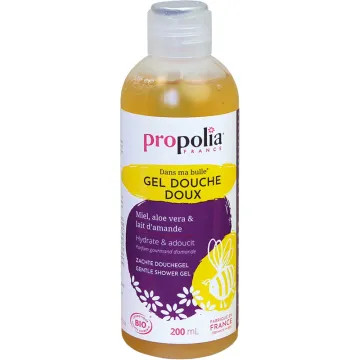
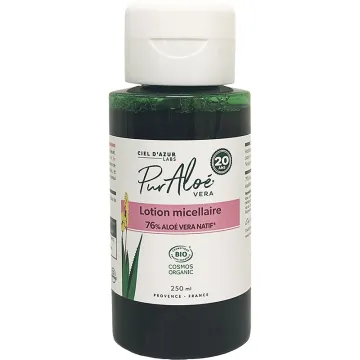
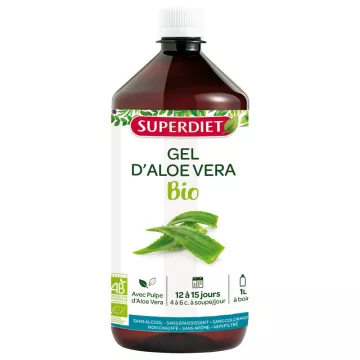
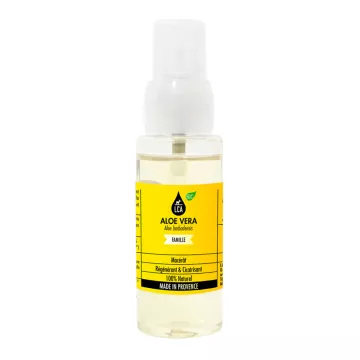
Take care of your skin and support your digestive health withaloe vera, a plant with numerous benefits that we offer in all its forms at Soin-et-Nature. Soothing gel, restorative cream, juice, or dietary supplement: each product has been carefully formulated using high-quality Aloe vera extracts to meet your daily needs, whether you’re looking tomoisturize, promote healing, or strengthen your natural defenses.
More details
Aloe verais a plant with numerous health benefits, whether used internally or externally. To reap the health benefits of aloe vera, we use the yellow latex extracted from the outer layer of the leaves and the clear, gel-like aloe vera gel extracted from the inner part of the aloe vera leaves.
Aloe vera is firmly rooted in the tradition of herbal medicine, which values medicinal plants for supporting health in a natural way.
Aloe vera, or aloe, is a succulent plant with exceptional properties. Its leaves contain a clear, gel-like pulp. Very rich in antioxidants and vitamins, this gel is used both topically and internally. Aloe vera is available as a gel that can be applied to the skin tosoothe and deeply moisturize. The juice and gel (gelled juice) are recommended for oral use (drinkable aloe vera) to relieveheartburn(healing) and reduce acidity. Both forms are also highly effective at restoring balance to the gut flora and aiding the digestive system.
Despite the current consensus that is restoringaloe vera’s reputation, it is important to note that the medicinal use of this plant dates back a very long time—at least 6,000 years. The oldest written record of it takes us back to the time of the Sumerians. A clay tablet already mentions its laxative properties. It is also mentioned among the Assyrians and Egyptians in ancient documents listing the plants used in the pharmacopoeias of the time.
The Ebers Papyrus is one such document. Hieroglyphic inscriptions highlight the anti-aging properties of aloe vera. Widely found around the Mediterranean in ancient times, aloe vera appears in a dye recipe on the Leiden Papyrus (Thebes, 3rd century A.D.), which is the oldest known “alchemical” document. It was also said to be effective at healing wounds and promoting rapid healing, and it was even used as a preventive measure against poisons.
Aloe, an African plant species, spread widely to other parts of the world through the efforts of Arab traders. This is why it became an ornamental plant in southern France. It later spread to Asia (India, Sumatra, Malaysia, China) and then to the New World (Mexico, the U.S.), where it is known as the “desert lily.”
Historically, it was not the aloe vera gel that was used, but its sap—a yellowish, very bitter substance that oozes from the leaves when they are cut and turns black as it dries. Several methods have been used to extract this sap. The best method is still to dry it and then pulverize it. In fact, the word “aloe” comes from the Arabic “alloeh,” which means “bitter and shiny substance.”
The concentrated sap from the leaves of Bardades aloe and Cape aloe, as well as the gel (mucilage) of Bardades aloe, are listed in List A of the French Pharmacopoeia.
According to the EMA, the use of dried aloe latex is “well established” for treating occasional constipation. It is considered a short-term treatment for occasional constipation by the WHO and the German Commission E. The WHO confirms these uses and cites its unproven use in traditional medicine for seborrheic dermatitis, gastrointestinal ulcers, tuberculosis, and fungal infections. This organization also recognizes the traditional use of the gel as a wound-healing agent, particularly for burns.
A powerful colon laxative, like other anthracenoside-containing herbs such as senna or buckthorn, aloe vera juice acts in the same way as the sennosides in senna or the anthraquinones in buckthorn. This laxative effect, which becomes purgative at high doses, is thought to be linked to the interaction ofaloin and its derivatives with prostaglandin synthesis. In the colon, the enzymatic breakdown ofaloin leads to the formationof anthrones, which stimulate intestinal peristalsis, increase secretions, inhibit the reabsorption of water and electrolytes (Na+, Cl-), and promote potassium loss. Its effectiveness is such that the use of aloe vera juice requires the same precautions and short treatment duration as other anthraquinone laxatives; ideally, it should be used under a doctor’s prescription for specific indications, such as preparation for a colonoscopy or anorectal surgery.
Soin-et-Nature offers a wide range of herbal products to help you take care of your health through the benefits of plants. Here are the main categories available:
These herbal medicine products available on Soin-et-Nature allow you to reap the benefits of plants for a natural and personalized approach to your health.