NOTICE
ANSM - Updated on : 24/04/2018
Product name
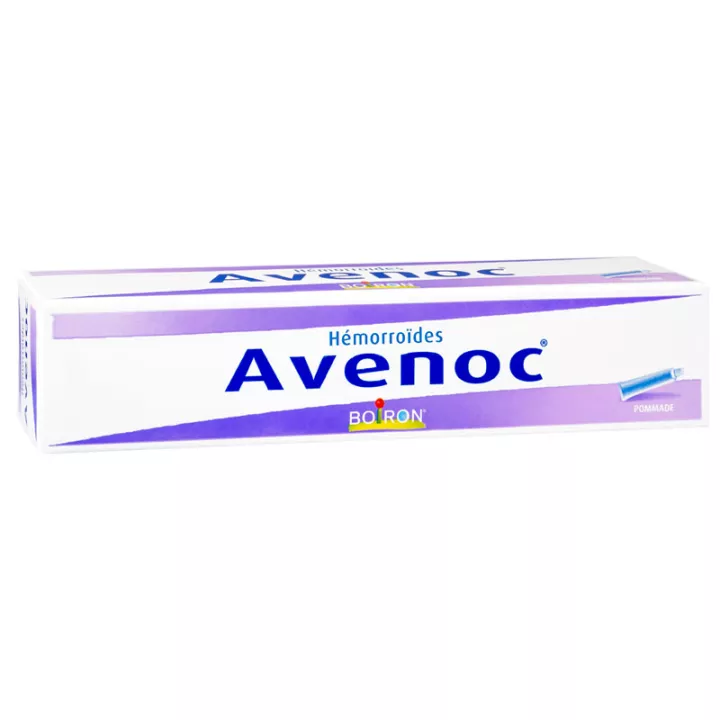
AVENOC, ointment
Box
Please read this leaflet carefully before using this medicine as it contains important information for you.
You must always use this medicine in strict accordance with the information provided in this leaflet or by your doctor or pharmacist.
- Keep this leaflet. You may need to read it again.
- Ask your pharmacist for any advice or information you may need.
- If you experience any side effects, talk to your doctor or pharmacist. This also applies to any side effects not mentioned in this leaflet. See section 4.
- You should contact your doctor if you do not feel any improvement or if you feel less well after 7 days.
What does this leaflet contain?
1. What is AVENOC ointment and what is it used for?
2. What do I need to know before using AVENOC, ointment?
3. How should AVENOC Ointment be used?
4. What are the possible side effects?
5. How should AVENOC Ointment be stored?
6. Package contents and other information.
1. WHAT IS AVENOC, ointment AND WHAT IS IT USED FOR?
Pharmacotherapeutic class: Homeopathic medicine.
Homeopathic medicine traditionally used in the treatment of hemorrhoids.
2. WHAT DO I HAVE TO KNOW BEFORE USING AVENOC, ointment?
Never use AVENOC, ointment:
if you are allergic to any of the active ingredients or to any of the other ingredients listed in section 6.
Warnings and precautions
Talk to your doctor or pharmacist before using AVENOC ointment.
If symptoms do not subside rapidly or worsen, a proctological examination should be carried out and treatment reviewed.
This medicine contains wool grease (lanolin) and may cause local skin reactions (e.g. contact dermatitis).
Children
Not applicable.
Other medicinal products and AVENOC, ointment
Tell your doctor or pharmacist if you are taking, have recently taken or may take any other medicines.
AVENOC, ointment with food and drink
Not applicable.
Pregnancy and breast-feeding
As a precautionary measure, AVENOC ointment should not be used during pregnancy.
AVENOC ointment may be used by nursing mothers.
Driving and use of machinery
Not applicable.
AVENOC, ointment contains wool fat (lanolin).
3. HOW TO USE AVENOC Ointment
Dosage
Apply a thin layer of ointment 3 to 4 times a day, after cleansing.
Method of administration
Rectal route.
In case of internal pain, intra-rectal application is possible thanks to the removable cannula.
Duration of treatment
Treatment should not exceed one week.
If you have used more Avenoc ointment than prescribed
Consult your doctor or pharmacist.
If you forget to use AVENOC, ointment
Do not take a double dose to make up for the one you forgot to take.
If you stop using AVENOC, ointment
Not applicable.
If you have any further questions about the use of this medicine, please ask your doctor or pharmacist.
4. WHAT ARE THE POSSIBLE SIDE EFFECTS?
Like all medicines, this product may cause undesirable effects, but they do not occur systematically in everyone.
Reporting side effects
If you experience any side effects, please tell your doctor or pharmacist. This also applies to any side effects not mentioned in this leaflet. You can also report adverse reactions directly via the national reporting system: Agence nationale de sécurité du médicament et des produits de santé (ANSM) and the network of Centres Régionaux de Pharmacovigilance - Website: www.ansm.sante.fr
By reporting adverse reactions, you are helping to provide more information on drug safety.
5. HOW TO CONSERVE AVENOC, ointment?
Keep out of sight and reach of children.
No special storage precautions.
Do not use this medicine after the expiration date indicated on the packaging. The expiration date refers to the last day of the month.
Do not dispose of any medicine with your household waste. Ask your pharmacist to identify any medicines you no longer use. These measures will help protect the environment.
6. CONTENTS AND OTHER INFORMATION
What AVENOC ointment contains
- The active ingredients are :
Paeonia officinalis TM.............................................................................................................................. 0.01g
Adrenalinum 3DH..................................................................................................................................... 0.05g
Ratanhia 3CH........................................................................................................................................... 0.01g
Aesculus hippocastanum 3CH ................................................................................................................. 0.01g
Hamamelis virginiana 1DH........................................................................................................................ 0.01g
Per 100 g
- Other ingredients: wool fat (lanolin), petroleum jelly, 70% V/V ethanol.
What AVENOC ointment is and what it contains
This medicine comes in the form of an ointment in a 30 g tube with a removable cannula.
Marketing authorization holder
BOIRON
2 AVENUE DE LOUEST LYONNAIS
69510 MESSIMY
FRANCE
Marketing authorization holder
BOIRON
2 AVENUE DE LOUEST LYONNAIS
69510 MESSIMY
FRANCE
Manufacturer
BOIRON
2 AVENUE DE LOUEST LYONNAIS
69510 MESSIMY
FRANCE
Product names in member states of the European Economic Area
Not applicable.
The last date on which this leaflet was revised is :
MM/YYYY.
Other
Detailed information on this drug is available on the ANSM (France) website.
What are hemorrhoids and hemorrhoidal crisis?
Hemorrhoids are exaggerated and permanent dilations of the veins of the anus. These dilatations can sometimes occur outside the anus. Hemorrhoids are accompanied by painful attacks, itching and minor bleeding: this medication is intended to reduce these symptoms.
You should consult your doctor if there is no improvement after a few days, particularly if the attack worsens or recurs.
This treatment does not exempt you from observing hygiene and dietary measures to combat constipation:
- consume dietary fiber: it increases stool frequency and improves stool consistency. Eat green vegetables, rich in fiber, and fresh fruit, which promote transit. You can also eat bread or cookies made with bran or wholegrain cereals, gradually and without overdoing it;
- avoid foods with too much fat or sugar;
- drink enough water regularly (at least 1.5 liters a day);
- engage in regular physical activity, avoiding sports involving heavy lifting.