0
Menu
Biseptine Antiseptic Solution Biseptine Antiseptic Solution
Over-the-counter medication

Biseptine Antiseptic Solution

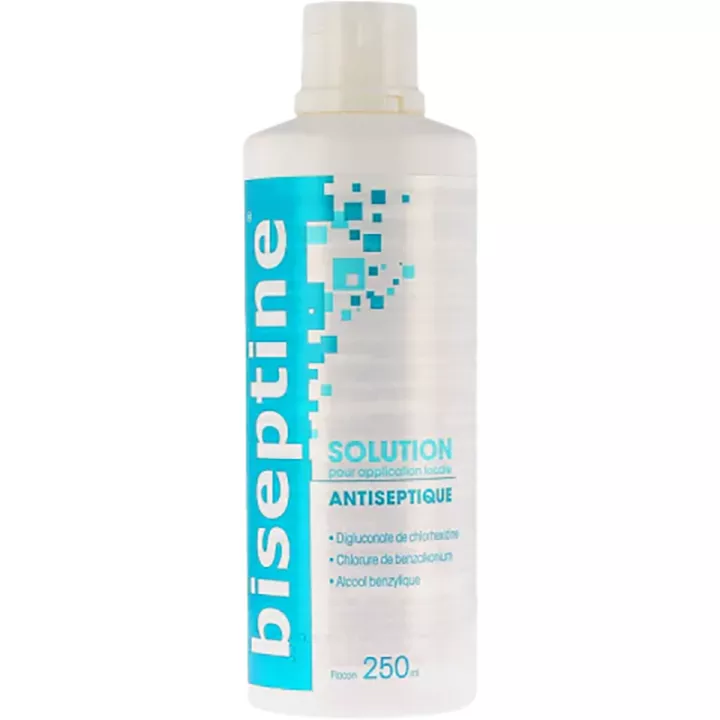
Biseptine Antiseptic, a 250-ml bottle available at our organic pharmacy, is used for the adjunctive topical treatment of skin conditions.

€3.91 EXCL. VAT €3.99 INCL. VAT
In stock Shipped within 24h Secure payment
Reference : 3400932913282
You must be logged in to add this product to a list. Customer login
See delivery conditions

Our doctors of pharmacy advise you

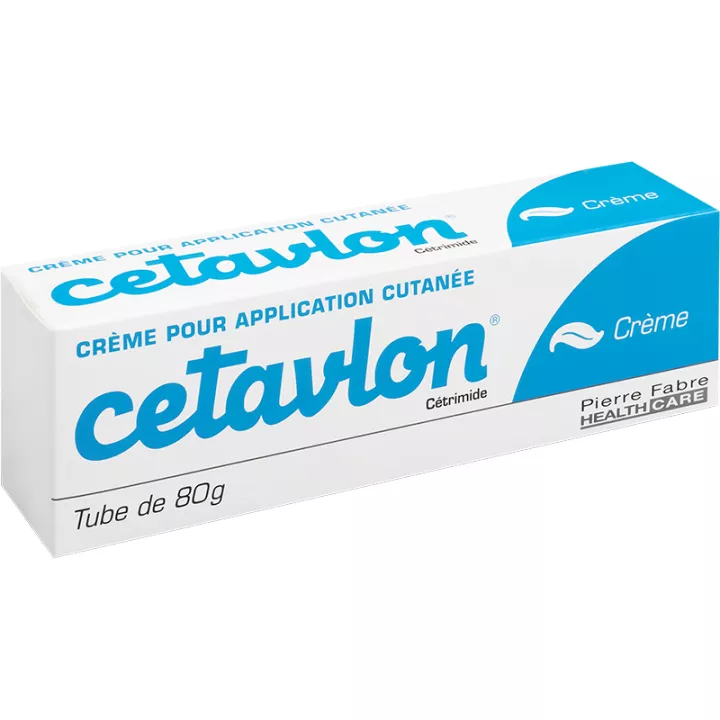
Cetavlon Antiseptic Cream 80g Cetavlon Antiseptic Cream 80g
€5.99
Add to cart
Shipped within 24h
Biseptinespraid Solution for Topical Application, 50 ml Biseptinespraid Solution for Topical Application, 50 ml
€5.99
Add to cart
Shipped within 24h
Diaseptyl 0.5% Chlorhexidine Spray, 75 ml Diaseptyl 0.5% Chlorhexidine Spray, 75 ml
€4.65
Shipped within 24h
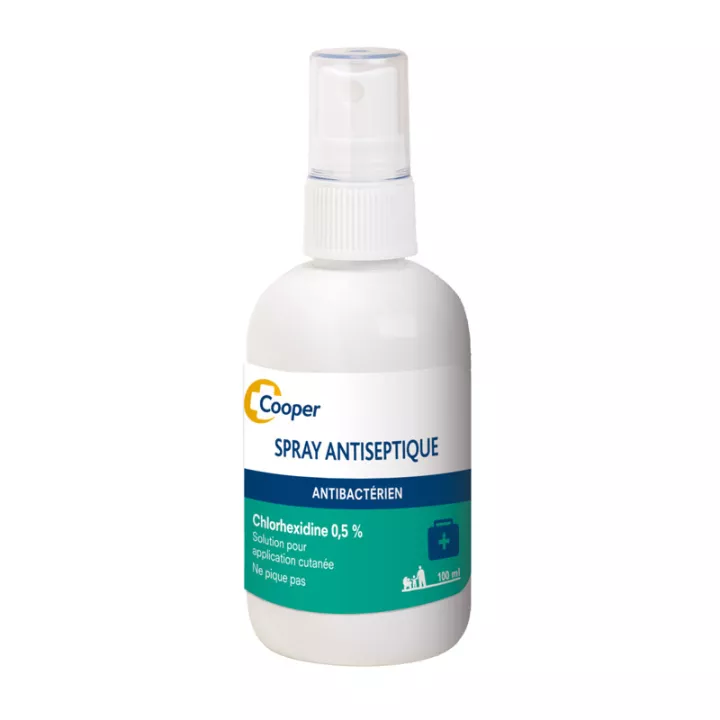
Cooper Chlorhexidine 0.5% Antiseptic Spray Cooper Chlorhexidine 0.5% Antiseptic Spray
€5.94
Shipped within 24h
Green-Marked Cotton Crepe Tape, 15 cm x 4 m Green-Marked Cotton Crepe Tape, 15 cm x 4 m
€1.99
Shipped within 24h

For warnings, precautions, and contraindications, please refer to the package insert.

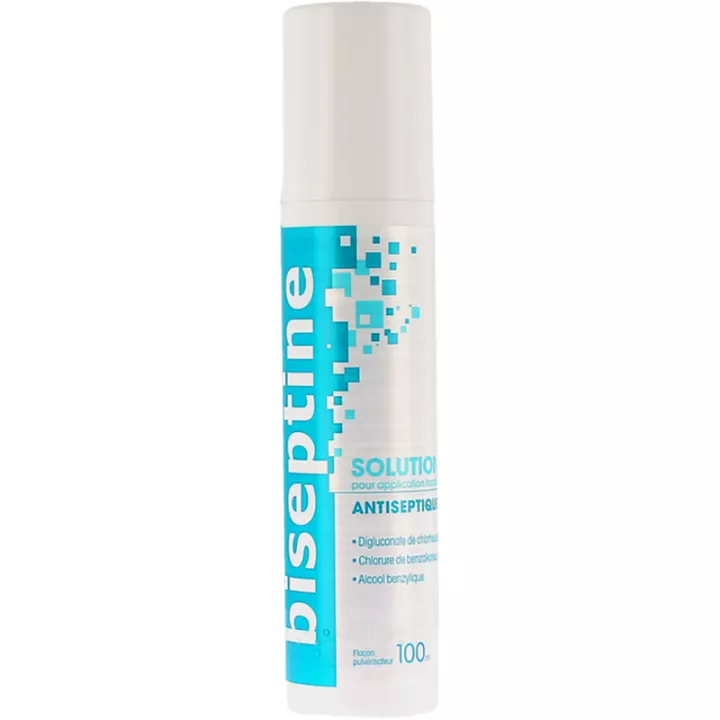
Description of Biseptine Antiseptic 250 ml Bottle or 100 ml Spray

Biseptine Antiseptic 250-ml Bottle is a topical antiseptic. It is used for skin antisepsis (before surgery), shallow wounds, and as an adjunct in the treatment of skin lesions that are infected or at risk of infection.

Two techniques can be used to limit the risk of infection:

  • The technique designed to prevent the introduction of external infectious agents is called asepsis. It involves the hygiene precautions taken by the person providing care (disinfection of hands and instruments, wearing gloves, a mask, and decontaminated or sterile clothing, etc.).
  • The technique designed to destroy contaminating microorganisms on the skin and mucous membranes is called antisepsis. Its effect is temporary but may be sufficient to halt the onset of an infection.

Good to know: Asepsis always plays a preventive role, whereas antisepsis can also have a curative role in certain cases of skin infection.

Directions for Use of Biseptine Antiseptic 

This solution is applied undiluted and should not be rinsed off.
Apply Biseptine Antiseptic Solution twice a day.

Ingredients of Biseptine Antiseptic 250-ml Bottle & 100-ml Spray

  • Chlorhexidine digluconate: 0.250 g
  • Benzalkonium chloride: 0.025 g
  • Benzyl alcohol: 4.000 ml
  • Purified water: q.s. to 100 ml

Precautions for Use

For topical use.
Do not swallow.
Avoid contact with the eyes.

This medication should not be used in the following cases:

  • allergy to quaternary ammonium compounds;
  • when applied to mucous membranes, particularly the genital mucosa;
  • in the eyes or ear canal (risk of toxicity if the eardrum is perforated);
  • for the disinfection of medical and surgical equipment (see Caution).

Avoid prolonged use of this medication—especially in children, on large areas of skin, or on deep wounds—without consulting your doctor: risk of the medication entering the bloodstream.
This antiseptic is not suitable for disinfecting scissors, razors, or other potentially contaminated objects.

Packaging of Biseptine Antiseptic

250-ml bottle or 100-ml spray bottle

This medication is a topical antiseptic. It is used for skin antisepsis (before surgery), shallow wounds, and as an adjunctive treatment for skin lesions that are infected or at risk of infection.

Warning: This medication is not like other products. Read the package insert carefully before ordering. Keep medications out of the reach of children. If symptoms persist, consult your doctor or pharmacist. Be aware of potential interactions with other products you are currently using.

Biseptine Antiseptic, available in a 250-ml bottle at our organic pharmacy, is used for the local adjunctive treatment of skin conditions.


Biseptine—Your Partner for Healthy Skin

Care for Your Skin with Biseptine

When it comes to taking care of your skin, Biseptine is here for you. Our antiseptic, available in a 250 ml bottle and sold at our organic pharmacy, is the ideal choice for the topical adjunctive treatment of skin conditions. Discover how Biseptine can help you maintain healthy, soothed skin.

A Natural Solution from Our Organic Pharmacy

Biseptine is an antiseptic solution that’s perfect for those who prefer natural products. Available at our organic pharmacy, it’s recommended for treating skin conditions. Trust Biseptine for clean, healthy skin.

Why Choose Biseptine?

Protect and Soothe

Biseptine acts as an antiseptic to protect your skin from infections and soothe irritation. It provides immediate relief and helps maintain your skin’s health, allowing you to feel comfortable.

A Trusted Product*

Biseptine is recommended by skin care experts for the topical treatment of skin conditions. You can trust the quality of our product to care for your skin. Choose Biseptine for an effective solution.

Biseptine—Your Key to Healthy Skin

Keep Your Skin Beautiful and Healthy

Skin conditions can affect the beauty of your skin. With Biseptine, you can take care of your skin and keep it healthy. Say goodbye to skin problems and regain a radiant appearance.

Easy to Use Every Day

Easily incorporate Biseptine into your daily skincare routine. Apply it topically to the affected areas and enjoy the simplicity of our treatment. Don’t wait to take care of your skin—choose Biseptine.

Pharmacovigilance Report an adverse drug reaction(s)

Download PDF leaflet

NOTICE

ANSM - Updated on : 17/07/2024

Product name

BISEPTINE, solution for topical application

Benzyl alcohol, chlorhexidine digluconate and benzalkonium chloride

Sidebar

Please read this leaflet carefully before using this medicine, as it contains important information for you.

You must always use this medicine in strict accordance with the information provided in this leaflet or by your doctor or pharmacist.

- Keep this leaflet. You may need to read it again.

- Ask your pharmacist for advice and information.

- If you experience any of the unwanted effects, tell your doctor or pharmacist. This also applies to any side effects not mentioned in this leaflet. See section 4.

- You should contact your doctor if you do not feel any improvement or if you feel less well.

- Keep out of the reach of children.

What does this leaflet contain?

1. What is BISEPTINE, solution for topical application and what is it used for?

2. What do I need to know before using BISEPTINE, solution for topical application?

3. How do I use BISEPTINE topical solution?

4. What are the possible side effects?

5. How should BISEPTINE topical solution be stored?

6. Package contents and other information.

1. WHAT IS BISEPTINE AND WHAT IS IT USED FOR?

Pharmacotherapeutic class: ANTISEPTICS AND DISINFECTANTS (D. Dermatology)

This medicine is indicated for :

Antisepsis of shallow surgical and traumatic wounds.

Local adjunctive treatment of infected skin or skin at risk of infection.

Skin antisepsis prior to surgery.

2. WHAT DO I HAVE TO KNOW BEFORE USING BISEPTINE, solution for topical application?

Never use BISEPTINE, solution for topical application:

- If you are allergic (hypersensitive) to the active substance or to any of the other components of this medicine listed in section 6.

- In the ear canal in the event of tympanic perforation, or in the eyes.

- Do not apply to mucous membranes, particularly genital mucosa.

- Do not use to disinfect medical and surgical equipment.

Warnings and precautions

Talk to your doctor or pharmacist before using BISEPTINE, solution for local application.

Do not apply to the eyes. BISEPTINE, solution for topical application must not come into contact with the eye, as there is a risk of visual damage. If it comes into contact with the eyes, rinse immediately and thoroughly with water. In the event of irritation, redness or pain in the eye, or visual disturbance, seek prompt medical advice.

Serious cases of persistent corneal damage (damage to the surface of the eye) requiring corneal grafting have been reported.s when similar products have accidentally come into contact with the eye during surgery, in patients under general anaesthesia (sleep without intense pain).

Avoid contact with the brain, meninges (membranes surrounding the brain and spinal cord) and middle ear.

Allow to dry before using an electrical instrument, as there is a risk of burns.

Do not use over large areas, under occlusive dressings, on deeply burned skin, or on the skin of premature babies or infants, as there is a risk of it entering the general circulation.

This medicine is only a local antiseptic. Its action only reduces the number of micro-organisms.

Use with caution in newborns, particularly premature infants. BISEPTINE may cause chemical burns to the skin.

Avoid simultaneous or successive use of other antiseptics.

Handle with care, as microbial contamination may occur as soon as an antiseptic preparation is opened.

Stop using BISEPTINE and consult your doctor immediately if you notice any signs suggesting an allergic reaction. These signs are listed under "Serious adverse reactions" in section 4.

Children and adolescents

Keep out of the reach of children.

Other medicinal products and BISEPTINE, solution for local application

Tell your doctor or pharmacist if you are using, have recently used or may use any other medicines.

Avoid simultaneous or successive use of different antiseptics with this antiseptic (in particular, prior use of soap should be followed by thorough rinsing).

BISEPTINE, solution for topical application with food, drink and alcohol

Not applicable.

Pregnancy and breast-feeding

Tell your doctor or pharmacist if you are using, have recently used or may use any other medicines.

Sportsmen

Not applicable.

Driving and use of machinery

Not applicable.

3. HOW TO USE BISEPTINE, solution for topical application?

Always use this medicine exactly as directed by your doctor or pharmacist. Check with your doctor or pharmacist or in case of doubt.

Dosage

Injured skin :

Generally 1 application, 2 times a day.

Preparing healthy skin for surgery :

2 successive applications corresponding respectively to the cleansing/detersion phase and the antisepsis phase.

IN ALL CASES, ADHERE STRICTLY TO MEDICAL PRESCRIPTION.

Method and route of administration

DERMAL ROUTE

IN ALL CASES, ADHERE STRICTLY TO MEDICAL PRESCRIPTION.

Duration of treatment

IN ALL CASES, ADHERE STRICTLY TO MEDICAL PRESCRIPTION.

If you have used more BISEPTINE, solution for topical application than you should have :

Consult your doctor or pharmacist immediately.

If you forget to use BISEPTINE, solution for topical application :

Not applicable.

If you stop using BISEPTINE, solution for topical application :

Not applicable.

If you have any further questions about the use of this medicine, please ask your doctor or pharmacist.

4. WHAT ARE THE POSSIBLE SIDE EFFECTS?

Like all medicines, this drug may cause undesirable effects, but they do not occur systematically in everyone.

Serious side effects

Stop taking BISEPTINE and consult your doctor immediately if you experience any of the following side effects:

Severe allergic reaction, signs of which may include :

- difficulty breathing or swallowing

- Low blood pressure, which may lead to dizziness or lightheadedness

- Swelling of the face, lips, tongue or throat

- Severe itching of the skin, accompanied by a red rash or pimples

Other adverse reactions with unknown frequency:

- Allergic skin disorders such as dermatitis (inflammation of the skin), pruritus (itching), erythema (redness of the skin), eczema, rash, urticaria, skin irritation and blisters.

- Chemical burns in newborns.

- Corneal damage (damage to the surface of the eye) and permanent eye damage, including permanent visual impairment (following accidental accidental ocular exposure during head, face and neck surgery) in patients under general anaesthesia (pain-free sleep).

Reporting side effects

If you experience any side effects, please tell your doctor or pharmacist. This also applies to any side effects not mentioned in this leaflet. You can also report adverse reactions directly via the national reporting system: Agence nationale de sécurité du médicament et des produits de santé (ANSM) and the network of Centres Régionaux de Pharmacovigilance.

By reporting adverse reactions, you are helping to provide more information on drug safety.

5. HOW DO I USE BISEPTINE, solution for topical application?

Keep out of sight and reach of children.

Do not use this medicine after the expiration date indicated on the bottle after EXP. The expiration date refers to the last day of that month.

For polyethylene bottles: No special storage precautions.

For polyethylene spray bottles: Store at a temperature not exceeding 25°C.

Do not dispose of any medicine down the drain or with household waste. Ask your pharmacist to dispose of any medicines you no longer use. These measures will help protect the environment.

6. CONTENTS AND OTHER INFORMATION

What BISEPTINE, solution for topical application, contains

- The active ingredients are :

Chlorhexidine digluconate.......................................................................................... 0.250 g

Benzalkonium chloride............................................................................................... 0.025 g

Benzyl alcohol.......................................................................................................... 4,000 ml

Per 100 ml.

- The other component is :

Purified water

What is BISEPTINE, solution for topical application and what does it contain?

This medicine comes in the form of a solution for topical application.

50 or 100 ml spray bottles or 40, 50, 100, 125, 250, 500, 1000 or 2500 ml bottles.

Not all presentations may be marketed.

Marketing authorization holder

BAYER HEALTHCARE

1 RUE CLAUDE BERNARD

59000 LILLE

Marketing authorization holder

BAYER HEALTHCARE

33, RUE DE LINDUSTRIE

74240 GAILLARD

Manufacturer

KVP PHARMA + VETERINAR PRODUKTE GMBH

PROJENSDORFER STRASSE

324 24106 KIEL

GERMANY

Product names in member states of the European Economic Area

Not applicable.

The last date on which this leaflet was revised was :

[To be completed by the holder]

Other

Detailed information on this drug is available on the ANSM (France) website.

VIDAL DE LA FAMILLE

BISEPTINE

Fiche révisée le 16 Octobre 2024
Famille du médicament : Antiseptique local

Indications

Ce médicament est un antiseptique local.

Il est utilisé :
  • pour l'antisepsie de la peau (avant une opération) et des plaies peu profondes,
  • dans le traitement d'appoint des lésions cutanées infectées ou exposées à un risque d'infection.

Présentations

BISEPTINE : solution pour application locale ; flacon pulvérisateur de 100 ml
Ordonnance facultative - Remboursable à 30% - Prix : 2.11 €
BISEPTINE : solution pour application locale ; flacon de 250 ml
Ordonnance facultative - Remboursable à 30% - Prix : 1.99 €

Les prix mentionnés ne tiennent pas compte des « honoraires de dispensation » du pharmacien.

Composition

p 100 ml
Chlorhexidine gluconate250 mg
Benzalkonium chlorure25 mg
Alcool benzylique4 ml

Contre-indications

Ce médicament ne doit pas être utilisé dans les cas suivants :
  • allergie aux ammoniums quaternaires ;
  • en application sur les muqueuses, notamment génitales ;
  • dans les yeux ou dans le conduit auditif (risque de toxicité en cas de perforation du tympan) ;
  • pour la désinfection du matériel médicochirurgical (voir Attention).

Attention

Évitez l'usage prolongé de ce médicament, notamment chez l'enfant, sur des surfaces étendues ou profondément lésées, sans l'avis de votre médecin : risque de passage du médicament dans le sang.

Cet antiseptique ne convient pas pour la désinfection des ciseaux, rasoirs et autres objets potentiellement contaminants.

En cas de contact accidentel avec les yeux, rincez rapidement et abondamment à l'eau courante. En effet, la chlorhexidine contenue dans ce médicament peut provoquer des lésions de la cornée. Si vous devez utiliser cette solution sur le visage, veillez absolument à ce que le produit ne puisse entrer en contact avec les yeux.

Interactions médicamenteuses

L'association à d'autres antiseptiques ou aux savons est déconseillée car leurs effets risquent de s'annuler.

Fertilité, grossesse et allaitement

Le passage de la chlorhexidine dans le sang après une application cutanée n'a pas été suffisamment étudié (notamment sur une peau lésée) pour que ce médicament puisse être utilisé chez la femme enceinte ou allaitante sans avis médical.

Mode d'emploi et posologie

Cette solution est appliquée pure et ne doit pas être rincée.

Posologie usuelle :

2 applications par jour.

Conseils

Le simple lavage à l'eau et au savon permet d'éliminer la majorité des germes ; il doit être suivi d'un rinçage soigneux car le savon peut inactiver certains antiseptiques.

Tous les antiseptiques peuvent être contaminés par des germes : une fois ouvert, le flacon ne doit pas être conservé inutilement.

Effets indésirables possibles

Fréquence indéterminée :
  • eczéma de contact, réaction allergique grave qui nécessite l'arrêt des applications et un avis médical ;
  • brûlure chez le nouveau-né lors de l'utilisation avant un acte chirugical.

De plus, des cas de lésions de la cornée, parfois graves, ont été rapportés après contact accidentel d'une solution contenant de la chlorhexidine avec les yeux.

LEXIQUE

alcool

Nom général désignant une famille de substances qui ont la propriété de pouvoir être mélangées à l'eau et aux corps gras. L'alcool le plus courant est l'alcool éthylique (éthanol), mais il existe de nombreux autres alcools : méthanol, butanol, etc. Le degré d'une solution alcoolique correspond au volume d'alcool pur présent dans 100 ml de solution, en sachant que 1 verre ballon de vin ou 1 demi de bière (25 cl) contiennent environ 8 g d'alcool.

Lorsque l'alcool est utilisé comme antiseptique, un dénaturant d'odeur désagréable lui est souvent ajouté pour éviter qu'il soit bu. Contrairement à une croyance répandue, l'alcool à 70° (ou même à 60°) est un meilleur antiseptique que l'alcool à 90°.

Consultez l'article : Alcoolodépendance

allergie

Réaction cutanée (démangeaisons, boutons, gonflement) ou malaise général apparaissant après un contact avec une substance particulière, l'utilisation d'un médicament ou l'ingestion d'un aliment. Les principales formes d'allergie sont l'eczéma, l'urticaire, l'asthme, l'œdème de Quincke et le choc allergique (choc anaphylactique). L'allergie alimentaire peut également se traduire par des troubles digestifs.

ammonium quaternaire

Famille d'antiseptiques présents dans de nombreux médicaments d'usage local. Généralement bien supportés, ils peuvent cependant donner lieu à de rares allergies.

antisepsie

Action consistant à détruire les bactéries, les champignons microscopiques ou les virus présents notamment sur la peau, les muqueuses et les plaies.

L'action d'un antiseptique n'est pas toujours immédiate : un délai de quelques minutes est parfois nécessaire avant que les germes soient inactivés.

antiseptique

Substance qui détruit localement les bactéries, réduisant leur nombre et empêchant leur prolifération. Certains antiseptiques sont également actifs sur les champignons microscopiques et les virus.

eczéma

Maladie de la peau se manifestant par des boutons et de vives démangeaisons. L'eczéma peut être dû au contact avec une substance allergisante (eczéma de contact) ou être lié à une prédisposition génétique (eczéma atopique).

Consultez l'article : Dermatite atopique (eczéma atopique)

fréquence indéterminée

La fréquence d'un effet indésirable est décrite dans les documents officiels de la manière suivante :

  • Très fréquent : constaté chez plus d'un patient sur 10
  • Fréquent : survient chez moins d'un patient sur 10 mais plus d'un patient sur 100
  • Peu fréquent : survient chez moins d'un patient sur 100 mais plus d'un patient sur 1000
  • Rare : survient chez moins d'un patient sur 1000 mais plus d'un patient sur 10000
  • Très rare : survient chez moins d'un patient sur 10000
  • Fréquence indéterminée : effet indésirable trop rare pour que l'on puisse en préciser la fréquence, ou concernant un médicament très ancien pour lequel on ne dispose pas d'études permettant de quantifier sa fréquence de survenue.
germe

Terme général qui désigne tous les organismes microscopiques susceptibles de provoquer une infection : bactéries, virus, parasites, champignons.

muqueuse

Tissu (membrane) qui tapisse les cavités et les conduits du corps communiquant avec l'extérieur (tube digestif, appareil respiratoire, voies urinaires, etc.).

nouveau-né

Enfant de moins de un mois.

réaction allergique

Réaction due à l'hypersensibilité de l'organisme à un médicament. Les réactions allergiques peuvent prendre des aspects très variés : urticaire, œdème de Quincke, eczéma, éruption de boutons rappelant la rougeole, etc. Le choc anaphylactique est une réaction allergique généralisée qui provoque un malaise par chute brutale de la tension artérielle.

Consultez l'article : Peut-on être allergique aux médicaments ?

tympan

Fine membrane située au fond du conduit de l'oreille. Le tympan transmet les vibrations sonores aux organes responsables de l'audition. La pression des deux côtés du tympan doit être équilibrée pour un bon fonctionnement de celui-ci. Un excès de pression d'un seul côté peut entraîner une rupture du tympan responsable d'une surdité partielle.

RELATED SEARCHES WITH MEDICATIONS ONLINE

Advice from our naturopaths

What type of dressing to choose according to the wound? What type of dressing to choose according to the wound?

When the little accidents of everyday life cause minor wounds, it's perfectly possible to treat them at home. Scratches, scrapes and cuts always hurt! The usual reflex is to immediately apply a plaster. Which isn't really a bad thing, given that a plaster is essential to heal and protect the wound. Why put on a plaster? It is recommended to…

Read the article on the blog
Dexeryl, economical multi-use cream: double cleansing, scars, eczema, etc. Dexeryl, economical multi-use cream: double cleansing, scars, eczema, etc.

Dexeryl is a moisturising cre a m renowned for its versatility and effectiveness in the treatment of various dermatological conditions. It is particularly appreciated for its action against extreme dryness of the skin, manifestations of eczema, and the management of healing, including that of tattoos. This dermatological product offers a gentle yet effective formula, suitable for even the most sensitive…

Read the article on the blog
Tamanu oil stimulates collagen production Tamanu oil stimulates collagen production

Calophylla oil, also known as Tamanu oil, is a natural ingredient with multiple benefits for the skin, especially for mature skin looking for an effective solution to maintain firmness and elasticity. Thanks to its composition rich in bioactive ingredients, it is the ideal ally for stimulating collagen production. This article explores how this precious oil, used for centuries in Polynesia…

Read the article on the blog
Natural Health Advice