What is vitamin B5, and why is it found in almost all foods?
Vitamin B5 (pantothenic acid—from the Greek “pantos” = everywhere) is the most widespread B vitamin in nature: it is found in virtually all foods, which explains why severe deficiencies are extremely rare in well-nourished people. Its central role is as a precursor to coenzyme A (CoA)—one of the most active molecules in human metabolism, involved in more than 70 enzymatic reactions. It also converts to dexpanthenol (the active alcohol form), which yields the dexpanthenol and panthenol used in cosmetics. An overview of B vitamins is available in the store.
- Coenzyme A: What Does It Actually Do?: CoA is essential for the β-oxidation of fatty acids (burning fat to produce energy) — in the Krebs cycle (mitochondrial ATP production from carbohydrates) — in fatty acid synthesis (building cell membranes) — in the synthesis of cholesterol and steroid hormones (cortisol, testosterone, estrogens, progesterone) — in the synthesis of acetylcholine (a neurotransmitter involved in memory and learning) — without CoA, none of these reactions can function properly
- The “anti-stress vitamin”—not a myth: the adrenal glands are the organs that produce cortisol (the stress hormone) and adrenaline — they have the highest concentration of pantothenic acid in the entire body — vitamin B5 is directly required for cortisol synthesis via CoA — during intense and prolonged stress, the body’s need for B5 increases significantly—a deficiency contributes to adrenal fatigue and reduced stress resistance
- Synthesis of steroid hormones: testosterone, estrogens, progesterone, cortisol — all these hormones are derived from cholesterol — their production necessarily involves CoA (acetyl-CoA → cholesterol → steroid hormones) — a B5 deficiency can disrupt this pathway, contributing to hormonal imbalances
- RDA and requirements: Adult RDA = 5 mg/day — breastfeeding women: 7 mg/day — athletes and individuals under intense stress: increased requirements — no upper limit established by the EFSA (very well tolerated)
- Link to CoQ10: B5 is involved in CoQ10 synthesis (via mevalonate and CoA)—the B5 + CoQ10 combination is particularly beneficial for mitochondrial energy production
B5 and the skin: Why is it the vitamin for damaged skin?
- Wound healing and skin repair: CoA activates the synthesis of keratinocyte membrane lipids—accelerates epidermal cell proliferation—reduces skin inflammation—when taken orally, B5 improves wound healing from within—when applied topically (dexpanthenol, panthenol), it acts directly on the skin barrier
- Acne — a well-documented use: studies show that high doses of B5 (1 to 10 g/day) reduce sebum production — mechanism: B5 competes with fatty acids for CoA, thereby reducing the availability of CoA for sebaceous lipid synthesis — result: less sebum, fewer clogged pores, less acne — high doses only under medical supervision
- Hair: pantothenic acid nourishes hair follicles from the inside — contributes to keratin synthesis (along with biotin [B8] and zinc) — prevents premature hair loss and enhances shine — the synergy of biotin + B5 + zinc forms the basis of nourishing hair care formulas
- Skin and aging: by promoting the production of skin barrier lipids (ceramides, free fatty acids), internally taken B5 complements the action of topical panthenol creams—a diet rich in B5 contributes to more elastic and better-hydrated skin from within
What are the best dietary sources of vitamin B5?
- Richest animal sources: beef and chicken liver (5–7 mg/100 g—the most concentrated sources) — kidneys (4 mg/100 g) — egg yolk (3 mg/100 g) — salmon and tuna (1.5 mg/100 g) — lean poultry (1 mg/100 g)
- Plant-based sources: avocados (1.4 mg/100 g — a notable plant-based source) — dried shiitake mushrooms (3.6 mg/100 g) — brewer’s yeast (3 mg/100 g) — legumes: chickpeas + lentils + beans (0.8–1 mg when cooked) — whole grains: oats + brown rice + quinoa (0.5–1 mg) — sweet potato (0.8 mg) — broccoli (0.5 mg)
- Why severe deficiencies are rare: Vitamin B5 is present in all foods in significant amounts — even a poor diet generally provides enough to prevent serious symptoms — signs of subclinical deficiency (fatigue, sensitivity to stress, mild sleep disturbances) are, however, much more common and often undiagnosed
- What depletes B5: alcohol (inhibits intestinal absorption) — chronic stress (overworked adrenal glands consume more B5) — a diet based on ultra-processed foods (industrial processing destroys B5) — excessive coffee — strict low-calorie diets
Supplementation, Adrenal Stress, and Practical Synergies
- When to supplement with B5?: intense chronic stress (work, exams, difficult life events) — adrenal fatigue (exhaustion, feeling “wiped out” even after sleeping) — persistent adult acne — elite athletes — people on restrictive or vegan diets — pregnancy and breastfeeding
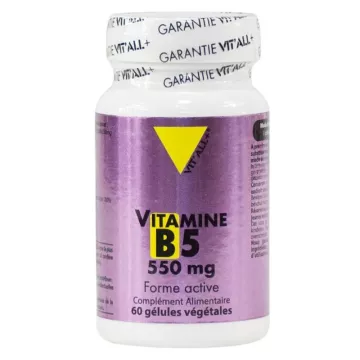
- Available forms: D-pantothenic acid — standard dietary form — calcium pantothenate — the most commonly used form in supplements (stable, well-tolerated) — D-panthenol (oral dexpanthenol) — alcohol form, better absorbed — typical doses: 5 to 50 mg/day in a B-complex supplement — high doses for acne: 500 mg to 2 g/day under medical supervision — B vitamins available at pharmacies
- The B5 + magnesium synergy: Magnesium and B5 form the core duo for stress resilience — magnesium regulates the HPA axis (stress) and GABA receptors — B5 supports the adrenal glands and cortisol synthesis at an appropriate dose — together, they reduce stress-induced fatigue and nervousness — found in anti-stress supplements
- B5 and sleep: B5 contributes to the synthesis of acetylcholine (involved in REM sleep phases) and, indirectly, to that of melatonin (via CoA and serotonin synthesis)—stress-related sleep disturbances may benefit from a B5 + B6 + magnesium complex taken in the evening
- Safety: no documented toxicity even at very high doses—the EFSA has not set an upper limit—the only possible side effect at very high doses (>10 g/day) is mild digestive upset—no known major drug interactions