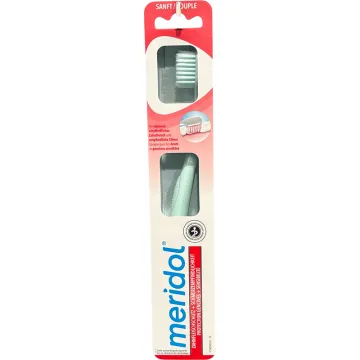
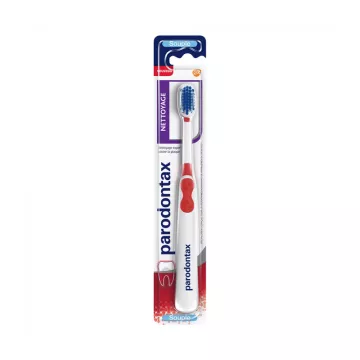
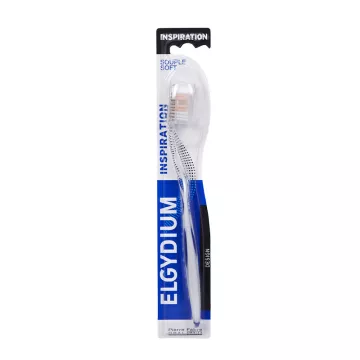
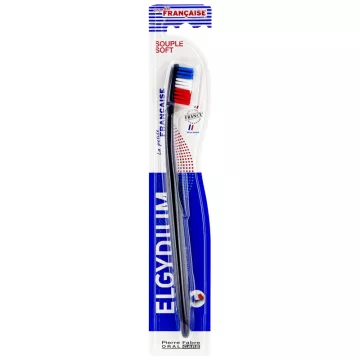
Soft-bristled toothbrushes are recommended by most dentists for daily use. Contrary to popular belief, hard bristles do not remove plaque more effectively—they wear down enamel and damage the gums, accelerating gum recession. Soft bristles (filaments measuring 15 to 20/100 of a millimeter) flex under pressure and penetrate more effectively into the spaces between teeth and the gingival sulcus without damaging the tissues. Brushing for 2 minutes twice a day with soft bristles removes plaque just as effectively as vigorous brushing with hard bristles, while preserving enamel and gums over the long term.
Bristle hardness is measured in hundredths of a millimeter and determines the recommended use for each toothbrush:
Apart from these specific indications, the ultra-soft bristles offer no additional benefits over the extra-soft bristles for daily use.
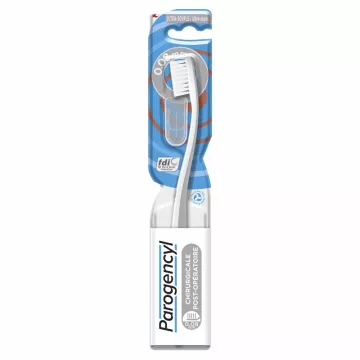
People with sensitive gums or gum recession have specific needs. “Gum care” toothbrushes with extra-soft bristles are designed with smaller heads and rounded, polished bristle tips—this tip treatment reduces microtrauma to the gum tissue. For advanced stages of periodontitis, surgical toothbrushes (8–15/100) allow for gentle cleaning around periodontal pockets without aggravating inflammation. The choice of brush must always be approved by the dentist, who will select the appropriate brush based on the severity of the condition.
The modified Bass technique is the recommended standard method for use with soft bristles. The brush head is angled at 45° relative to the tooth surface, so that the bristles penetrate slightly into the gingival sulcus. Small, circular, vibrating motions are performed on 2 to 3 teeth at a time, then moving upward toward the crown to remove plaque. The pressure applied should be minimal—if the bristles flatten, you’re pressing too hard. A comprehensiveoral hygiene routine includes brushing with a soft-bristled toothbrush, interdental cleaning (floss, interdental brushes), and a suitable mouthwash.
A toothbrush should be replaced every 3 months, or sooner if the bristles are bent—a sign of excessive pressure that reduces cleaning effectiveness and may damage the gums. After an oral health issue (canker sores, infection, cold sores) or an ENT infection, immediate replacement is recommended to prevent recontamination. Electric toothbrushes with soft, oscillating-rotating bristles are a good alternative: their automatic motion standardizes pressure and brushing time, reducing the risk of abrasion. Persistent bad breath despite regular brushing may indicate residual plaque that hasn’t been adequately removed or an underlying condition that warrants a dental consultation.
Choosing a toothbrush may seem trivial, but making the wrong choice can have real consequences for long-term oral health. Using a toothbrush that’s too hard for years can cause irreversible enamel abrasion and gum recession. A toothbrush that is too soft, when used improperly, leaves behind residual plaque, which promotes cavities and tartar buildup. Your dentist is best suited to recommend the appropriate bristle hardness, brush head size, and brushing technique based on your anatomy and clinical situation. People with dental implants, bridges, or orthodontic appliances require personalized advice. Strengtheningtooth enamel with appropriate fluoride toothpastes and remineralizing mouthwashes effectively complements the mechanical action of a soft-bristled toothbrush.