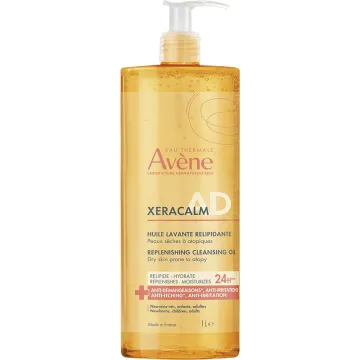
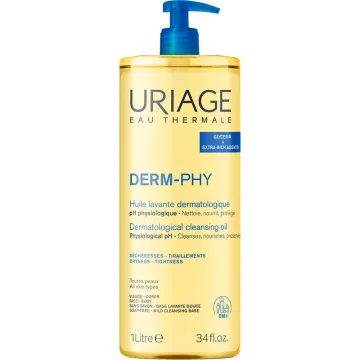
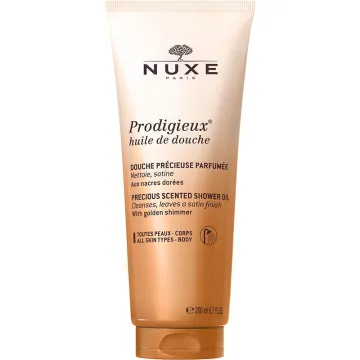
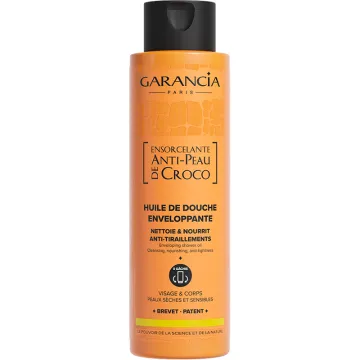
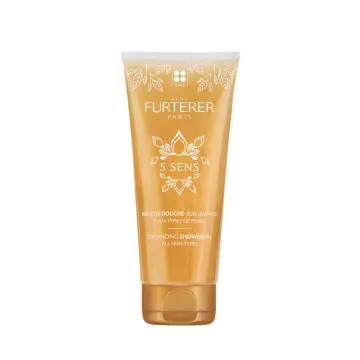
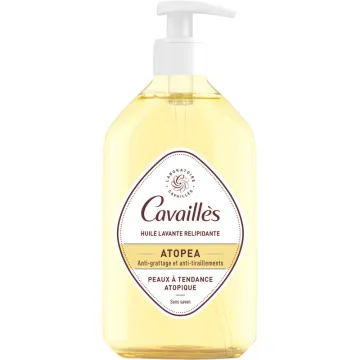
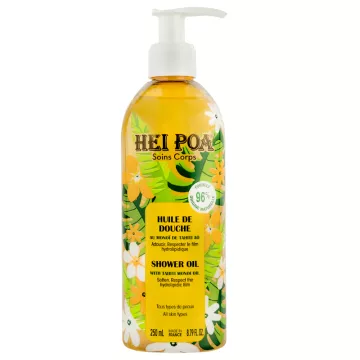
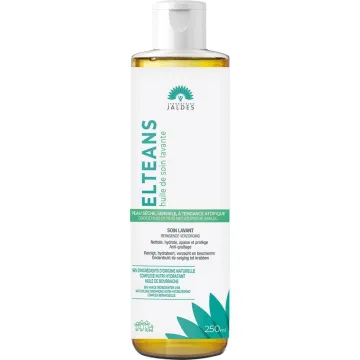
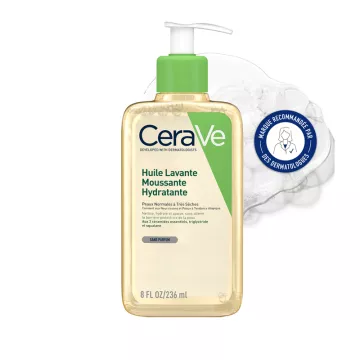
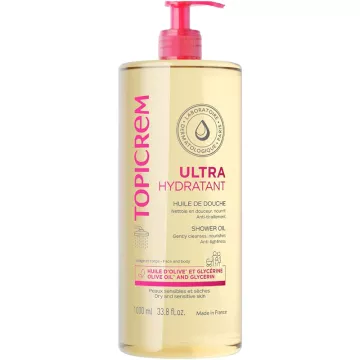
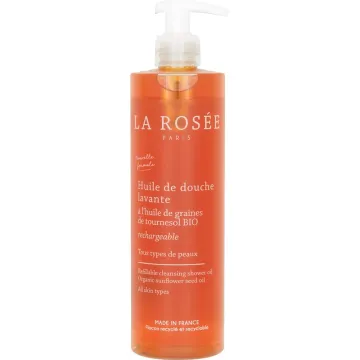
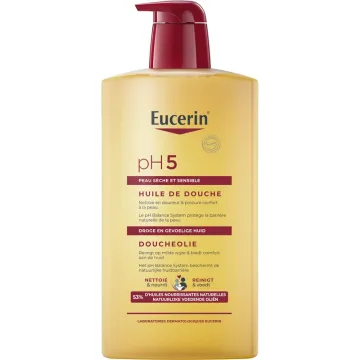
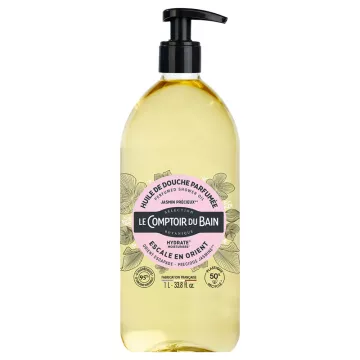
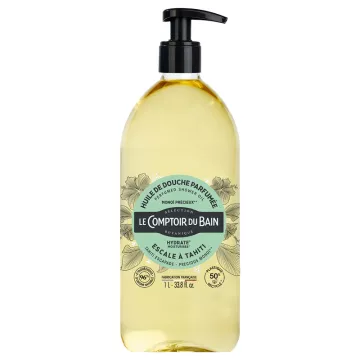
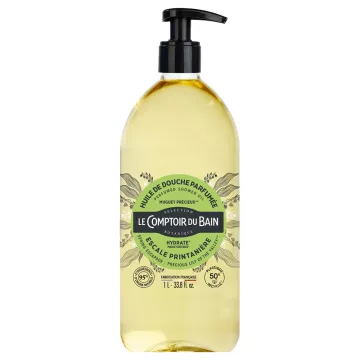
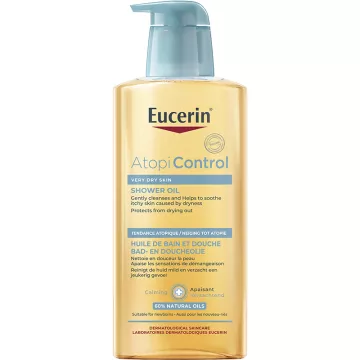
Shower oil is a body cleanser designed to cleanse, nourish, and be gentle on the skin. Unlike traditional soaps or highly foaming shower gels, it stands out for its rich, creamy texture, which transforms into a fine lather upon contact with water thanks to mild surfactants. It is particularly well-suited for dry, sensitive, or reactive skin, as it cleanses without stripping the skin’s natural hydrolipidic film.
To use, apply a small amount of oil to damp skin, massage in circular motions to create a silky lather, then rinse with lukewarm water. The skin feels clean, soft, and comfortable, without any tightness.
The benefits of shower oil stem from its dual cleansing and nourishing action. Enriched with emollients (plant oils) and mild surfactants, it cleanses the skin while providing lipid-based hydration. It helps preserve the hydrolipidic film, which contributes to greater daily skin comfort and less tightness after showering.
Many shower oils also contain vitamin E, a natural antioxidant that helps neutralize free radicals caused by external aggressors. The skin becomes more supple, feels softer to the touch, and your body care routine feels more like a pampering treatment than a simple hygiene routine.
To choose the right shower oil, it’s best to start with your skin type and its needs. Dry skin benefits from formulas enriched with nourishing oils such asargan oil, jojoba, or sweet almond oil. Dry, uncomfortable skin will appreciate a formula without a heavy fragrance and with a pH close to that of the skin.
For sensitive skin, it’s best to opt for gentle, well-tolerated shower oils—ideally fragrance-free or with minimal fragrance—and with a short list of ingredients. Formulas containing harsh sulfate-based surfactants (high concentrations of SLS or SLES) should be avoided as much as possible, and priority should be given to formulas designed to balance the hydrolipidic film.
Shower oil falls somewhere between a classic shower gel and a nourishing skincare product. Conventional shower gels rely on effective foaming surfactants that can sometimes be drying. Soaps, especially traditional alkaline soaps, have a higher pH than that of the skin and can weaken the hydrolipidic film over time.
Shower oil, on the other hand, combines mild surfactants with plant-based oils: it cleanses effectively while leaving a soothing lipid barrier—ideal for those who experience discomfort after rinsing. It integrates particularly well into a body-nourishing routine.
Shower oils are most often formulated with a blend of plant-based oils selected for their cosmetic benefits:
When properly balanced, these oils provide long-lasting comfort without weighing down the skin or leaving an occlusive film after rinsing.
Yes, a well-formulated shower oil is perfectly suitable for daily use, even on sensitive skin. Its benefits are particularly noticeable in daily routines: it helps limit the cumulative drying effect of repeated showers—especially in winter—and maintains skin comfort over the course of weeks. For acne-prone skin on the body, it’s best to use it in the evening and alternate with a specialized shower gel if needed.
Shower oils are often recommended for dry, atopic, or reactive skin, as their formula is gentler on the hydrolipidic film than traditional cleansers. They help soothe the discomfort associated with dry skin. However, they are not a substitute for medical treatment: in casesof eczema or psoriasis, it’s best to consult a dermatologist, who will recommend a specific cleanser (often soap-free and fragrance-free) suited to the severity of the condition. In the event of an active inflammatory flare-up, oozing lesions, or a severe allergic reaction (angioedema), call 15 or 112.
For a complete body care routine, shower oil is the first step right when you step into the shower. It prepares the skin by gently cleansing it, which makes subsequent skincare products more effective. After showering, pat the skin dry without rubbing to preserve the lipid barrier, then apply a moisturizing lotion or cream—or even a body oil as a finishing touch—to lock in moisture.
Once or twice a week, a gentle body scrub before using the shower oil helps remove dead skin cells and reveal a more even complexion. All of this naturally fits into a long-term skincare routine.
Shower oil is a universal product, suitable for all skin types and all genders. Men experience the same benefits: gentle cleansing, preserved skin comfort, and a simple routine with no extra steps in the morning. It’s particularly popular among those who exercise (due to sweat, chlorine, and saltwater) and who want to nourish their skin without leaving it feeling heavy.