What are the different types of headaches and their causes?
Headaches are one of the most common medical complaints. The ICHD-3 international classification identifies more than 200 types:
- Tension headaches (60 to 70%): mild-to-moderate, bilateral “helmet-like” pain associated with the contraction of cranial muscles due to stress or prolonged postural strain.
- Migraines (15 to 20% of the adult population): moderate-to-severe unilateral throbbing pain, accompanied by nausea and photophobia. Mechanism: pervasive cortical depression and trigeminal activation.
- Analgesic-overuse headaches: paradoxically induced by taking pain relievers too frequently (>10 to 15 days/month).
- Secondary headaches: a symptom of an underlying condition. A “thunderclap” headache (reaching maximum intensity in less than one minute), accompanied by fever, neck stiffness, or neurological deficits, requires urgent medical attention.
Does magnesium reduce the frequency of headaches?
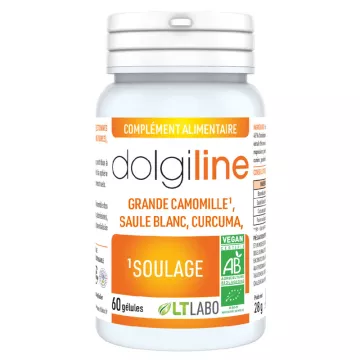
Magnesium is the best-documented supplement for headache prevention. Its mechanism of action involves blocking NMDA receptors (reducing cortical hyperexcitability), inhibiting substance P (a trigeminal neuropeptide that promotes pain), and reducing cranio-cervical muscle contractions. Meta-analyses confirm a 41% reduction in migraine frequency compared to placebo with 600 mg/day of magnesium dicitrate over 12 weeks. The European Headache Federation (EHF) recommends it as a first-line prophylaxis for chronic headaches.
Vitamin B2 and CoQ10: Prevention of Recurrent Headaches?
Two mitochondrial agents have sufficient clinical evidence to be included in prophylaxis recommendations:
- Vitamin B2 (riboflavin, 400 mg/day): mitochondrial dysfunction has been documented in migraine. A randomized trial (Schoenen, 1998) showed a 50% reduction in migraine frequency after 3 months. Recommended by European and American guidelines for prophylaxis.
- Coenzyme Q10 (300 mg/day): same mitochondrial mechanism. A controlled study (Sandor, 2005) showed a 47% reduction in frequency compared to placebo after 3 months. Recommended by the American Academy of Neurology.
These active ingredients should be used for prophylaxis for at least 3 months—they do not treat acute attacks.
Do essential oils relieve tension headaches?
Clinical data are available for two essential oils:
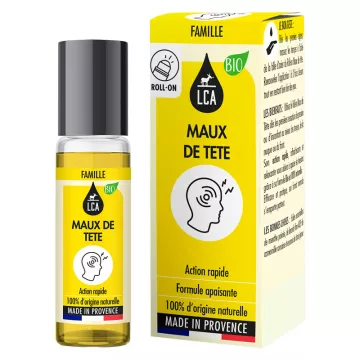
- Peppermint (EO): A randomized controlled study (Göbel, 1996) demonstrated that applying a 10% solution of peppermint essential oil to the temples reduces tension-type headache pain comparably to 1,000 mg of acetaminophen at 30 minutes. Menthol activates TRPM8 receptors, which inhibit trigeminal pain pathways. Application: 2 to 3 drops diluted in a carrier oil, applied to the temples and forehead—avoid the eyes.
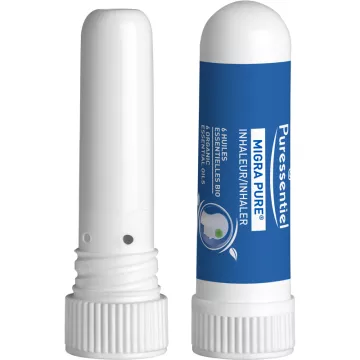
- True lavender (essential oil): A randomized study (Sasannejad, 2012) shows that 15 minutes of inhalation significantly reduces the severity of migraine attacks. Its linalool modulates GABA receptors and reduces the release of trigeminal substance P.
Does passionflower help with stress-related headaches?
Tension headaches associated with chronic stress may benefit from support targeting their triggering mechanisms. Passionflower (Passiflora incarnata) reduces nervous hyperexcitability via GABA-A receptors (chrysin, apigenin), thereby decreasing the cranio-cervical muscle tension that triggers headaches. Randomized studies confirm its effectiveness for mild anxiety after 4 weeks, comparable to oxazepam (Akhondzadeh, 2001), without the cognitive side effects of benzodiazepines or the potential for dependence.
What headache triggers should be identified?
Identifying personal triggers is the most effective preventive strategy:
- Dietary factors: alcohol (red wine, beer), excessive caffeine or caffeine withdrawal, processed meats (nitrites), aged cheeses (tyramine), ultra-processed foods (monosodium glutamate).
- Behavioral factors: skipping meals (hypoglycemia), dehydration (missing 1 to 2 glasses of water can trigger a headache within 30 to 60 minutes), too much or too little sleep.
- Environmental factors: bright lights, strong odors, loud noises, altitude.
- Hormonal factors: menstruation, hormonal contraception, and menopause are major triggers in women, linked to fluctuations in estrogen levels affecting trigeminal sensitivity.