What is Raynaud's syndrome, and how does it manifest?
Raynaud’s syndrome is a vasospastic disorder characterized by episodes of excessive vasoconstriction of the distal arterioles—primarily in the fingers, toes, and sometimes the nose and ears—in response to cold or emotional stress. The blood vessels constrict disproportionately, sharply reducing local blood flow. It affects 3 to 5% of the general population, with a clear predominance among women. Circulation care products are available in the blood circulation section of the store.
- Characteristic three-phase color sequence: white phase (pallor—ischemia due to vasoconstriction) → blue phase (cyanosis—venous stasis) → red phase (erythema—reperfusion)—each phase may be accompanied by tingling, numbness, and warming pain
- Primary form (Raynaud’s disease): the most common (80–90% of cases)—functional vasoconstriction without an underlying disease—often seen in young women—benign, without trophic lesions—diagnosis by exclusion
- Secondary form (Raynaud’s syndrome): associated with a systemic disease (scleroderma—the most common cause—lupus, Sjögren’s syndrome, dermatomyositis, rheumatoid arthritis) — signs suggestive of a secondary form (onset after age 30 in men, digital ulcers, asymmetry, abnormalities on capillaroscopy) — requires a rheumatologic evaluation
- Diagnosis: clinical (history + physical exam) — periungual capillaroscopy (visualization of cuticular capillaries — suggests secondary form) — autoimmune workup (ANA, anticentromere antibodies, anti-Scl70) — performed by a rheumatologist or angiologist
What are the triggering factors and what medical treatments are available?
- Main triggering factors: cold (ambient or local—handling frozen foods, cold water)—sudden temperature changes—emotional stress and anxiety—repeated mechanical vibrations (jackhammer, chainsaw — occupational Raynaud’s) — smoking (a powerful vasoconstrictor) — certain medications (non-cardioselective beta-blockers, vasoconstrictive decongestants, ergotamine)
- Drug treatments for severe secondary forms (by prescription): calcium channel blockers (nifedipine, amlodipine—the standard arteriolar vasodilators) — ACE inhibitors (losartan) — phosphodiesterase-5 inhibitors (sildenafil) — IV prostanoids for forms with ulcerations — never modify or discontinue vasodilator therapy without medical advice
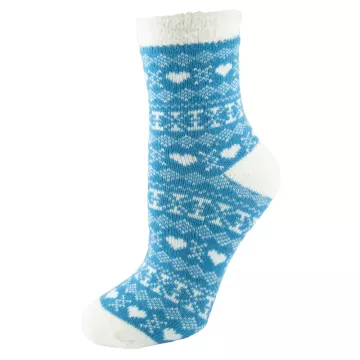
- Effective non-pharmacological measures: thermal protection (heated gloves, woolen socks, layered thermal clothing) — avoid the cold above all (refrigerator, frozen food section) — gradual warming techniques (arm movements, immersion in lukewarm water) — smoking cessation (Tabac Info Service: 3989) — thermal biofeedback (control of skin temperature through training)
What natural approaches can support circulation in Raynaud’s syndrome?
These supplements support venous circulation —they do not treat Raynaud’s syndrome and are not a substitute for prescription vasodilators. Medical advice is required before taking any supplements in cases of secondary Raynaud’s syndrome or when undergoing treatment.
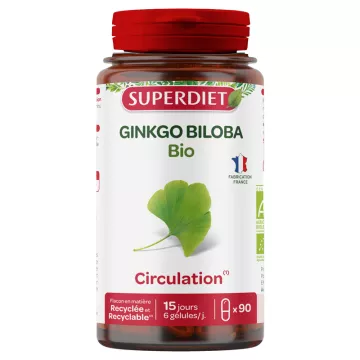
- Ginkgo biloba: flavonoids and terpenoids — improves peripheral microcirculation and inhibits platelet aggregation — several positive clinical trials in primary Raynaud’s syndrome — 120 to 160 mg of standardized EGb 761 extract per day — Contraindicated with anticoagulants and antiplatelet agents
- Omega-3 EPA-DHA: improves red blood cell deformability and blood fluidity — reduces vasospastic hyperreactivity — 2 to 3 g/day — EFSA health claim regarding normal heart function
- Magnesium: natural calcium antagonist — reduces hyperexcitability of vascular smooth muscle cells — supports thermoregulation and stress management (a co-trigger of attacks) — 300 to 400 mg/day as bisglycinate
- Daily physical protection: gloves for handling frozen foods and cold beverages — prioritize warming the extremities — avoid strong air conditioning — relaxation techniques (cardiac coherence, meditation) to reduce the stress component of attacks