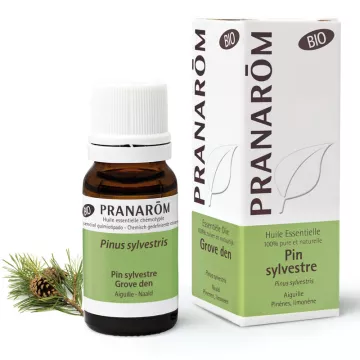
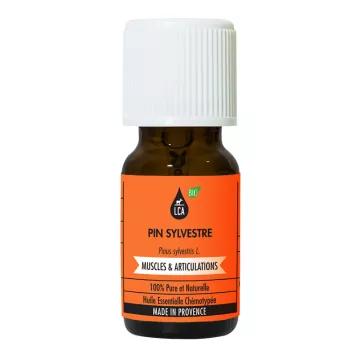
The pine genus includes several species of the Pinaceae family used in aromatherapy and herbal medicine—primarily Scots pine (Pinus sylvestris), maritime pine (Pinus pinaster), and black pine (Pinus nigra). Their essential oils, rich in monoterpenes (α-pinene, β-pinene, limonene), share common respiratory and invigorating properties. Explore our respiratory health and aromatherapy line.
Which pine species are used in aromatherapy?
The term “pine” encompasses several distinct species—the choice of species determines the primary properties.
- Pinus sylvestris (Scots pine, Siberia, Scotland): α-pinene and β-pinene are dominant—the gold standard for respiratory comfort, with mild cortisone-like effects and general tonifying properties—see our Scots pine page
- Pinus pinaster (maritime pine, Aquitaine): rich in pinenes and longifolen—used similarly to Scots pine, with some differences in the sesquiterpene profile
- Pinus nigra (Laricio pine): richer in camphene—comparable uses, with a slightly more camphor-like note
- Abies balsamea (balsam fir): often confused with pine in diffusion—different ester/monoterpene profile, highly prized for its fresh, woody note
- Always check the full botanical name on the label to ensure the expected properties
Pine and respiratory comfort?
This is the primary indication for pine essential oils—one of the best-documented among conifers.
- Expectorant and mucolytic: α-pinene thins bronchial secretions and facilitates their expulsion—supporting respiratory comfort during the winter months
- Airborne antiseptic: when diffused, pine monoterpenes disinfect the ambient air and reduce bacterial and viral load
- Mild cortisone-like action (Scots pine): supports the body’s response to excess mucus secretions
- Inhalation: 3–4 drops in a bowl of hot water; cover your head and inhale for 10 minutes—relief for the upper respiratory tract
- Topical application to the chest: 2–3% diluted in a vegetable oil, massage 2 to 3 times a day — see our winter ailments line
Pine and joint and muscle comfort?
Pine monoterpenes penetrate tissues quickly—properties valued in massage.
- Massage application diluted to 3–5% in a vegetable oil (arnica, St. John’s wort) on areas of joint pain and muscle tension
- Local warming and circulatory action—used after exercise to aid muscle recovery
- Synergy: Scots pine + camphor rosemary + juniper in arnica oil—a comprehensive protocol for joint and muscle comfort
- Aromatherapy bath: 10 drops in a solubilizing base—muscle toning and post-exercise recovery
Pine and general tonic?
Pine essential oils are among the most widely used aromatherapeutic agents for supporting vitality.
- Cortisol-like action of Scots pine: supports the body’s response to chronic fatigue and nervous exhaustion
- Physical and mental stimulant: the fresh, woody scent of pine activates the sympathetic nervous system—ideal for diffusing in the morning
- Invigorating diffusion: 10 drops of pine + 5 drops of lemon + 5 drops of peppermint—a revitalizing morning blend
- Combine with cypress and Atlas cedar for a complete “forest” synergy when diffused
Precautions and contraindications?
Pine essential oils require specific precautions depending on the species.
- Pregnant and breastfeeding women: avoid as a precaution—monoterpenes cross the placental barrier
- People with asthma: relative contraindication—high concentrations of monoterpenes can cause bronchospasms—never diffuse in the bedroom of someone with asthma
- Children under 6 years of age: Avoid pine essential oils—use specific pediatric essential oils (ravintsara, eucalyptus radiata at an appropriate dose)
- Always dilute to 2–5% for topical use—risk of skin irritation if applied undiluted
- Store in the refrigerator or away from heat—monoterpenes oxidize rapidly (best before 1–2 years after opening)