What is an oral hygiene kit, and how do you put one together?
An oral hygiene kit is a set of tools that make up a complete oral care routine. An effective kit covers all the essential steps: tooth brushing (toothbrush + fluoride toothpaste),interdental cleaning (dental floss or interdental brushes), tongue cleaning (tongue scraper), and mouthwash as needed. Each component fulfills a function that the others cannot—none is redundant. The products to put together your kit are available in the oral care line.
- Toothbrush: soft bristles required—small head—manual or electric (oscillating-rotating brushes are clinically superior for reducing plaque and gum bleeding)—replace every 3 months or as soon as the bristles splay
- Fluoride toothpaste: 1,450 ppm for adults—SLS-free for sensitive gums—check the concentration on the tube (“natural” or “whitening” formulas are often underdosed) — Do not rinse with water immediately afterward (this removes 80% of the protective residual fluoride)
- Interdental hygiene: waxed dental floss (for tight spaces) or ISO interdental brushes (for wider spaces) — once a day in the evening — bridge floss if you have a bridge or implant
- Tongue scraper: the most underrated practice — reduces volatile sulfur compounds (which cause bad breath) by 40 to 75% — 30 seconds every morning
- Mouthwash as needed: 225 ppm fluoride (in the evening without rinsing—for nighttime remineralization)—0.12% chlorhexidine antiseptic (short courses of 2 to 4 weeks)—alcohol-free to prevent dry mouth
How do you choose the right kit for your profile and needs?
The ideal kit varies depending on each person’s needs. People who wear orthodontic appliances need floss threaders or a water flosser with an orthodontic tip to clean around the brackets. People with periodontitis or gingivitis benefit from soft-bristled interdental brushes and an antiseptic mouthwash. People with tooth sensitivity should choose a toothpaste containing potassium nitrate (5%) and an ultra-soft toothbrush.
- Children’s Kit: toothbrush with a head sized for the child’s mouth — children’s toothpaste with 500–1,000 ppm fluoride (< 6 years old: a pea-sized amount, under adult supervision) — timer or hourglass (ensures 2 minutes of brushing) — start flossing as soon as the first gaps appear between baby teeth
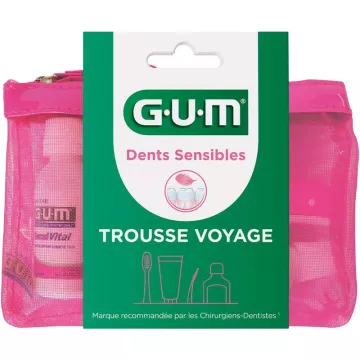
- Travel kit: travel toothbrush (with foldable head or cap) — mini tube of toothpaste (carry-on size ≤ 100 mL) — floss picks or pre-cut floss — effervescent disinfectant tablets if you wear dentures — store in a ventilated, waterproof case (residual moisture on an undried toothbrush promotes bacterial growth)
- Eco-friendly kit: bamboo toothbrush (biodegradable handle) — solid toothpaste in tablet or powder form (zero plastic) — dental floss made of natural silk or compostable PLA — mouthwash in effervescent tablets or concentrated powder — COSMOS organic formulas guarantee the absence of controversial ingredients
When should you replace the components of your oral care kit?
The lifespan of each component is determined by specific criteria. A frayed toothbrush no longer breaks up plaque effectively and can damage the gums—don’t wait until it’s “really worn out” to replace it. Toothpaste has a shelf life (check the PAO date—the open-jar symbol)—after that, the fluoride breaks down and the active ingredients lose their effectiveness. Mouthwash generally lasts 2 to 3 years unopened—after opening, 3 to 6 months depending on the formula.
- Recommended replacement schedule: toothbrush—every 3 months (or as soon as the bristles splay)—toothpaste—depending on use, about 2 months for 2 brushings per day — dental floss — when the roll runs out — interdental brushes — as soon as the bristles splay or the central wire bends (about 1 to 2 weeks depending on frequency) — tongue scraper — every 3 to 6 months
- Hygiene of the kit itself: rinse the toothbrush thoroughly after use — do not cover it immediately (trapped moisture promotes mold growth) — avoid laying the brush flat — open brush holders are more hygienic than closed tubes — disinfect interdental brushes once a week (diluted vinegar for 15 minutes)
- Signs that warrant a dental visit even when the kit is used properly: persistent gum bleeding, persistent bad breath, new or increasing tooth sensitivity — the kit helps maintain oral health, while the dentist diagnoses and treats