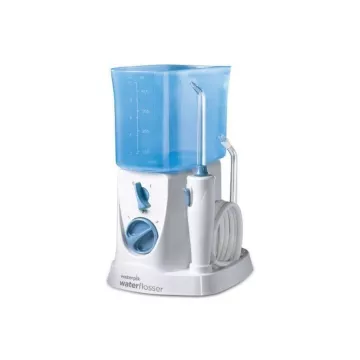
What is a water flosser, and what is its purpose in dental hygiene?
A water flosser (or oral irrigator) is a device that delivers a pulsating jet of pressurized water into the mouth to remove food debris and bacterial biofilm from areas that are inaccessible to a toothbrush. It does not replace tooth brushing —which remains essential for breaking down plaque—but complements it by reaching interdental spaces, gum pockets, peri-implant areas, and the areas around bridges and orthodontic appliances. Accessories for dental appliances andoral hygiene products are available in the store.
Its operating principle is based on the hydraulic effect of the pulsed water jet: the water pulses (typically 1,200 to 1,600 pulses per minute) create a compression-decompression action that dislodges biofilm and debris without aggressive mechanical contact. This makes it particularly well-suited for people with sensitive gums or gums weakened by gingivitis or periodontitis.
- Advantage over dental floss: Dental floss mechanically removes plaque from between the teeth—which is very effective but requires skill and can be cumbersome—while the water flosser reaches periodontal pockets up to 6 mm deep, irrigates the sulcus (the gum-tooth groove), and cleans areas inaccessible to floss (under bridges, around implants, between braces)
- Complementarity: brushing (breaks down plaque on accessible surfaces) + dental floss or interdental brushes (interdental contact) + water flosser (irrigation and hard-to-reach areas)—using all three together yields the best clinical results
- Documented benefits: 29% reduction in interdental plaque compared to flossing alone (ADA studies) — 52% reduction in gingival bleeding compared to brushing alone — significant improvement in probing bleeding scores in cases of treated periodontitis
For whom is the water flosser particularly recommended?
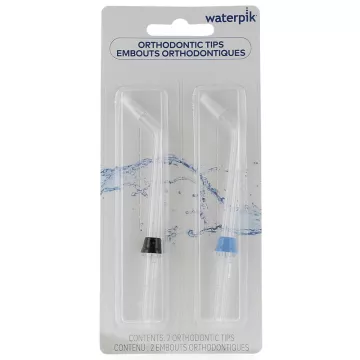
The water flosser is suitable for everyone as a supplement to their routine, but it is particularly recommended in certain situations. People with fixed orthodontic appliances (braces) benefit greatly: brackets and wires create numerous pockets where food and bacteria can become trapped that are inaccessible to regular brushing—orthodontists often recommend a water flosser with an orthodontic tip. People with dental bridges need to clean the prosthetic margin under the pontic—which is impossible with a toothbrush and difficult even with interdental floss—but the water flosser handles this with ease.
- Periodontitis and gingivitis: irrigation of gum pockets reduces bacterial load and bleeding—it can be used with water alone or with a diluted antiseptic solution (up to 0.06% chlorhexidine in the reservoir)—as a supplement to professional treatment, never as a substitute
- Dental implants and crowns: Peri-implant areas are particularly prone to bacterial buildup (peri-implantitis)—the special implant tip with a soft nozzle prevents any risk to the crown margins
- Elderly individuals and children under supervision: People with reduced dexterity will find the water flosser a comfortable alternative to dental floss—for children ages 6 and up under adult supervision and with minimal pressure
- Dry mouth (xerostomia): Rinsing with warm water improves comfort and stimulates residual saliva production
How to properly use and choose a water flosser?
It is best to use it in the evening after brushing, over the sink. Fill the reservoir with lukewarm water (cold water can cause tooth sensitivity). Start at the lowest pressure setting for the first few uses—gradually increase over 1 to 2 weeks. Position the nozzle at a 90° angle to the gums, starting with the molars and moving forward. Aim for the sulcus (the gum-tooth junction) and the spaces between the teeth—do not insert the tip deeply into the pockets (risk of bacteremia). Daily use provides the best results for preventing cavities and maintaining good gum health.
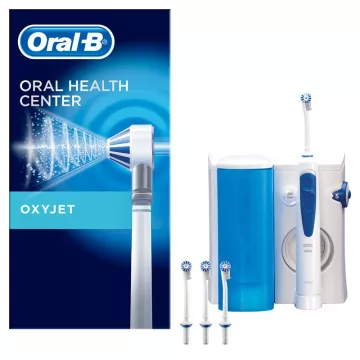
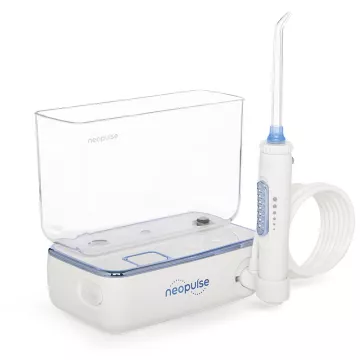
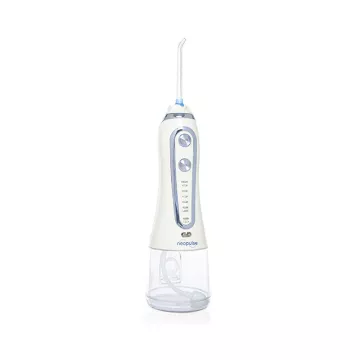
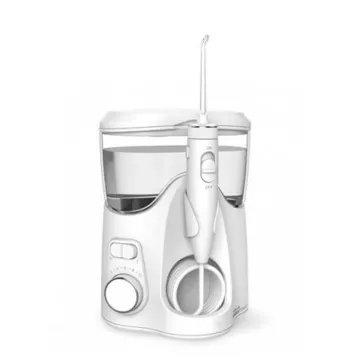
- Countertop vs. portable models: countertop (larger reservoir, 600–1,000 mL; more powerful and adjustable pressure; family use; plugs into an outlet) — portable (rechargeable battery; compact for travel; 150–200 mL reservoir; generally lower pressure)
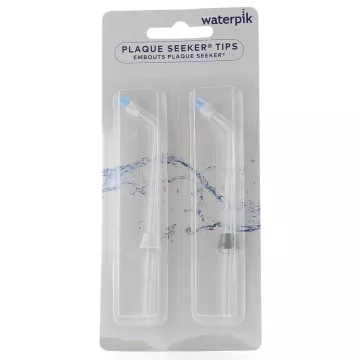
- Tips to know: standard (daily use for all types of teeth) — orthodontic (brush around braces) — periodontal (flexible tip for gentle irrigation of pockets) — implant (flexible plastic tip) — microjet (precision cleaning of bridges and crowns)
- Adding mouthwash: possible at a maximum 1:1 dilution with water — 0.06% chlorhexidine diluted for enhanced antiseptic effect — never use undiluted alcohol-based solutions (irritates mucous membranes) — rinse the reservoir thoroughly afterward
- Maintenance: Empty and dry the reservoir after each use (prevents the growth of Pseudomonas and Candida) — Disinfect the nozzles once a week (diluted vinegar for 30 minutes or a disinfectant solution) — replace the mouthpieces every 3 to 6 months — descale monthly if the water is hard (diluted white vinegar)