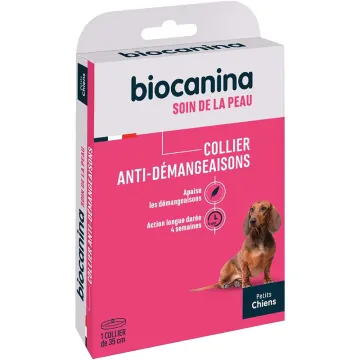
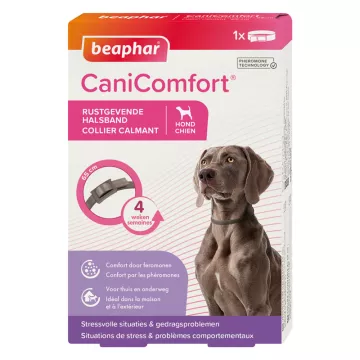
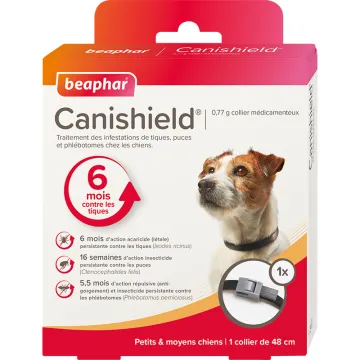
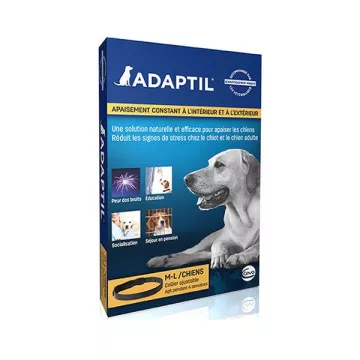
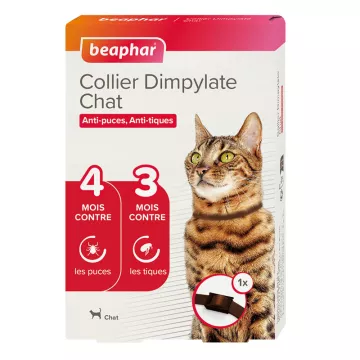
The flea and tick collar is one of the most widely used preventive tools for protecting dogs and cats against fleas and ticks. As a complement to spot-on treatments and tablets, it offers long-lasting protection without requiring direct contact with the animal’s skin at each application. Choosing the right collar is key to its effectiveness.
What is a pet flea and tick collar?
A flea and tick collar continuously releases active ingredients (insecticides or repellents) over the animal’s entire coat. It protects against fleas, ticks, and sometimes mosquitoes for a set period of time—usually 4 to 8 months, depending on the product. Unlike spot-on treatments, it requires only a single application for its entire duration of effectiveness.
How do you choose a flea or tick collar?
The choice depends on several key criteria.
- Spectrum of action: Some collars work only on fleas, while others work on both fleas and ticks—check the label
- Duration of protection: from 4 months (basic collars) to 8 months (premium long-lasting collars)
- Active ingredients: deltamethrin, imidacloprid/flumethrin, or natural active ingredients, depending on preference
- Water resistance: essential for pets that swim or are frequently bathed
Our selection oftick preventatives for dogs and cats includes the main brands available in pet stores.
Pest-control collars: dogs vs. cats—what are the differences?
Collars are not interchangeable between dogs and cats. Certain active ingredients are toxic to cats and can cause severe poisoning if used on them.
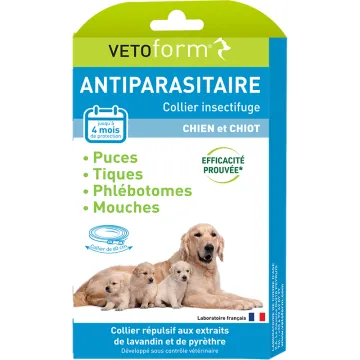
- Dogs: a wider range of active ingredients available, some of which are not suitable for cats
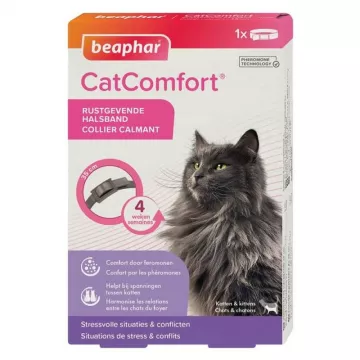
- Cats: Specific formulations are required—never use a dog collar on a cat
- Puppies/ kittens: collars with age-appropriate doses, to be used only starting at the indicated age
How do you use a flea and tick collar?
Effectiveness depends on proper application.
- Place the collar around the neck, leaving enough space for two fingers between the collar and the skin
- Cut off the excess length after adjusting
- Replace the collar on the expiration date of its protection, without waiting for it to wear out
- Remove the collar before any bath, then put it back on after the pet is completely dry
Why use an identification collar for your pet?
Identification is a legal requirement for dogs and an important safety measure for cats.
- Combine the flea and tick collar with an engraved ID tag
- For indoor cats: a quick-release collar prevents the risk of strangulation if the cat gets caught on an obstacle
- Additionally: Tattooing or microchipping is mandatory for dogs—check with your veterinarian
What precautions should be taken with flea and tick collars?
Strict safety precautions must be followed to ensure the safety of both the animal and humans.
- Wash your hands after handling the collar
- Do not let children play with the collar or pet the animal immediately after putting it on
- If the animal develops skin irritation, remove the collar and consult a veterinarian
- Store the collar in its original packaging when not in use
- Check out our selection of over-the-counterparasite treatments