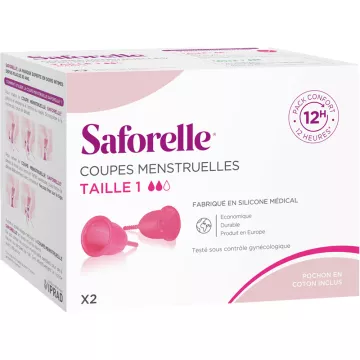
A menstrual cup is a reusable sanitary product that collects menstrual fluid rather than absorbing it. Made of medical-grade silicone, natural latex, or TPE, it takes the form of a small, flexible cup with a stem for easy removal. It is inserted into the vagina, where it unfolds and forms a tight seal against the vaginal walls, preventing any leaks. Because it has a larger capacity than tampons, it can be worn for up to 12 hours, including overnight. When properly cared for, a menstrual cup can be used for up to 10 years, making it both the most economical and the most environmentally friendly option among all menstrual products.
The size determines the comfort and effectiveness of the cup. Several factors influence the choice:
Consult the manufacturers’ size charts, and if in doubt, consulting a healthcare professional is the best approach for your first purchase.
Proper hygiene is essential to preserve the vaginal flora and prevent infection:
Thorough care minimizes the risk of toxic shock syndrome, which is already very low with the menstrual cup compared to tampons.
The menstrual cup is suitable for the vast majority of users and activities:
If you have an IUD (intrauterine device), a prior gynecological consultation is recommended to ensure that the cup will not pull on the strings and dislodge the device. Particular care must then be taken during insertion and removal.
The safety profile of the cup is generally very favorable. The rare complications reported include:
After an infection, supporting the vaginal flora with Lactobacillus-based probiotics can help restore balance more quickly.
Yes: most new users need one to two menstrual cycles to master insertion and removal. Folding techniques (C-fold, punch-down fold) help compact the cup for insertion. Once properly positioned, the cup should not be felt. If discomfort persists, check the folding, size, and position. Women with sensitive skin or mucous membranes may find a higher-quality medical-grade silicone more comfortable. After each successful emptying, the process quickly becomes second nature.