What is melasma, and how does it manifest?
Melasma is a symmetrical, acquired hyperpigmentation that manifests as brown or grayish-brown patches on sun-exposed areas of the face. Common sites include the forehead, cheeks, upper lip (“mustache”), chin, and occasionally the nose and temples. The borders are relatively well-defined but irregular. Less commonly, extrafacial involvement has been reported (forearms, décolletage).
Three forms are described based on the depth of the excess melanin:
- Epidermal (most common): pigment in the superficial layers; well-defined dark brown spots. More favorable treatment prognosis.
- Dermal: pigment located deeper in the skin, grayish-brown spots. More resistant to treatment.
- Mixed: a combination of the two; the most common in clinical practice.
Melasma affects overwhelmingly women (9 out of 10 cases), particularly those between the ages of 20 and 50, and is more common in intermediate to dark skin types (III to V).
What causes melasma?
The origin of melasma is multifactorial, involving excessive stimulation of melanocytes (melanin-producing cells):
- Exposure to UV radiation and visible light (particularly blue light): the primary factor, both triggering and perpetuating the lesions.
- Hormonal factors: pregnancy (chloasma, “pregnancy mask”), estrogen-progestin contraception, menopausal hormone therapy, thyroid disorders.
- Genetic predisposition: common family history; more frequent in certain skin types.
- Phototypes IV through V are particularly affected.
- Photosensitizing or pigmentation-inducingmedications (certain anticonvulsants, antibiotics).
- Irritating or perfumedcosmetics (post-inflammatory reaction).
- Chronic oxidative stress and heat exposure (cooking, steam rooms), which also stimulate melanogenesis.
A purely hormonal cause is not sufficient on its own: it is the combination of a predisposed constitution and light exposure that triggers and maintains melasma. Sun protection is therefore the cornerstone of any treatment plan.
How is melasma diagnosed?
The diagnosis is primarily clinical and is made by a general practitioner or a dermatologist:
- Visual examination: symmetrical brown patches with a characteristic distribution on sun-exposed areas of the face.
- Medical history: pregnancy, hormonal contraception, family history, sun exposure, cosmetics used, and current treatments.
- Wood’s lamp (filtered UVA): used to assess the depth of the pigment. Epidermal melasma = increased contrast; dermal melasma = no increase in contrast.
- Assessment using the MASI (Melasma Area and Severity Index) score for follow-up.
- Differential diagnosis: solar spots (lentigines), post-inflammatory hyperpigmentation, exogenous ochronosis, Riehl’s melanosis, fixed pigmented erythema, Hori’s nevus, acquired dermal melanocytosis.
- Laboratory workup as indicated by the clinical context (TSH if thyroid dysfunction is suspected).
What treatments are available to reduce melasma?
Treatment is multimodal and long-term, under dermatological supervision:
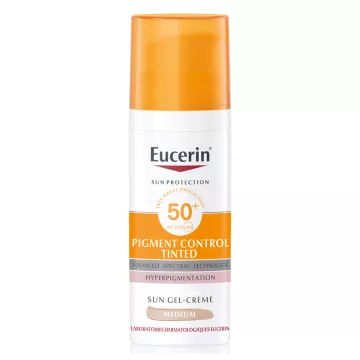
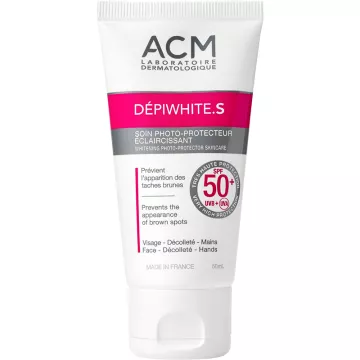
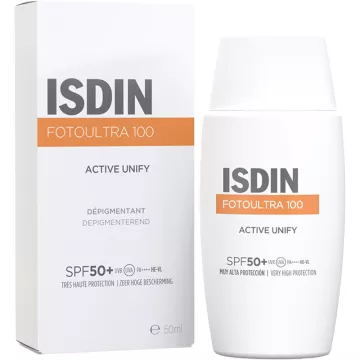
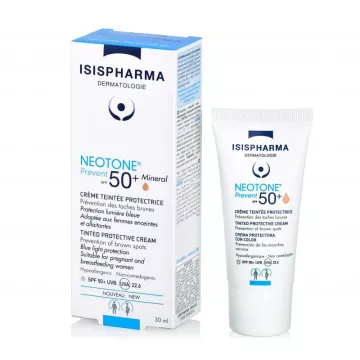
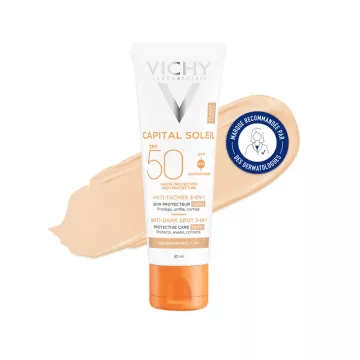
- Strict sun protection: an absolute must, using SPF 50+ broad-spectrum sunscreen that covers UVA, UVB, and ideally visible light (tinted mineral filters containing iron oxides are recommended). See sun protection.
- Prescription topical treatments:
- Kligman’s depigmenting trio (hydroquinone + tretinoin + topical corticosteroid): a long-standing standard of care, prepared as a compounded formulation, requiring strict dermatological monitoring and limited duration of use to avoid exogenous ochronosis and other adverse effects. **Contraindicated during pregnancy and breastfeeding** (tretinoin is teratogenic; hydroquinone is not recommended).
- 2–4% hydroquinone as monotherapy: available only under supervised dermatological prescription. **Prohibited in cosmetics sold in the European Union** (Annex II of Regulation (EC) No. 1223/2009). Its strictly medical use remains permissible.
- Tretinoin 0.025–0.1% by prescription: photosensitizing, **contraindicated during pregnancy and breastfeeding**.
- Azelaic acid 15–20% by prescription: an alternative compatible with pregnancy and breastfeeding, well tolerated.
- Topical cysteamine: an emerging option available by prescription; safety profile to be validated.
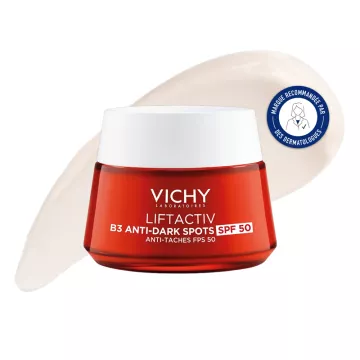
- Cosmetic depigmenting active ingredients (for daily use): niacinamide, vitamin C, kojic acid, arbutin, phytic acid, resorcinol, targeted plant extracts (licorice, white mulberry, peony), thiamidol.
- Oral tranexamic acid: an option available by specialized prescription for certain resistant forms. Prior assessment of thromboembolic risk factors (personal/family history, estrogen-progestin contraception, smoking, prolonged immobilization), medical follow-up.
- Superficialchemical peels performed in a clinic (glycolic acid, mandelic acid, salicylic acid, low-concentration TCA): performed by a dermatologist as part of a supervised treatment regimen.
- Lasers and intense pulsed light (IPL): to be used with caution on melasma—risk of exacerbation due to inflammatory effects. Picosecond and Q-switched lasers at very low fluence are emerging in experimental protocols. Consensus: sun protection and topical treatments as first-line therapy; laser treatment only if these fail and performed by experts.
- Microneedling alone or with the delivery of active ingredients (tranexamic acid, vitamin C) in a medical office.
Self-medication with unregulated skin-lightening products (particularly unregulated hydroquinone, misused corticosteroids, and imported cosmetics containing banned derivatives) can lead to serious complications: exogenous ochronosis (paradoxically, permanent darkening and intensification of pigmentation), skin atrophy, telangiectasias, and contact dermatitis. **To be avoided at all costs**.
How can you prevent melasma from developing?
Several measures can reduce the risk of triggering or worsening melasma in people who are predisposed to it:
- Consistent daily sun protection, starting in the morning and reapplied every 2 hours during sun exposure (SPF 50+ broad-spectrum).
- Wear a wide-brimmed hat, sunglasses, and seek shade.
- Avoid intense sun exposure, especially between 11 a.m. and 4 p.m. in the summer.
- Sun protection should also include protection against visible blue light (tinted mineral filters, iron oxides)—especially for people with skin types IV–V and in cases of prolonged screen exposure.
- Consult with a doctor to adjust birth control if there is a history of melasma while taking estrogen-progestin combinations (alternatives include low-dose progestin-only pills or a copper IUD).
- Use gentle cosmetics that are fragrance-free and do not contain denatured alcohol to avoid irritation.
- During pregnancy, take extra care with sun protection (the risk of melasma is highest).
- Regular dermatological follow-up if there is a personal history of melasma.
What role does sun protection play in melasma?
Sun protection is the non-negotiable cornerstone of any melasma management strategy—both preventive and therapeutic:
- UVB rays directly stimulate melanin production.
- UVA rays penetrate more deeply and activate melanocytes even through glass.
- Visible light, particularly blue light, also stimulates pigmentation in darker skin types (a role recognized more recently).
- Infrared radiation and heat may also contribute to the persistence of lesions.
Practical recommendations:
- SPF 50+ sunscreen with high UVA protection (UVA logo in a circle, UVA/SPF ratio ≥1/3).
- Prefer tinted formulations containing iron oxides: effective filtration of visible light, particularly useful for intermediate to dark skin types.
- Apply generously (2 mg/cm², or the equivalent of two finger joints for the face) before sun exposure.
- Reapply every 2 hours during prolonged exposure or after swimming.
- Use additional sun-protective clothing (hat, UV-protective clothing).
- Do not skip protection on cloudy days (UVA rays penetrate clouds).
Pregnancy melasma: what to do after giving birth?
Chloasma (pregnancy melasma) affects up to 50% of pregnant women, mainly during the second and third trimesters, due to the combined effects of hormones (estrogens, progesterone, MSH) and sun exposure.
Postpartum progression:
- Spontaneous resolution is common within 6 to 12 months after childbirth, especially if strict sun protection was followed during pregnancy.
- Persists in 30 to 40% of cases, sometimes worsening thereafter.
- Recurrence is possible in subsequent pregnancies or with hormonal contraception.
Treatment options after delivery, depending on breastfeeding status:
- During breastfeeding: strict sun protection, compatible cosmetic active ingredients (niacinamide, vitamin C, azelaic acid—if prescribed and compatible). Avoid topical retinoids and hydroquinone.
- After breastfeeding: consult a dermatologist for more active treatments if pigmentation persists.
- Patience: Improvement is often slow; allow several months.
Melasma and hormonal contraception: what’s the connection?
Estrogen-progestin contraceptives (the pill, vaginal ring, or patch) are recognized as a trigger or aggravating factor for melasma. Discontinuing or switching these methods can be discussed with your doctor when:
- Melasma appeared after starting these methods.
- Melasma worsens despite rigorous sun protection and properly administered treatments.
- Other risk factors are present (smoking, history of thromboembolism).
Alternatives to discuss with a doctor: microprogestins (birth control pill, implant, hormonal IUD), copper IUD, barrier methods. The decision should take into account contraceptive preferences, medical history, and the impact of melasma. See contraception for an overview.
Which cosmetic ingredients are effective against melasma?
Several cosmetic active ingredients can be incorporated into a daily routine (though they do not replace sun protection or prescribed treatments for extensive forms):
- Niacinamide (vitamin B3, 5–10%): inhibits the transfer of melanin from melanocytes to keratinocytes; well-tolerated; useful in a daily skincare routine.
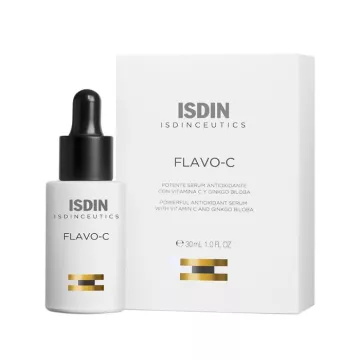
- Vitamin C (ascorbic acid 10–20% or stable derivatives): antioxidant, tyrosinase inhibitor, skin-lightening agent. Use in the morning with sun protection.
- Kojic acid (1–2%): tyrosinase inhibitor; should be introduced gradually (may cause sensitization).
- Arbutin and alpha-arbutin: natural derivatives related to hydroquinone, with a better-tolerated cosmetic profile.
- Topical tranexamic acid (2–5%): an emerging option; promising data for melasma.
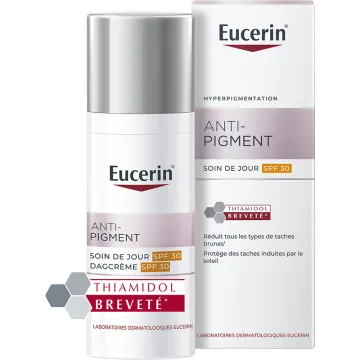
- Thiamidol: a human tyrosinase inhibitor; recent clinical data are encouraging.
- Phytic acid, ferulic acid, resorcinol, plant extracts (licorice, white mulberry, peony).
- 10%azelaic acid in cosmetics (higher concentrations available by prescription): well tolerated, effective for skin prone to blemishes.
- Mild exfoliating acids (low-concentration glycolic acid, mandelic acid, lactic acid): promote cell turnover; use with sun protection.
- Hyaluronic acid and emollients: help maintain a healthy skin barrier. See hyaluronic acid.
Recommendations for use: Introduce one active ingredient at a time; test on the inner elbow; monitor tolerance; do not use multiple irritating active ingredients simultaneously.
What are some recent innovations for treating melasma?
Several recent developments have expanded the therapeutic arsenal:
- Oral tranexamic acid: used in specialized settings for resistant forms, with assessment of thromboembolic risk factors.
- Topical cysteamine: an alternative to hydroquinone; its safety and efficacy profile is currently undergoing clinical evaluation.
- Thiamidol: a selective inhibitor of human tyrosinase, incorporated into several recent cosmetic products.
- Low-fluencepicosecond lasers: new modalities being cautiously explored for melasma.
- Microneedling with delivery of active ingredients (tranexamic acid, vitamin C, growth factors) in a medical office.
- Tinted sunscreens containing iron oxides: increasingly used to block visible light, which is particularly important for intermediate to dark skin types.
- Pharmacogenomic research to identify responder profiles.
- Oral antioxidant supplements (Polypodium leucotomos, pycnogenol): reported benefits; should be incorporated into a comprehensive treatment strategy rather than used as monotherapy.
Can melasma disappear completely?
Melasma is a chronic, recurrent condition: complete, lasting remission is possible, but the risk of recurrence remains high as long as triggering factors persist (sun exposure, hormones).
- Epidermal and recent forms: favorable prognosis with treatment and strict sun protection.
- Dermal and long-standing forms: more resistant; partial improvement is often realistic.
- Pregnancy-related melasma: frequent spontaneous resolution (50–70%) within the year following childbirth with proper sun protection.
- Recurrences: very common in cases of unprotected sun exposure or the return of hormonal triggers.
Long-term management includes lifelong sun protection, an appropriate skincare routine, and dermatological follow-up. See also “brown spots” for an overview of hyperpigmentation.
What impact does melasma have on quality of life?
Although strictly cosmetic, melasma can have a significant psychological impact:
- Visible lesions on the face, an area of great social significance.
- A chronic and recurrent condition, which can be a source of frustration.
- Clothing adjustments (hats, sunglasses) and sun avoidance that impact leisure activities and family life.
- Use of concealing makeup, which is sometimes experienced as a burden.
- Self-esteem, body image, anxiety, and sometimes depression—validated studies (MELASQOL score).
- Financial cost of long-term treatments and cosmetic care.
Compassionate support, realistic treatment goals (improvement rather than complete clearance), advice on corrective makeup, and psychological support in cases of significant emotional impact are all part of a comprehensive care plan. For reactive skin, see also sensitive skin, as melasma treatment regimens require caution and a gradual approach.