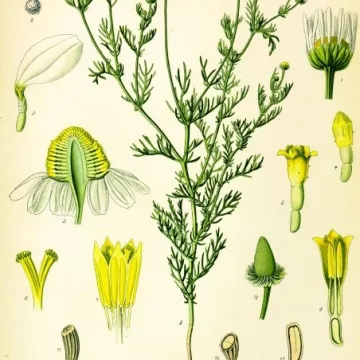
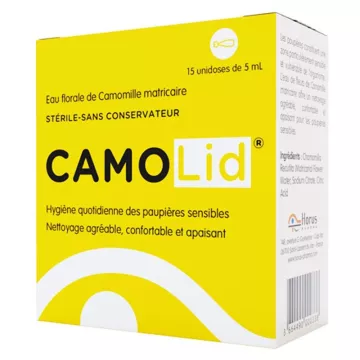
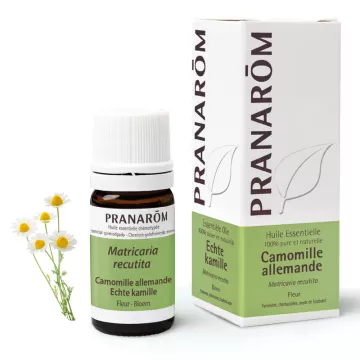
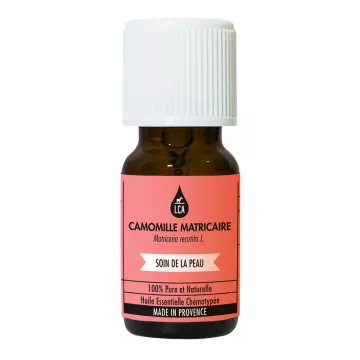
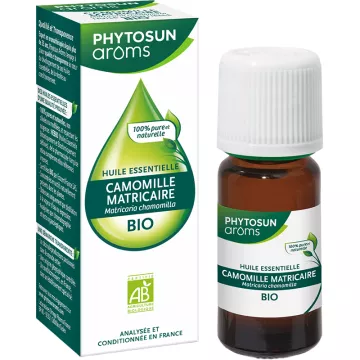
German chamomile (Matricaria chamomilla) is the variety of chamomile with the most potent skin-benefiting properties—the one whose essential oil is blue. Deep blue chamazulene: the active ingredient that makes all the difference for reactive skin, persistent redness, and irritated scalps. As a herbal tea, it also soothes upset stomachs and restores peaceful sleep. Discover our relaxation and sleep line and our sensitive skin care products.
Blue chamomile essential oil: Who is it for, and what is it used for?
If you’ve ever seen just one essential oil change color when opened, it was probably this one.
- The blue color comes from chamazulene —a compound that doesn’t exist in the flower but forms during distillation—a sign of an authentic, high-quality essential oil
- A colorless or pale yellow chamomile essential oil indicates an insufficient concentration of chamazulene or a low-quality product
- Chamazulene is the most powerful soothing active ingredient among floral essential oils—particularly suited for highly reactive skin, redness, and sensitive skin
- α-Bisabolol (the second key active ingredient) promotes cell renewal and improves the skin’s tolerance to skincare products
- Effective concentration in cosmetics: 0.5 to 1% is sufficient—more isn’t better, and the blue color can tint light-colored formulas
Chamomile for the skin: how can you use it in practice?
A few practical uses that really make a difference.
- Skin that flushes easily: 1 drop of chamomile essential oil + 1 tsp of jojoba oil—apply to reactive areas in the evening and leave on
- Skin flushing or irritation: well-chilled chamomile hydrosol—apply a soaked cotton pad for 10 minutes—immediate soothing effect on troubled skin
- Irritated or dandruff-prone scalp: 5 drops of essential oil in 50 mL of mild shampoo—gently massage in and let sit for 2–3 minutes before rinsing
- Puffy or tired eye area: a compress soaked in chilled chamomile hydrosol — 5 minutes in the morning — a classic in natural skincare
- See our line of products for sensitive skin and eczema
Another key area where it excels—particularly useful when stomachaches have a nervous component.
- Herbal tea after meals: 1 tbsp dried flowers, water at 90°C, steep covered for 10 min — ideal for slow digestion and post-meal bloating
- "Stress-induced stomach knots": chamomile acts simultaneously on the digestive tract and the nervous system—more effective than mint alone in this case
- Standardized extract capsules: for recurrent functional digestive disorders—more targeted action than the herbal tea
- A winning combination: chamomile + linden — an evening herbal tea to end the day with a calm stomach and mind
Chamomile and sleep?
Not the most sedative of herbs, but very effective for cases of “digestive agitation + nervous tension.”
- Evening herbal tea: 1 cup of chamomile 30 minutes before bedtime—calms the mind and relaxes the digestive tract at the same time
- Essential oil diffusion: 4 drops of chamomile + 6 drops of true lavender —diffuse for 20 minutes in the bedroom before bed
- The apigenin in chamomile binds to GABA-A receptors—providing a gradual calming effect without drowsiness the next day
- For a more potent effect on sleep: see our page on chamomile and combinations with valerian
What should you know before using chamomile?
- Allergy to Asteraceae (daisy, mugwort, dandelion): perform a skin test before extended use—cross-reactivity has been documented
- Anticoagulants: Inform your doctor—chamomile may potentiate their effects
- Pregnant women: a mild herbal tea is generally tolerated after the first trimester; use essential oil only under medical supervision
- Chamomile essential oil: dilute to 0.5–1%—it’s highly concentrated, so only a small amount is needed