What is a ligament, and how does it differ from a tendon?
A ligament is a band of dense fibrous connective tissue that connects two bones at a joint—as opposed to a tendon, which connects a muscle to a bone. This fundamental anatomical distinction determines the associated conditions, injury mechanisms, and treatments. Our joint collagen line offers active ingredients tailored to support both of these structures.
- Composition: 70–80% type I collagen (fibers oriented along the stress axes) — proteoglycans (compressive strength) — water — fibroblasts differentiated into fibrochondrocytes
- Ligament vs. tendon: same basic composition—but ligaments tolerate multidirectional stresses (torsion, valgus, varus), whereas tendons respond to tensile forces along a single axis
- Proprioception: ligaments contain mechanoreceptors (Ruffini corpuscles, Pacini corpuscles, tendinous Golgi organs) — transmit information about joint position and movement to the brain — a ligament tear impairs proprioception even after healing → proprioceptive rehabilitation is essential
- Poor vascularization: slow healing (6–12 weeks for Grade 2 tears, several months for Grade 3 tears)—reliance on nutrients supplied by synovial fluid
- Difference from cartilage: Cartilage is avascular and uninnervated—ligaments are poorly vascularized but innervated (proprioception + pain)
Which ligaments are most commonly injured, and why?
The frequency of ligament injuries is directly related to joint biomechanics and the most common activities — for treatment protocols, see our pages on sprains and ligament pain.
- Ankle (LTFA + LCF): 85% of sprains — equinus varus mechanism — the first ligament injured in the vast majority of ankle sprains
- Knee ACL: Frequent tears occur in sports involving pivoting and changes of direction (soccer, skiing, basketball)—major instability without surgery in active athletes
- Knee MCL: valgus mechanism (lateral impact) — conservative treatment whenever possible
- Scapho-lunar ligaments (wrist): fall onto outstretched hand (FOOSH) — carpal instability if completely torn — often overlooked
- Ulnar collateral ligament of the thumb (skier’s thumb): forced hyperabduction of the thumb—ski pole—surgical treatment if completely torn
How does nutrition support ligament health and repair?
Ligaments, which have poor blood supply, rely on targeted nutrition to maintain the quality of their collagen matrix and accelerate healing after injury. Find the right formulas in our joint collagen and sports wellness lines.
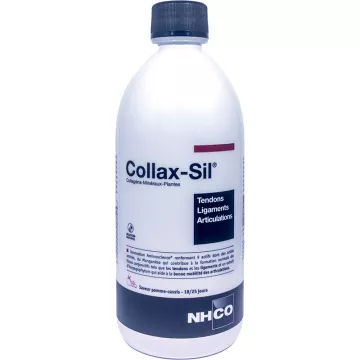
- Hydrolyzed marine collagen + vitamin C: take 30–60 minutes before rehabilitation—doubled synthesis of type I ligament collagen, as documented—minimum 12-week course
- Zinc: a cofactor for metalloproteases involved in ligament remodeling — 10–15 mg/day
- Magnesium: reduces compensatory muscle spasms that overload weakened ligaments — 300–400 mg/day
- Omega-3s: reduce scar fibrosis — promote a more flexible and resilient repaired ligament
- Total protein: at least 1.5 g/kg/day — ligament fibroblasts require sufficient amino acids to synthesize new collagen
Ligament Aging and Innovative Treatments
- Ligament aging: progressive loss of elasticity — reduced water and proteoglycan content — increased stiffness and risk of rupture even with minor trauma — a process that begins as early as age 30–35 but is accelerated by a sedentary lifestyle, smoking, and dehydration
- Preventive physical activity: moderate mechanical stress maintains active ligament remodeling—stretching + strengthening of stabilizing muscles—regular proprioceptive training (Freeman’s board, single-leg balance)
- Prolotherapy: injections of irritant solutions (concentrated dextrose) into ligament insertions—stimulates the synthesis of new collagen—indicated for chronic ligament laxity—results vary across studies
- PRP (platelet-rich plasma): injection of autologous growth factors — accelerates ligament collagen repair — an option for chronic grade 2–3 injuries or in preparation for surgery
- Reconstructive surgery (ligamentoplasty): ACL, Broström ankle — tendon or synthetic grafts — rehabilitation 6–12 months — see our page on ligament injuries