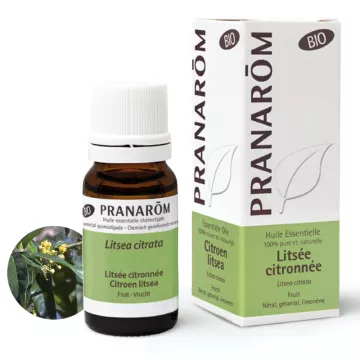
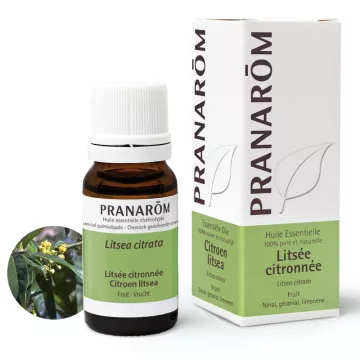
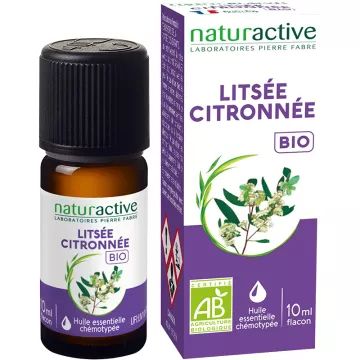
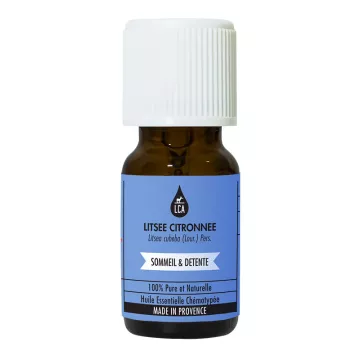
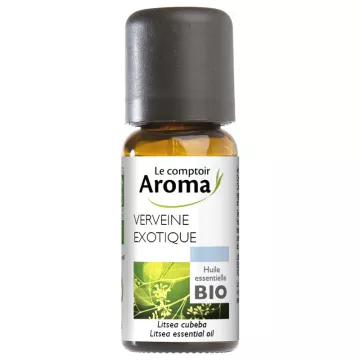
Litsea cubeba essential oil (distilled berries) is an intriguing member of the aromatherapeutic citrus family: it is actually a member of the Lauraceae family, not a citrus. Its scent, however, is reminiscent of lemon and lemongrass, which explains its inclusion in this olfactory family. Its composition is dominated by citral (geranial + neral, 70–85%), supplemented by limonene (9–15%) and traces of linalool and geraniol. This high citral content gives it calming, antibacterial, and antifungal properties that are more pronounced than those of traditional citrus essential oils. Another common name: “exotic verbena”—not to be confused with lemon verbena (Lippia citriodora), a different plant with more subtle notes but a significantly higher cost.
Lemon litsea is one of the go-to essential oils for managing stress, nervous agitation, and mild bouts of the blues. Citral exerts a gentle sedative effect on the central nervous system without causing significant drowsiness, while linalool enhances the overall calming effect. It is traditionally used to help with postpartum baby blues and temporary bouts of nervousness. When applied, a few drops diluted on the solar plexus or the inner wrists, 1 to 2 times a day, promote a sense of calm. Shell marjoram, rich in terpinene-4-ol, is the essential oil most commonly paired with lemon litsea in evening anti-stress blends.
Citral and limonene give this essential oil a recognized anti-inflammatory effect in two areas: the digestive system and the joints. For digestive issues, it is traditionally used to relieve bloating, slow digestion, and mild nausea when applied in synergy with a carrier oil to the abdomen. For joint issues, it helps alleviate muscle tension and rheumatic pain when used in localized massage. Wintergreen, rich in methyl salicylate, is the go-to anti-rheumatic essential oil to combine with lemon litsea for painful joints. In herbal medicine,harpagophytum effectively complements this action when taken orally to support long-term joint comfort.
Its fresh, zesty scent—less overpowering than Java citronella or lemongrass—makes it a very pleasant essential oil for diffusing into the air. Some recommended blends:
In cosmetics, lemon litsea is valued for its purifying and slightly astringent effect on oily, blemish-prone skin. When diluted to 0.3–0.6% in a facial treatment, it helps regulate shine and purify acne-prone areas, working in synergy with its natural antibacterial properties. It is also used in shampoos for oily scalps. Greenclay is the most common cosmetic ingredient used to enhance the mattifying and purifying effect on oily skin. Zinc, when taken orally, also helps regulate sebum production and improve skin comfort in skin prone to long-term breakouts.