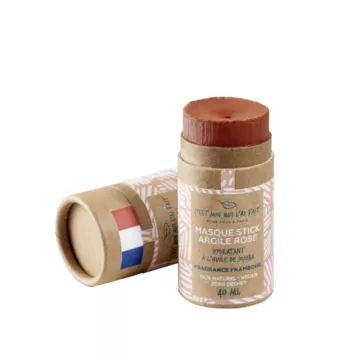
What is clay, and what are its main properties?
Clay is a natural sedimentary rock formed by the slow decomposition of silicate minerals. It is composed primarily of aluminum silicates, along with trace elements that vary depending on the type (iron, magnesium, calcium, silica). Used since ancient times, clay remains a staple cosmetic ingredient today, valued for its external uses in facial, body, and hair care.
Its main cosmetic properties are:
- Absorbent and adsorbent: its microscopic layered structure captures impurities and excess sebum from the skin’s surface.
- Purifying: it supports skin prone to breakouts by improving skin texture.
- Soothing: it provides a comforting sensation on irritated or reactive skin.
- Supports dailysurface skinregeneration.
- Re-mineralizing sensory effect: it delivers minerals and trace elements upon application.
Internal uses of clay are strictly limited to medical or pharmaceutical contexts and should never be used for self-medication (see the dedicated section below).
What are the different types of clay, and how do you choose them?
There are several varieties of clay, each with a specific mineral profile and cosmetic use:
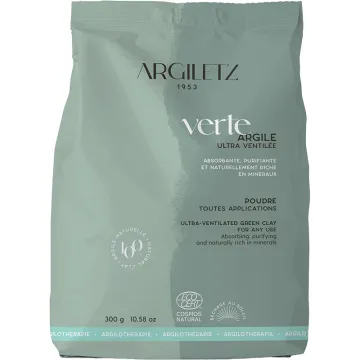
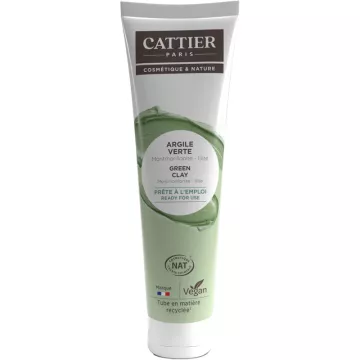
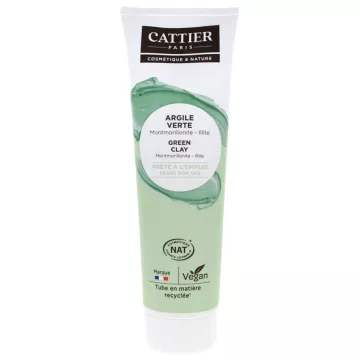
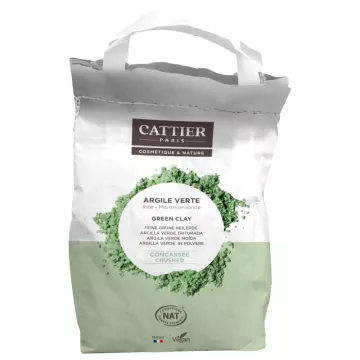
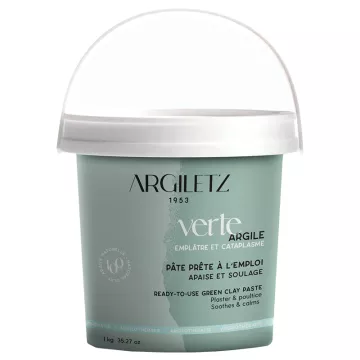
- Green clay: rich in silica and iron, it is the most absorbent type of clay. It is recommended for combination to oily skin, blemish-prone skin, and use in body poultices.
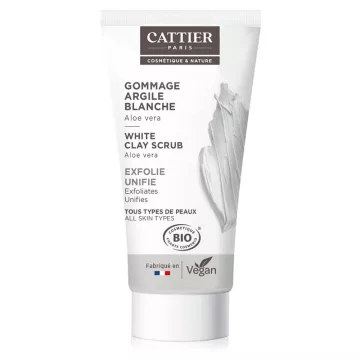
- White clay (kaolin): gentle and mildly absorbent, it is suitable for sensitive or reactive skin, thin skin, and hair care for delicate scalps.
- Red clay: rich in iron oxide, it is traditionally used for dull or tired skin to create a healthy, radiant glow.
- Yellow clay: a medium-absorbent clay, traditionally used for combination and tired skin types seeking both absorption and gentleness.
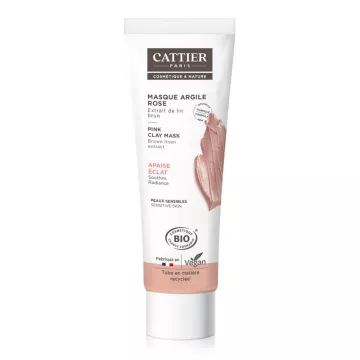
- Pink clay: a blend of white and red clay, particularly well-suited for delicate skin with visible redness.
- Blue clay (ghassoul / blue illite): a traditional Moroccan clay used in facial and body care for its fine texture and gentle finish.
The choice depends on your skin type, your desired results, and your skin’s sensitivity. If you’re unsure, your pharmacist can help you choose the clay best suited to your needs.
How do you use clay in facial and body care?
Clay is primarily used in three cosmetic forms:
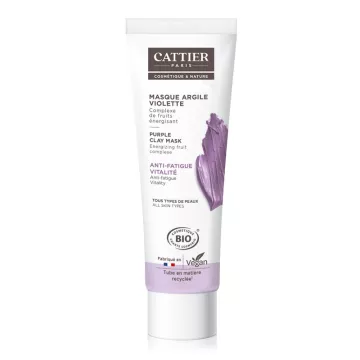
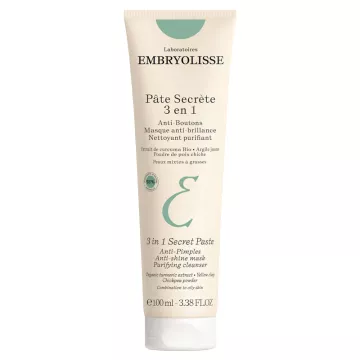
- Face mask: Mix 2 tablespoons of powdered clay with a little mineral water or a gentle hydrosol (rose water, cornflower water) using a non-metallic utensil. Apply a medium-thick layer, avoiding the eye and lip areas; leave on for up to 10 minutes without letting it dry completely, then rinse with lukewarm water and moisturize.
- Gentle mineral scrub: Add a pinch of finely ground clay to a gentle cleanser for a very gentle exfoliation; use once a week.
- Body poultice: On affected muscles or joints, apply a thick paste of clay to intact skin, cover with a clean cloth, leave on for 20 to 60 minutes, then rinse with lukewarm water. Recommended for stiffness or soreness after exercise, in conjunction with adequate rest.
For all preparations: use only non-metallic utensils (wood, glass, ceramic, plastic), and never apply to open wounds, burns, or infected skin.
What are the benefits of clay for hair?
Clay is beneficial for oily, weighed-down scalps or those prone to oily dandruff:
- It absorbs excess sebum at the roots and prolongs the feeling of cleanliness.
- It traps pollution and styling product residue on the surface.
- Provides relief for scalps prone to mild itching.
- Restores volume and lightness to hair weighed down by excess sebum.
Directions: Mix clay (green for oily hair, white for sensitive scalps) with lukewarm water until a smooth paste forms. Apply to a damp scalp, leave on for 5 to 15 minutes, rinse thoroughly, then follow with a mild shampoo. Repeat once a week for a treatment course lasting 4 to 6 weeks maximum. In cases of persistent dandruff, severe inflammation, or abnormal hair loss, it is recommended to consult a dermatologist.
Can clay be taken internally?
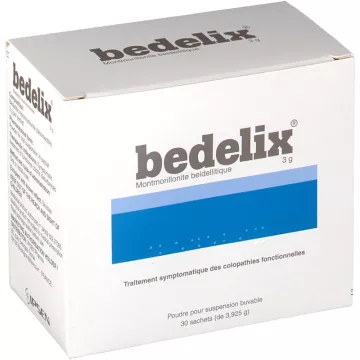
Oral use of clay is a risky practice and should never be considered self-medication. All clays, including ultra-ventilated varieties, may contain traces of heavy metals (lead, arsenic, cadmium), and repeated ingestion of these can pose a health risk.
The ANSM (French National Agency for Medicines and Health Products Safety) has issued restrictions on certain clay products intended for digestive use, particularly those containing diosmectite, due to the risk of lead contamination: use is not recommended for pregnant or breastfeeding women or children under 2 years of age.
If occasional internal use is considered (for example, in cases of temporary digestive discomfort), it is essential that:
- Be based on a pharmaceutical or food product of controlled quality, with contaminant analysis results available.
- Be approved by a healthcare professional (doctor or pharmacist).
- Be taken at least 2 to 3 hours apart from any medication or supplement, as clay reduces their absorption.
- Be contraindicated in cases of chronic constipation, intestinal obstruction, severe digestive disorders, pregnancy, breastfeeding, and in children.
Claims of “overall detoxification” or the elimination of heavy metals through oral administration are not supported by a solid scientific consensus. No internal treatment should be undertaken without medical advice.
What are the side effects and precautions for use?
Clay is generally well tolerated for external use when used properly. Several precautions should be followed:
- Never use metal utensils for preparation: opt for wood, glass, ceramic, or plastic instead.
- Do not allow a maskto dry completely on the skin, as this may cause drying.
- Avoid inhaling the dry powder, as it can irritate the respiratory tract.
- Avoid regular use on dry, sensitive, or rosacea-prone skin.
- Do not apply to open wounds, burns, or infected skin.
- Perform a patch test (on the inner elbow, 48 hours) before first use, especially if you have sensitive skin.
- Internal use is not recommended without medical advice, particularly in cases of chronic treatment, constipation, pregnancy, breastfeeding, or in children.
- If you experience a systemic reaction (facial swelling, difficulty breathing), call 15 or 112 immediately.
Where can you buy clay, and how should you store it?
Clay is available at pharmacies, drugstores, organic stores, and specialty shops. To ensure you’re getting a reliable product, check for several quality criteria:
- Stated purity: 100% pure clay, free of additives, fragrances, preservatives, and dyes.
- Traceable origin with information on the extraction site and available contaminant analyses (particularly for heavy metals).
- Particle size suitable for the intended use: ultra-fine for face masks, coarsely ground for poultices.
- Cosmetic or food-grade certification indicated according to the intended use.
Storage: Keep the clay powder in an airtight container, protected from moisture, heat, and direct light. For ready-to-use clay (in paste or tube form), follow the expiration date and PAO (period after opening) indicated on the packaging. If you have any doubts about a product’s quality, ask your pharmacist for advice.