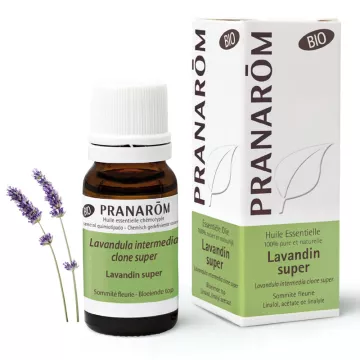
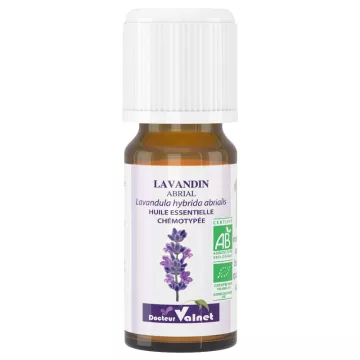
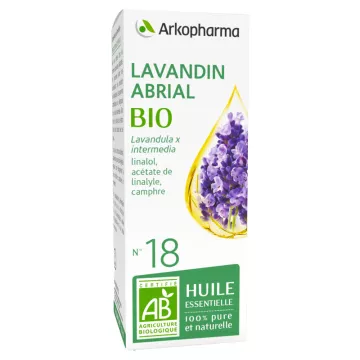
Lavandin (Lavandula x intermedia, a hybrid of L. angustifolia × L. latifolia) is the most widely cultivated lavender in Provence—and by far the most produced in the world. Its fragrance is more potent than that of true lavender, it’s more affordable, and its chemical profile (linalool 30–40% + camphor 6–12% + 1,8-cineole 5–10%) makes it a more effective muscle relaxant and insect repellent than true lavender. A good compromise for everyday uses that don’t require the gentleness of true lavender. Explore our aromatherapy line.
Lavandin vs. true lavender: which one should you choose?
Both are available in our product lines—but they serve different purposes.
- Lavandin (L. x intermedia): linalool + camphor + cineole—stronger, fresher scent—muscle, respiratory, insect repellent, household— less suitable for deep sleep in sensitive adults, contraindicated for children under 6 years old
- True lavender (L. angustifolia): linalool + predominantly linalyl acetate, with no significant camphor—sleep, stress, sensitive skin, children as young as 3 months
- On the label: check for “Lavandula x intermedia” (lavandin) vs. “Lavandula angustifolia” or “officinalis” (true lavender)—both are often sold simply as “lavender”
- Approximate price: Lavandin costs 3 to 5 times less than true high-altitude fine lavender—which is normal for a high-yield hybrid plant
Lavandin and Muscle Comfort?
This is where lavandin outperforms true lavender—camphor makes all the difference.
- Recovery massage: 4–5% in arnica or St. John’s wort oil—the camphor quickly penetrates muscle tissue, providing a warming sensation followed by gradual relaxation
- Post-workout soreness, chronic muscle tension: 2–3 applications per day on painful areas
- Sports Synergy: lavandin + wintergreen + lemon eucalyptus—the complete muscle trio
- Muscle bath: 10 drops in a solubilizing base, warm bath for 15–20 minutes — deep relaxation after a physically demanding day
- Caution: Lavandin may cause mild drowsiness—best used in the evening, not before driving
Lavandin and Diffusion: The Most Accessible Lavender Scent?
To scent the home with a powerful Provençal note, lavandin is often preferred over true lavender.
- Diffusion: 5–10 drops in an ultrasonic diffuser for 20–30 minutes — creates a relaxing and purifying atmosphere with a powerful, long-lasting scent
- Sleep support: less effective than true lavender for insomnia, but sufficient to promote relaxation in the evening
- Insect repellent: The camphor in lavandin keeps mosquitoes and moths away—place a few drops on a cotton ball in closets, or diffuse in the evening
- Laundry and textiles: 5 drops on a piece of cotton wool in storage areas—moth protection and a natural scent
- See our relaxation and sleep and pest control lines
Lavandin and daily care?
More purifying and less delicate than true lavender—it has a wide range of cosmetic applications.
- Oily and acne-prone skin: 1% in jojoba oil—purifying and slightly astringent effect—less recommended for very sensitive skin than true lavender
- Mild insect bites: 1 drop undiluted on the affected area—linalool soothes itching
- Oily scalp: 2–3 drops in shampoo—regulates sebum production and provides a pleasant, fresh scent
- Minor burns: Prefer spike lavender—spike lavender is more effective than lavandin for this purpose
- Respiratory comfort: 3–5 drops for inhalation in a bowl of hot water — mild decongestant due to cineole
Are there any specific precautions for lavandin?
- Children under 6 years of age: contraindicated due to its camphor content—use true lavender
- Pregnant and breastfeeding women: not recommended—camphor crosses the placental barrier
- Epilepsy: contraindicated—camphor can trigger seizures at high doses
- Asthmatics: Avoid direct inhalation—use a diffuser at a distance in a well-ventilated room
- May cause drowsiness: do not use before driving or engaging in activities requiring sustained alertness