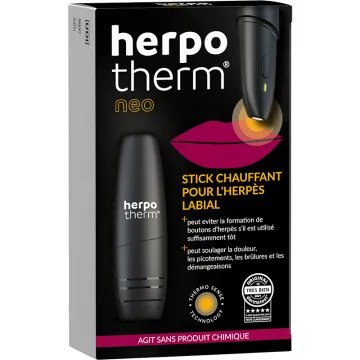
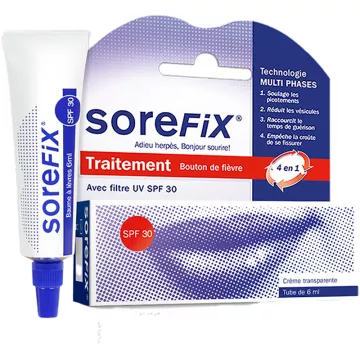
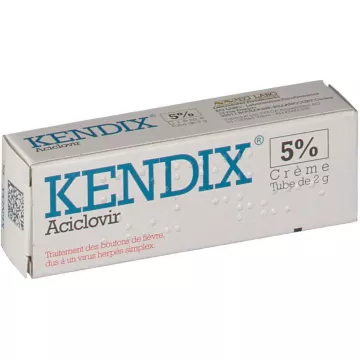
What is a cold sore, and how does it develop?
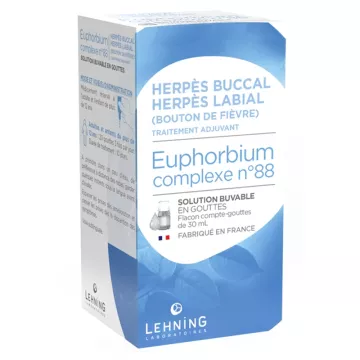
A cold sore (herpes labialis) is a skin and mucous membrane manifestation of the herpes simplex virus type 1 (HSV-1), characterized by a cluster of painful blisters on the lips or around the mouth. As a chronic viral infection, it progresses in recurrent outbreaks against a background of permanent neural latency: HSV-1 remains in the trigeminal ganglion for life. For a complete overview of herpes, visit our herpes page. Discover our products for herpes and cold sores, as well as our homeopathic formulas for herpes.
- Typical clinical phases: prodromal phase (Day -1 to Day 0) — a burning, tingling, or itching sensation at the usual site of the outbreak — 12–48 hours before the visible rash appears — this is the ideal time to start treatment (maximum effectiveness) — vesicular phase (Day 1–Day 3) — clusters of small vesicles filled with clear, highly contagious fluid — ulcerative phase (Days 3–5) — ruptured vesicles → painful superficial ulcers — scabbing phase (Days 5–10) — gradual healing under a scab
- Contagiousness: highest during the vesicular and ulcerative phases — possible (to a lesser extent) during the prodromal phase — the virus is shed asymptomatically — transmission occurs through direct contact with lesions or saliva — avoid kissing, sharing utensils, lip balms, and towels during outbreaks
- Triggering factors: sun exposure (UV rays = the primary trigger for cold sores) — emotional or physical stress — fever or concurrent infection (flu, cold) — fatigue + lack of sleep — hormonal fluctuations (menstrual cycle) — local trauma (dental procedures) — immunosuppression
- Distinguishing between cold sores and canker sores: cold sores = clusters of blisters on the lips or around the mouth + burning sensation as a prodrome + contagious — canker sores = a single or few ulcers inside the mouth (mucosa) + no prodrome + not contagious
- Possible complications: ocular herpes (herpetic keratitis — eye pain + photophobia + tearing → see an ophthalmologist immediately — never apply corticosteroids to the eye without a precise diagnosis) — herpetic whitlow (finger) — neonatal herpes if transmitted to a newborn — herpetic encephalitis (extremely rare, medical emergency)
Medical treatments and topical and oral antivirals
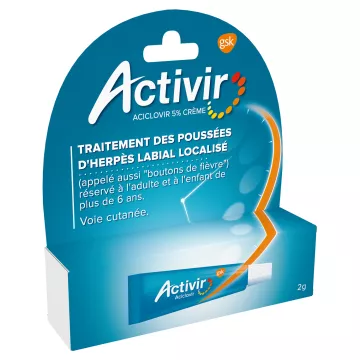
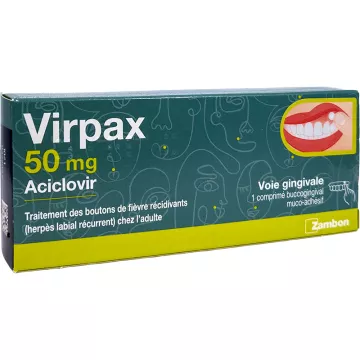
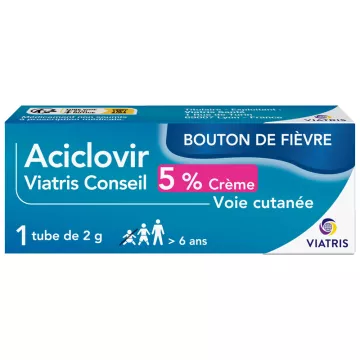
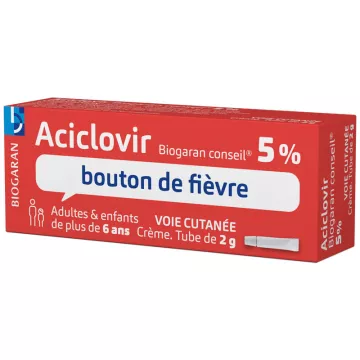
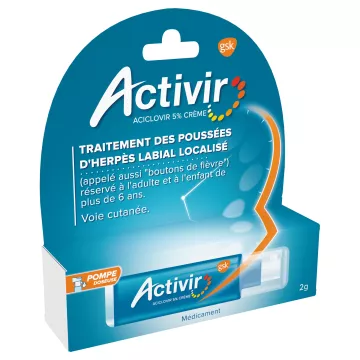
- Topical antivirals (over-the-counter or prescription): 5% aciclovir cream (Zovirax cream)—apply as soon as prodromal symptoms appear—5 applications per day for 5 days—moderately effective if started during the prodromal phase—1% penciclovir cream (Vectavir) — similar mechanism of action — slightly more effective than aciclovir cream according to some studies — docosanol 10% (Abreva) — blocks viral fusion — available without a prescription
- Oral antivirals (prescription only): valacyclovir 2 g × 2 times daily for 1 day (highly effective short-course regimen) — to be started within 12 hours of prodromal symptoms — reduces the duration of the outbreak by 1–2 days — acyclovir 400 mg × 5 times daily for 5 days — alternative — suppressive therapy (valacyclovir 500 mg/day): if > 6 outbreaks/year or if there is a social or professional impact (teachers, wind instrument players, etc.)
- Sun protection is essential: SPF 30+ lip-specific sunscreen (lip sunscreen stick) to be applied year-round but especially before any sun exposure (winter sports, beach, high altitude)—UV rays are the primary trigger for lip outbreaks—lip sun protection is the most effective preventive measure for individuals with frequent recurrences
- Local analgesics: 2% lidocaine gel or benzocaine applied topically—reduce pain during painful episodes—useful before meals if chewing causes pain
- When to seek medical attention: an unusual outbreak (size, extent, location—particularly around the eyes) — failure to heal after 10–14 days — very frequent recurrences (> 6/year) without suppressive therapy — pregnant women with a primary oral herpes infection — immunocompromised individuals
Complementary natural remedies to relieve cold sores
- Tea tree essential oil (Melaleuca alternifolia): terpinene-4-ol — antiviral activity against HSV-1 documented in vitro — apply topically with a cotton swab 2–3 times a day starting at the prodromal stage — dilute in a neutral vegetable oil (50/50) to prevent irritation — never swallow — complementary efficacy to antiviral treatment
- Lemon balm extract (Melissa officinalis): rosmarinic acid + tannins — antiviral activity against HSV-1 documented in vitro and in 2 clinical trials — 1% lemon balm cream or gel — apply topically 2–4 times a day as soon as prodromal symptoms appear — reduces duration and improves healing — well tolerated
- Propolis: flavonoids (quercetin, phenolic acids) — inhibits HSV-1 replication — a clinical study comparing 3% propolis to acyclovir cream showed equivalent or slightly better healing — topical propolis gel or cream — apply 3–4 times daily starting at the first signs of an outbreak
- L-lysine: inhibits arginine, an amino acid essential for HSV-1 replication — 500–1,000 mg/day for prevention or 3 g/day during an outbreak — reduce intake of arginine-rich foods (chocolate, nuts, almonds, peanuts, raisins) during outbreaks — several meta-analyses show a modest benefit in reducing recurrences
- Aloe vera gel: anti-inflammatory and healing properties — relieves burning and inflammation during painful phases — apply the pure gel topically — refreshing — no direct antiviral activity demonstrated — useful as a complementary comfort treatment
Recurrence prevention, protection of those around you, and special cases
- Comprehensive strategy to prevent recurrences: SPF 30+ on the lips before any UV exposure — stress management (cardiac coherence + magnesium + 7–9 hours of sleep) — L-lysine 500 mg/day for prevention — immune support: vitamin D3 + zinc + vitamin C — “preemptive” prescription of oral antivirals to treat immediately upon the onset of prodromal symptoms
- Transmission to infants: HSV-1 can be fatal in newborns (neonatal herpes) — strictly prohibit anyone with an active cold sore or one that is healing from kissing an infant under 3 months old on the face — wash hands thoroughly after contact with lesions
- Children and primary infection: a child’s primary infection (herpetic gingivostomatitis) can be severe (high fever + multiple mouth sores + refusal to eat) — See a pediatrician if a child under 6 years of age has a mouth covered in sores and a fever — Antiviral treatment may be given starting at age 2
- Pregnant women: recurrent cold sores = low risk to the baby — primary oral herpes infection near term = inform the obstetrician — the infant may become infected during breastfeeding if there is a lesion on the breast (rare) or during care—strict hygiene precautions
- Immune support during recovery: visit our immune defense page for natural supplements— propolis + zinc + vitamin D3 + echinacea as a short course of treatment after recovery