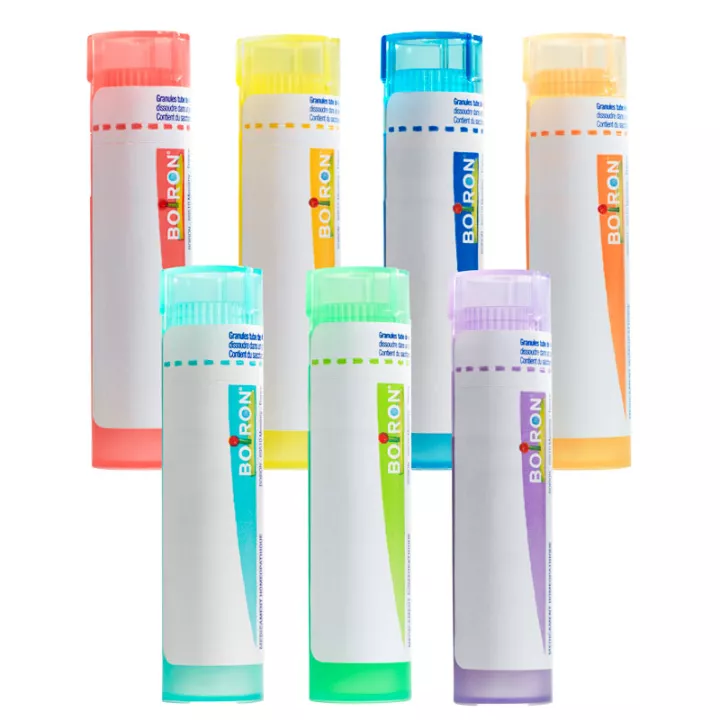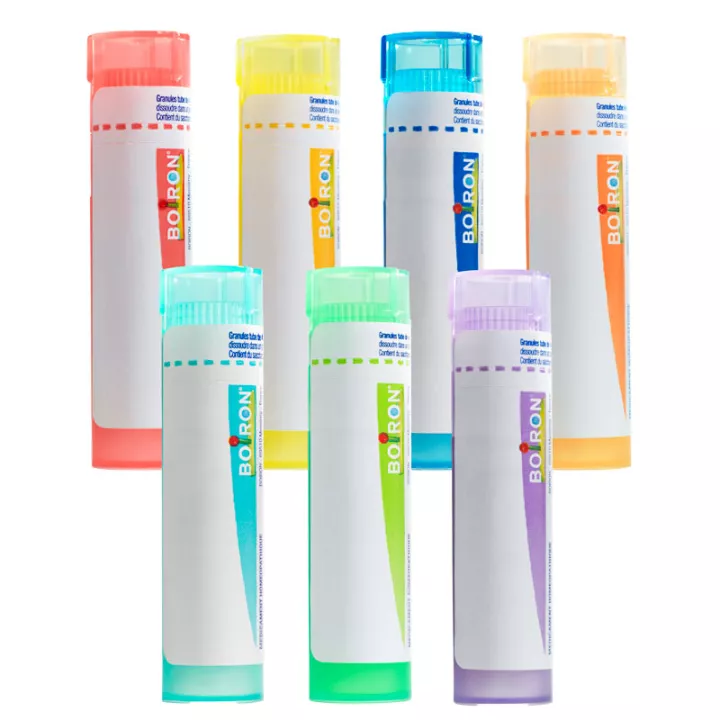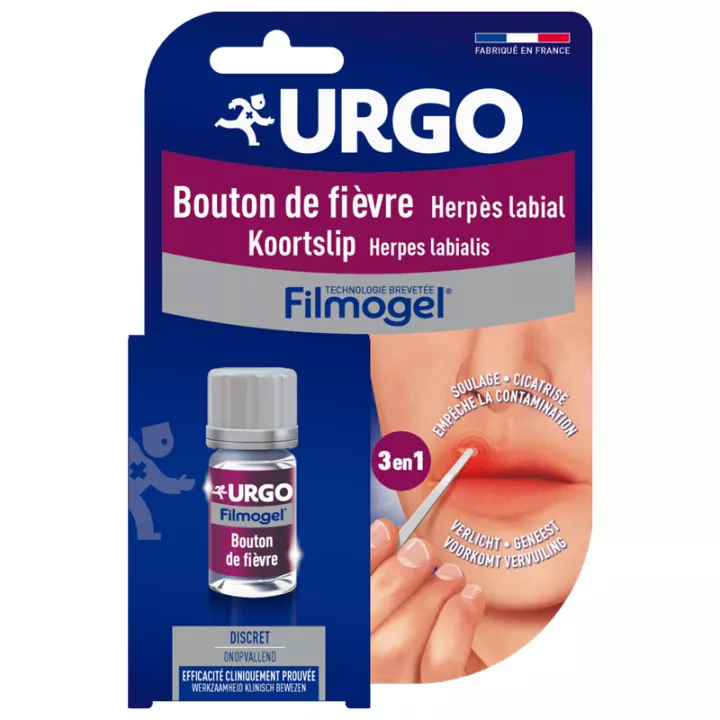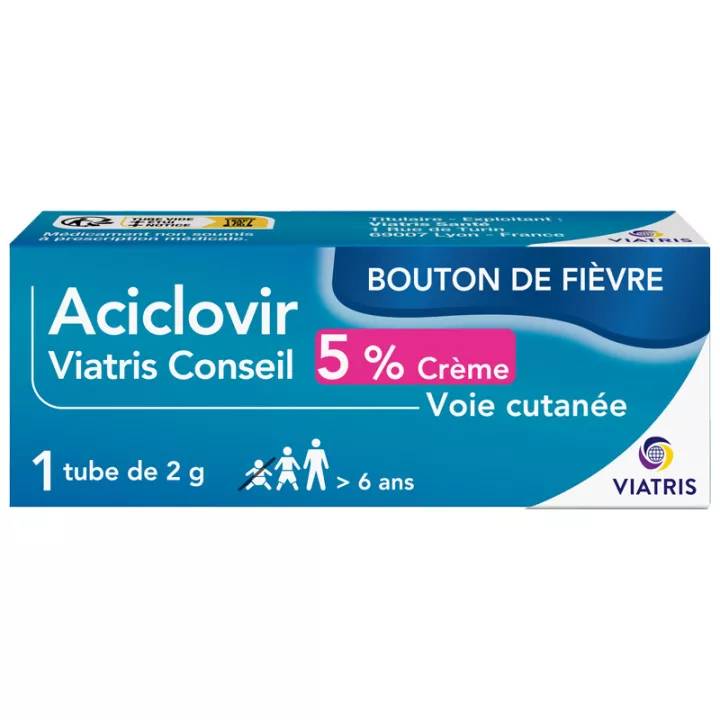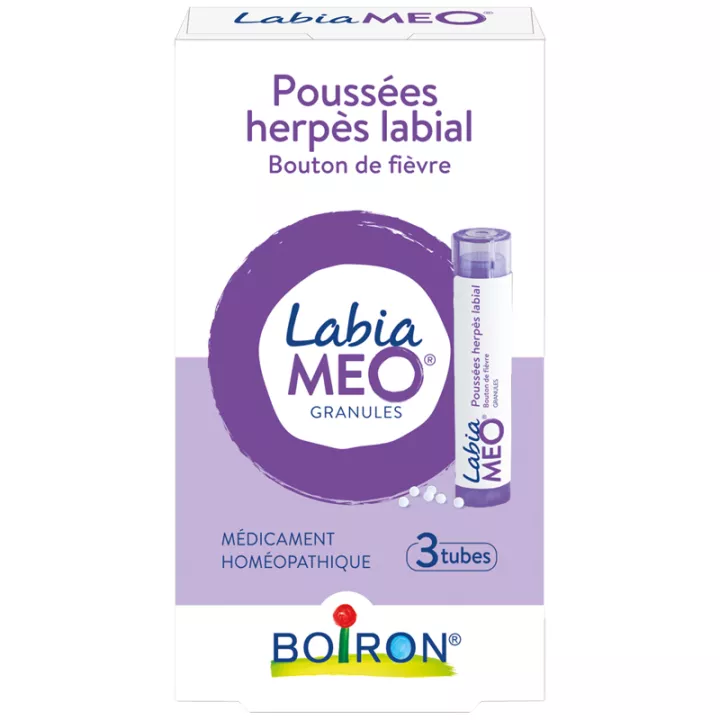
Order LABIAMEO Cold Sore Relief (3 tubes of granules ) from our organic pharmacy to treat cold sores. Share your feedback on usage instructions and dosage with our partner, Verified Reviews, after your purchase.

LABIAMEO is a homeopathic medicine in granule form. Labiameo is generally used to treat localized cold sores (commonly known as “fever blisters”).
Strengthen the body’s natural defenses against herpes outbreaks
Oral and genital herpes are recurrent viral infections that can cause pain, tingling, and uncomfortable sores. Boiron’s LABIAMEO is specially formulated to support the immune system and help the body better manage these episodes. By strengthening the intimate flora and helping to maintain the balance of the vaginal microbiota, this supplement offers additional protection against external irritants that can trigger an outbreak.
A Balanced Intimate Microbiome to Reduce Recurrences
Imbalances in the vaginal and oral flora can promote the reactivation of the herpes virus. Thanks to a specific combination of probiotics and natural ingredients, LABIAMEO promotes a protective environment that limits viral replication and reduces the risk of recurrence. Regular use thus helps space out outbreaks and lessen their severity.
A natural supplement for long-lasting relief
Unlike conventional antiviral treatments, LABIAMEO acts as a preventive measure and provides natural support. It helps restore the balance of the flora while soothing the discomfort associated with herpes outbreaks . This supplement is ideal for people prone to recurrent infections, particularly during periods of stress, fatigue, or hormonal fluctuations that can trigger an outbreak.
Can LABIAMEO Boiron prevent a herpes outbreak?
This supplement is not a substitute for antiviral treatment, but it helps reduce the frequency and severity of outbreaks by strengthening immunity and balancing the intimate flora.
Can LABIAMEO be used during an active herpes outbreak?
Yes, it can be taken as soon as the first symptoms appear to promote faster recovery and soothe discomfort associated with the lesions.
How long does it take to see results from LABIAMEO?
A 10- to 15-day course is generally recommended to restore the balance of the microbiome. For prevention, long-term use may be considered.
Is this supplement compatible with antiviral treatment?
Yes, LABIAMEO can be used alongside medical treatment to optimize the management of herpes outbreaks.
Let 5 granules dissolve under the tongue 3 to 5 times a day. Space out doses as symptoms improve and stop taking them once symptoms have disappeared.
Treatment should begin as soon as possible after the first signs of a cold sore appear (pain, burning, itching, tingling, or redness).
What are the side effects and contraindications?
Share your feedback on the usage instructions and dosage of LABIAMEO Cold Sores (3 tubes of granules ) with our partner. Verified reviews after your purchase.
Product Description
LABIAMEO Cold Sores 3 Tubes of Granules comesin a box containing 3 tubes of granules.
Pharmacovigilance Report an adverse drug reaction(s)
NOTICE
ANSM - Updated on : 27/06/2022
Product name
LABIAMEO, granules
Sidebar
Please read this leaflet carefully before taking this medicine, as it contains important information for you.
Always take this medicine exactly as instructed in this leaflet or by your doctor or pharmacist.
- Keep this leaflet. You may need to read it again.
- Ask your pharmacist for advice and information.
- If you experience any side effects, talk to your doctor or pharmacist. This also applies to any side effects not mentioned in this leaflet. See section 4.
- You should contact your doctor if you do not feel any improvement or if you feel less well after 8 days.
What does this leaflet contain?
1. What is LABIAMEO granules and what are they used for?
2. What do I need to know before taking LABIAMEO, granules?
3. How should LABIAMEO granules be taken?
4. What are the possible side effects?
5. How do I keep LABIAMEO granules?
6. Package contents and other information.
1. WHAT IS LABIAMEO, granules AND WHAT IS IT USED FOR?
Pharmacotherapeutic class: Homeopathic medicine
LABIAMEO, granules is a homeopathic medicine traditionally used to treat outbreaks of localized herpes labialis (also known as "cold sores").
2. WHAT DO I HAVE TO KNOW BEFORE TAKING LABIAMEO, granules?
If your doctor has informed you that you are intolerant to certain sugars, contact him/her before taking this medicine.
Never take LABIAMEO granules
- if you are allergic to any of the active ingredients or to any of the other ingredients listed in section 6.
Warnings and precautions
- This medicine is not recommended for patients with galactose intolerance, Lapp lactase deficiency or glucose-galactose malabsorption syndrome (rare hereditary diseases).
- This drug is not recommended for patients with fructose intolerance, glucose-galactose malabsorption syndrome or sucrase/isomaltase deficiency (rare hereditary diseases).
- Severely immunocompromised patients (e.g. AIDS patients or bone marrow transplant patients) should consult a physician regarding treatment of any infection.
Children
In the case of a primary infection, medical advice should be sought before use in children.
Other drugs and LABIAMEO, granules
Tell your doctor or pharmacist if you are taking, have recently taken or may take any other medicines.
LABIAMEO, granules with food and drink
Not applicable.
Pregnancy and breast-feeding
If you are pregnant or breast-feeding, think you may be pregnant or are planning to become pregnant, ask your doctor or pharmacist for advice before taking this medicine.
LABIAMEO, granules may be used during pregnancy and while breast-feeding.
Driving and use of machinery
Not applicable.
LABIAMEO granules contain lactose and sucrose.
3. HOW DO I TAKE LABIAMEO, granules?
Always take this medicine exactly as prescribed by your doctor or pharmacist. Check with your doctor or pharmacist if in doubt.
Dosage
For adults and children over 6 years of age.
Melt 5 granules under the tongue 3 to 5 times a day. Take at intervals as soon as symptoms improve, and stop as soon as symptoms disappear.
Treatment should be started as soon as possible after the first signs of cold sores (pain, burning/itching/pitting or redness) appear.
If symptoms worsen or persist beyond 8 days, consult a doctor.
In the case of a first infection, medical advice is required before use on children.
Method of administration
Sublingual route
Use in children and adolescents
Not applicable
If you have taken more LABIAMEO granules than you should have
Consult your doctor or pharmacist.
If you forget to take LABIAMEO, granules
Do not take a double dose to make up for the one you forgot to take.
If you stop taking LABIAMEO, granules
Not applicable.
4. WHAT ARE THE POSSIBLE SIDE EFFECTS?
Like all medicines, this drug may cause undesirable effects, but they do not occur systematically in everyone.
Reporting side effects
If you experience any side effects, please tell your doctor or pharmacist. This also applies to any side effects not mentioned in this leaflet. You can also report adverse reactions directly via the national reporting system: Agence nationale de sécurité du médicament et des produits de santé (ANSM) and the network of Regional Pharmacovigilance Centers.
By reporting adverse reactions, you are helping to provide more information on drug safety.
5. HOW DO I USE LABIAMEO, granules?
Keep out of sight and reach of children.
Do not use this medicine after the expiration date indicated on the box. The expiration date refers to the last day of the month.
Do not dispose of any medicine down the drain or in the household waste. Ask your pharmacist to identify any medicines you no longer use. These measures will help protect the environment.
6. CONTENTS AND OTHER INFORMATION
What LABIAMEO granules contain
- The active ingredients are :
Apis mellifica 15 CH............................................................................................................. 0.01 mL
Rhus toxicodendron 15 CH................................................................................................... 0.01 mL
Cantharis 15 CH................................................................................................................... 0.01 mL
Mezereum 15 CH.................................................................................................................. 0.01 mL
For one tube of 4 g of granules
- Other components are : Sucrose, lactose.
What LABIAMEO granules are and what they contain
This medicine comes in the form of granules packaged in tubes. One box contains 3 tubes of 4 g.
Marketing authorization holder
BOIRON
2 avenue de l'Ouest Lyonnais
69510 Messimy
France
Marketing authorization holder
BOIRON
2 avenue de l'Ouest Lyonnais
69510 Messimy
France
Manufacturer
BOIRON
2 avenue de l'Ouest Lyonnais
69510 Messimy
France
Product names in member states of the European Economic Area
Not applicable.
The last date on which this leaflet was revised was :
[to be completed subsequently by the holder]
< {MM/YYYY}>< {month/YYYY}.>
Other
Detailed information on this drug is available at on the ANSM (France) website.
HEALTH EDUCATION ADVICE
If you have a "fever blister", a few hygiene precautions are essential to prevent the lesions from spreading and transmitting the virus to those around you:
- avoid kissing those close to you, especially young children,
- don't touch or scratch the "fever blister" to avoid bacterial superinfection,
- don't rub your eyes or eyelids after touching herpes labialis lesions: there is a significant risk of self-contamination of the eyes,
- wash your hands after touching the lesion,
- if in doubt about the nature of your lesion, ask your pharmacist or doctor for advice.
Ce médicament est un complexe (association) de composants homéopathiques.
Il est traditionnellement utilisé dans le traitement de l'herpès labial (également appelé "bouton de fièvre")..
Les prix mentionnés ne tiennent pas compte des « honoraires de dispensation » du pharmacien.
| p tube | |
| Apis mellifica 15 CH | 0,01 ml |
| Rhus toxicodendron 15 CH | 0,01 ml |
| Cantharis 15 CH | 0,01 ml |
| Mezereum 15 CH | 0,01 ml |
| Lactose | + |
| Saccharose | + |
Chez les personnes immunodéprimées, ce médicament ne doit pas être pris sans avis médical.
En cas d'aggravation ou de persistance des symptômes après 8 jours de traitement, consultez votre médecin.
Ce médicament n'empêche donc pas la survenue d'autres crises d'herpès labial.
Les ultraviolets favorisent les poussées d'herpès labial. Évitez l'exposition au soleil fort ou aux UV, ou appliquez un écran total en quantité suffisante et renouvelée.
Aux dilutions homéopathiques, les substances contenues dans ce médicament ne sont pas connues pour être toxiques pendant la grossesse ou l'allaitement.
Le traitement doit être commencé dès les premiers symptômes annonçant une poussée d'herpès labial.
Laisser fondre les granules sous la langue.
Espacer les prises dès amélioration et cesser les prises dès la disparition des symptômes
L'herpès est une maladie contagieuse. Lavez-vous soigneusement les mains en cas de contact avec les lésions. Le risque de contagion est maximal au moment où apparaissent les vésicules (petites cloques sous la peau).
Abréviation de centésimale hahnemannienne. Cette unité correspond à la dilution au centième d'une substance homéopathique. 6 CH signifie que la substance (teinture mère) a été diluée au centième, six fois de suite.
Nom donné à une association de plusieurs remèdes homéopathiques. En général, les dilutions employées sont basses : de 3 DH (décimale hahnemannienne) à 6 CH (centésimale hahnemannienne).
Dilution d'une substance active obéissant aux règles homéopathiques. La solution obtenue après plusieurs dilutions successives ne contient qu'une quantité infime de la substance active initialement présente. Les propriétés d'un remède homéopathique sont étroitement liées à leur dynamisation (agitation de la solution entre chaque dilution). Les unités qui expriment les dilutions homéopathiques sont : DH, CH et K (korsakovienne).
Consultez les articles : Herpès génital et Bouton de fièvre (herpès labial)
Mode de traitement fondé sur deux principes : l'usage de substances douées d'effets semblables aux symptômes de la maladie qu'elles sont destinées à combattre, et la dilution infinitésimale de ces substances.
Consultez les articles : Les médicaments d'homéopathie
Le lactose est un sucre que l'on retrouve dans le lait et certains de ses dérivés. Pour le digérer, l'intestin doit être capable de sécréter une enzyme appelée lactase. De nombreuses personnes perdent la capacité à produire cette lactase à l'âge adulte. Le lactose passe alors dans l'intestin sans avoir été digéré et sa présence provoque des troubles intestinaux : diarrhée, ballonnements, gaz, etc. Certains médicaments contiennent du lactose utilisé comme excipient (composant sans activité thérapeutique). Les personnes qui ne digèrent pas le lactose peuvent, lorsqu'elles prennent ce type de médicament, souffrir d'effets indésirables intestinaux.
Le saccharose est la substance qui compose le sucre de cuisine et le sucre industriel que l'on retrouve dans les biscuits, les gâteaux, les sucreries et les boissons sucrées (une bouteille d'un litre et demi de soda contient l'équivalent de trente morceaux de sucre). Certaines personnes sont intolérantes au fructose issu de la digestion du saccharose et souffrent alors de ballonnements et de diarrhée. Certains médicaments contiennent du saccharose comme excipient (composant sans activité thérapeutique).
Consultez l'article : Tous les glucides sont-ils équivalents ?
Trouble ressenti par une personne atteinte d'une maladie. Un même symptôme peut traduire des maladies différentes et une même maladie ne donne pas forcément les mêmes symptômes chez tous les malades.
Les rayons ultraviolets sont des radiations émises naturellement par le soleil ou artificiellement par certaines lampes. On distingue les UV A et les UV B. Les UV B, de courte longueur d'onde, sont arrêtés dans les couches les plus externes de la peau. Ils sont responsables de brûlures (coups de soleil). Les UV A, de longueur d'onde plus importante, pénètrent profondément et atteignent le derme. Ils induisent la pigmentation (bronzage). L'exposition intense et répétée aux UV cause un vieillissement prématuré de la peau et augmente le risque de cancer cutané.
Abréviation : UV.
Abréviation d'ultraviolet.
 Lycopodium clavatum 4CH, 5CH, 7CH, 9CH, 15CH, 30CH Granules by Boiron Homeopathy