What is heart rate, and what are its normal values?
Heart rate (or heart rate—HR) refers to the number of ventricular contractions per minute. It reflects the heart’s electrical and mechanical activity and is one of the fundamental vital signs of cardiovascular health. Cardiac support supplements are available in the store’s cardiovascular health line.
- Normal resting ranges: adults 60 to 100 bpm — infants under 1 year: 100 to 160 bpm — children 1 to 10 years: 70 to 120 bpm — trained athlete: 40 to 60 bpm (physiological bradycardia due to cardiac adaptation) — these values are provided for informational purposes only — any persistent abnormality should be evaluated by a doctor
- Sinus node: the heart’s natural pacemaker, located in the right atrium — it generates the electrical impulse that triggers each contraction — its rate is regulated by the autonomic nervous system (the sympathetic nervous system speeds it up, the parasympathetic nervous system slows it down) and hormones (adrenaline, thyroid hormones)
- Theoretical maximum heart rate: 220 minus age (Karvonen formula)—useful for calibrating exercise intensity—never exceed 85% of maximum heart rate without prior medical evaluation in sedentary individuals or those with heart conditions
How to measure your heart rate and when to be concerned?
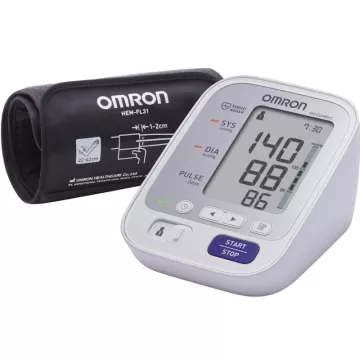
- Measurement methods: palpation of the radial pulse (inner wrist) or carotid pulse (neck)—count beats for 60 seconds (or 15 seconds × 4)—pulse oximeter (photoplethysmography) — ECG (complete electrical trace — the only test that allows for precise analysis of heart rhythm) — smartwatches and heart rate monitors (good accuracy at rest, less so during movement)
- Bradycardia (HR < 60 bpm at rest): physiological in trained athletes — pathological if associated with symptoms (syncope, fatigue, lightheadedness) — causes (atrioventricular block, sick sinus syndrome, hypothyroidism, beta-blockers) — medical evaluation if symptomatic
- Tachycardia (HR > 100 bpm at rest): see the dedicated page for types and causes
- Arrhythmia: irregular heart rhythm — palpitations (sensation of irregular or missed heartbeats) — atrial fibrillation (most common arrhythmia — thromboembolic risk) — diagnosis by ECG — consult a doctor in case of recurrent palpitations
- Call 15 immediately if: chest pain associated with an abnormal rhythm — syncope (loss of consciousness) — severe dyspnea at rest — these signs may indicate a cardiac emergency
What factors influence heart rhythm, and how can it be stabilized?
- Factors that increase heart rate: stress and anxiety (cortisol, adrenaline) — caffeine (> 3 to 4 cups of coffee per day) — nicotine — fever (each degree above 37 °C raises the heart rate by about 10 bpm) — dehydration — medications (decongestants, bronchodilators) — hyperthyroidism — anemia
- Stabilizing factors: regular physical activity (150 min/week—WHO recommendation—lowers resting heart rate and improves heart rate variability) — cardiac coherence (breathing at 5 cycles/min—increases heart rate variability) — magnesium (deficiency associated with palpitations and cardiac hyperexcitability — 300 to 400 mg/day bisglycinate) — adequate hydration (1.5 to 2 L/day)
- Hawthorn: cardiac tonic — supports normal heart rhythm and myocardial contractility — well-established EMA monograph — medical consultation required for patients treated with antiarrhythmics or digoxin (interactions)
- Omega-3 EPA-DHA: moderate reduction in the electrical excitability of cardiomyocytes — EFSA claim regarding normal heart function — 2 to 3 g/day — see heart and cardiovascular system conditions