What is hallux valgus, and what causes it?
Hallux valgus is a progressive foot deformity characterized by the lateral deviation of the big toe toward the other toes, accompanied by a painful bony protrusion on the inner edge of the foot—commonly known as a “bunion.” Discover our specialized care and orthopedic products in our orthopedics and foot care line.
- Genetics: family history is present in 70% of cases—predisposition to ligament laxity and certain foot types (flat feet, wide forefoot)
- Inappropriate footwear: high heels (> 4 cm) + pointed toes—a major aggravating factor, rarely the sole cause—explains the 9-to-1 prevalence in women compared to men
- Muscular imbalances: weakness of the intrinsic foot muscles (abductor hallucis) — promotes progressive deviation
- Rheumatic conditions: rheumatoid arthritis, metatarsophalangeal osteoarthritis — accelerate the deformity
- Hallux valgus is irreversible without surgery once the deformity has set in—conservative treatments prevent worsening and relieve pain
What are the non-surgical options for hallux valgus?
Conservative treatments are effective at relieving pain and slowing progression—particularly in mild to moderate cases.
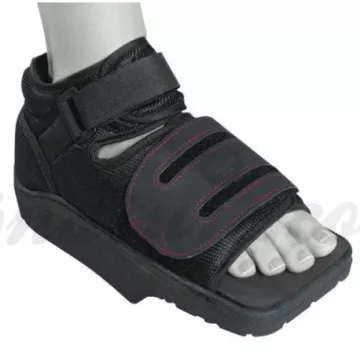
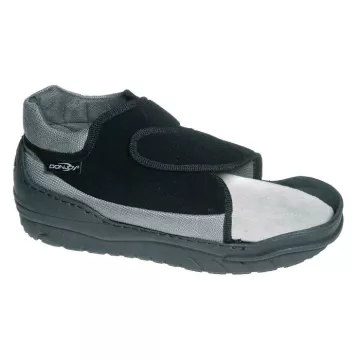
- Nighttime corrective orthotics: spreaders and aligners worn at night—keep the big toe aligned and relieve pressure on the bunion—available in our orthopedic line
- Separators and protective pads: silicone gel between the toes—reduce friction and pain in daily life—essential for closed-toe shoes
- Orthopedic insoles: correct excessive pronation and redistribute pressure on the sole of the foot—prescribed by a podiatrist—complement corrective orthotics
- Appropriate footwear: wide in the forefoot, round or square toe, heel ≤ 3 cm, flexible sole—essential criteria for preventing compression of the bunion
- Topical anti-inflammatory gels: applied locally to the painful bunion — provides temporary relief without systemic effects — see our joint pain product line
What exercises can help slow the progression of hallux valgus?
Strengthening the intrinsic muscles of the foot is the most accessible preventive measure—to be practiced daily to maintain mobility of the metatarsophalangeal joint and support comfort in daily life.
- Big toe abduction: actively move the big toe away from the others — 3 sets of 10 repetitions — strengthens the big toe abductor, the primary stabilizer
- Picking up marbles or towels with your toes: activates the intrinsic muscles under the foot—5 minutes daily—a simple and highly effective exercise
- Passive big toe extension: Press on the bunion to bring the big toe back into alignment—hold for 30 seconds—5 repetitions per side
- Walking barefoot on various surfaces: sand, grass, proprioception mats — stimulates the intrinsic muscles of the foot and improves proprioception
- If you experience associated joint pain, magnesium and omega-3 supplements can help support overall joint comfort
Hallux valgus vs. hallux rigidus: what are the differences and what are the implications?
- Hallux valgus: lateral deviation of the big toe—mobility preserved at first—painful bump on the inner side—progressive deformity—conservative treatment is often sufficient in the early stages
- Hallux rigidus: stiffness of the metatarsophalangeal joint — localized osteoarthritis — pain on flexion (climbing stairs, running) — no deviation but loss of range of motion — treatment with injections or surgery in severe cases
- Both conditions can coexist—joint pain in the big toe accompanied by stiffness should raise suspicion of associated hallux rigidus—X-ray is essential for differentiation
- When to operate: pain resistant to conservative treatments for > 6 months, major functional impairment (difficulty walking), severe deformity (angle > 40°)—surgery (osteotomy) corrects the deformity but requires 6–8 weeks of recovery
- A consultation with a podiatrist or orthopedic surgeon is recommended as soon as the bunion becomes painful on a daily basis or the deformity progresses rapidly