What is a facelift, and how does it work?
A facelift (or rhytidectomy) is a plastic surgery procedure designed to redefine the contours of the face and reduce the signs of skin aging. Characteristics:
- A surgical procedure performed by a board-certified plastic surgeon
- General or local anesthesia, depending on the extent of the procedure
- Strategic incisions near the hairline and around the ears
- Repositioning of deep tissues (superficial musculoaponeurotic system, SMAS)
- Excess skin is removed, and discreet sutures are placed
- Shorthospital stay (outpatient or 1 night, depending on the case)
- Long-lasting results over several years (8 to 12 years on average)
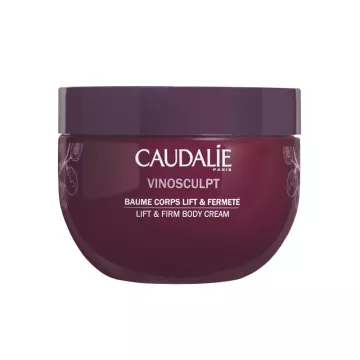
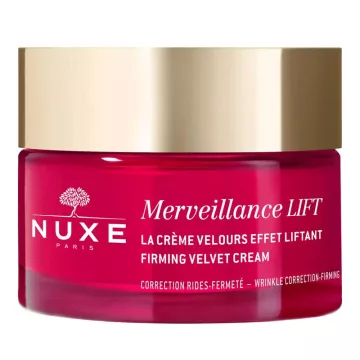
A surgical facelift does not eliminate fine, superficial wrinkles or improve skin quality. It addresses skin laxity and loss of structural firmness. For daily skincare, complementary alternatives are available.
What types of facelifts are available?
Several surgical techniques are available depending on the specific needs:
- Cervico-facial facelift: targets the lower face (facial contour, jowls) and the neck; the most comprehensive procedure
- Forehead lift: reshapes the forehead, eyebrows, and upper eye area
- Mid-face or centro-facial lift: focuses on the cheeks, cheekbones, and the area under the eyes
- Mini-facelift: a less invasive option with shorter incisions and a faster recovery; recommended for younger patients or those with moderate sagging
- Temporal lift: redefines the tail of the eyebrow and the outer corner of the eye
- Endoscopic facelift: uses video-assisted techniques; indicated for specific cases
- Isolated neck lift: for patients with predominant neck sagging
- MACS (Minimal Access Cranial Suspension) facelift: an alternative technique with minimal incisions
The choice of technique depends on age, the type of aging, skin quality, and patient expectations. A specialized consultation helps determine the best approach.
What are the benefits and limitations of a facelift?
Observed benefits:
- Redefinition of the facialcontour
- Reduction of skinlaxity and deep muscle sagging
- Elimination of jowls
- Improved jawline and neckcontour
- A more rested and harmoniousappearance
- Long-lasting results for several years
- Often improvedself-esteem
Limitations to be aware of:
- No effect on skin quality: texture, pores, and spots remain unchanged
- Hasno effect on superficialfine lines or expression lines
- Aging continues after the procedure
- Permanent scars (usually subtle but present)
- Long and demandingrecovery
- Significant cost (rarely covered by health insurance unless for reconstructive purposes)
- Results appear gradually and are fully visible after 6 to 12 months
Comprehensive information about what can and cannot be achieved is essential for setting realistic expectations.
What risks and precautions should be considered?
Any surgical procedure carries risks that you should be aware of:
- Hematomas: the most common complication, sometimes requiring surgical drainage
- Infections: rare with antibiotic prophylaxis
- Reactions to anesthesia
- Injury to a branch of the facial nerve: usually temporary, more rarely permanent
- Changes in skin sensation on the scalp and face, usually temporary
- Hypertrophic scars or keloids in predisposed patients
- Facialasymmetry
- Skin necrosis in active smokers
- Alopecia around the scars
- Inadequate results or results requiring revision
- Rarevenous thrombosis
Essential precautions: choose a board-certified and experienced plastic surgeon; strictly avoid smoking for several weeks before and after the procedure; avoid alcohol and certain anticoagulant medications (as advised by a doctor); be in good overall health.
How to Prepare for the Procedure?
Preoperative preparation is key to a successful procedure:
- Initial consultation: detailed discussion, clinical examination, review of medical history, photographs, explanation of techniques and expected results
- Mandatorypre-anesthesia consultation in the weeks leading up to the procedure
- Blood tests and additional tests based on the patient’s medical profile
- Strictly stop smoking at least 4 to 6 weeks before the procedure (and for 1 month afterward): a major factor in healing
- Avoid alcohol in the days leading up to the procedure
- Discontinuation of certain medications (aspirin, NSAIDs, anticoagulants, certain supplements) as advised by your doctor
- Preparing your home environment: arranging for recovery at home
- Administrative documents: estimate, informed consent, legal cooling-off period
- Psychological aspects: realistic expectations and emotional stability
- Preoperativeskin care as recommended by the surgeon
Strict adherence to these steps significantly reduces the risk of complications.
What is the recovery like after a facelift?
Postoperative recovery varies depending on the technique:
- Days 1–7: Significant swelling and bruising, bandages, moderate pain managed with pain medication
- Week 2: Gradual removal of sutures, reduction in bruising
- Weeks 3–4: Return to a more normal social life; bruising is still visible but can be concealed with makeup
- Months 2–3: Gradual improvement in results; skin sensation is still recovering
- Months 6–12: Final results, scars have faded
Essential precautions:
- Rest: Avoid physical exertion for 3 to 6 weeks
- Sleep with your head elevated for 7 to 14 days to minimize swelling
- Local care as prescribed: dressings, disinfection, healing creams
- Cold compresses for the first few days to reduce swelling
- Strictavoidance of sun exposure for several months (SPF 50+ required thereafter)
- No smoking, no alcohol during recovery
- Medical follow-up at 1 week, 1 month, 3 months, and 6 months at a minimum
- Gradualreturn to sports after medical clearance
- Scar massage as recommended, starting 4 to 6 weeks post-surgery
What are the non-surgical alternatives?
Several non-invasive medical procedures can be offered in the office:
- Botulinum toxin injections: for expression lines (forehead, glabella, crow’s feet)
- Injectable hyaluronic acid: fills in furrows and restores facial volume
- Calcium hydroxyapatite and poly-L-lactic acid: stimulate deep skin functions
- Monopolar or multipolar radiofrequency: tightening effect on the skin and underlying tissues
- High-IntensityFocused Ultrasound (HIFU): targets deep structures (SMAS)
- Ablative or non-ablativefractional lasers
- Microneedling with or without associated radiofrequency
- Resorbable thread lifts: gentle tissue lifting
- Medium- to deep-depthchemical peels (under medical supervision)
- Mesotherapy: injections of revitalizing cocktails
These procedures are less invasive and can be repeated, but their results are still inferior to those of a surgical facelift. They can serve as a preparatory step before surgery or as a complementary treatment. For sagging skin, several approaches are available.
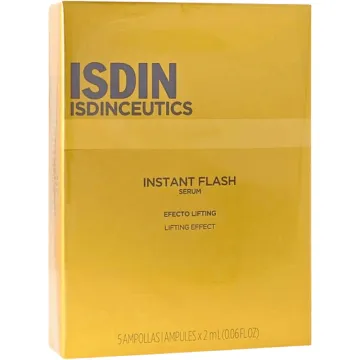
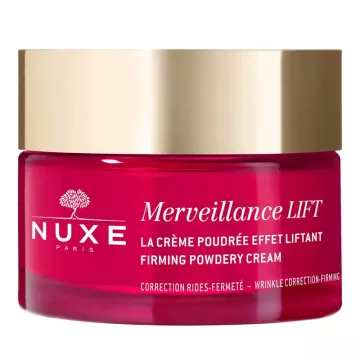
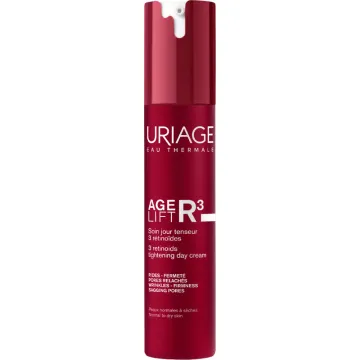
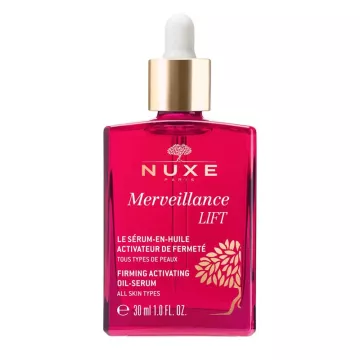
What skincare products offer a lifting effect?
Several cosmetic active ingredients help support the skin on a daily basis:
- Cosmetic retinol: supports cell renewal (for evening use only; photosensitizing; contraindicated during pregnancy and breastfeeding)
- Peptides: support skin suppleness and firmness
- Hyaluronic acid: moisturizing, plumping, with an immediate optical tightening effect
- Vitamin C: antioxidant, supports skin function
- Niacinamide: improves the visible quality of the skin
- AHAs (glycolic acid, lactic acid): gentle exfoliants that support cell renewal (photosensitizing)
- Ceramides and squalane: restore the skin barrier
- Coenzyme Q10: targeted antioxidant
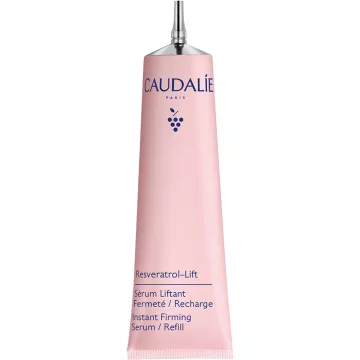
- Resveratrol and polyphenols: plant-based antioxidants
- Caffeine: local decongestant and firming effect
Our anti-aging section at the pharmacy offers products tailored to every skin type. For visibly plumping the skin, hyaluronic acid remains the go-to active ingredient.
How to Choose a Plastic Surgeon?
The choice of practitioner greatly influences the outcome:
- Qualifications: plastic, reconstructive, and cosmetic surgeon (French medical board certification verifiable at conseil-national.medecin.fr)
- Registration with the French Medical Board
- Specific experience in facial surgery and facelifts
- Before-and-after photographs of actual cases (with consent)
- Testimonials from previous patients, collected with care
- Clear and detailed estimate and surgicalplan
- Compliance with the legal 15-daycooling-off period between the quote and the procedure
- Detailed consultation without sales pressure
- Facilities: accredited clinic, qualified anesthesia team
- Availability for postoperativefollow-up
- Rejection of promises of spectacular results or abnormally low prices
Caution regarding low-cost“medical tourism” destinations: compromised follow-up care, sometimes substandard practices, and complications that are difficult to manage upon return.
What daily habits can help support your skin?
Both before and after any procedure, several habits can help maintain the skin’s visible quality:
- Daily broad-spectrumsun protection with SPF 30 to 50+: the number one preventable cause of skin aging
- A skincare routine tailored to your skin type (cleansing, moisturizing, targeted serum)
- Avoiding tobacco and limiting alcohol
- Quality sleep: 7 to 9 hours per night
- A balanced diet rich in antioxidants, omega-3s, and high-quality protein
- Oral hydration: 1.5 to 2 L of water per day
- Regular, moderatephysical activity (microcirculation, oxygenation)
- Chronic stress management
- Sleep on your back as much as possible
- Silk or satinpillowcase to minimize skin creases
- Gentle, regularfacial massage to support microcirculation
- Targeteddietary supplements as recommended by a pharmacist (marine collagen, peptides, antioxidants)
For mature skin and loss of elasticity, a combined approach (skincare, lifestyle, and, if necessary, medical or surgical procedures) yields the best long-term results. Your pharmacist remains a valuable local resource to guide your daily skincare choices.