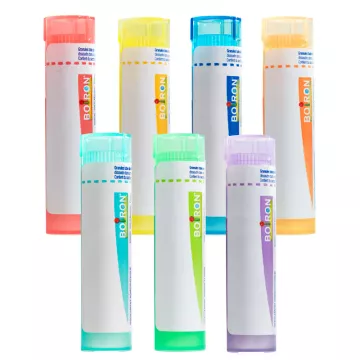
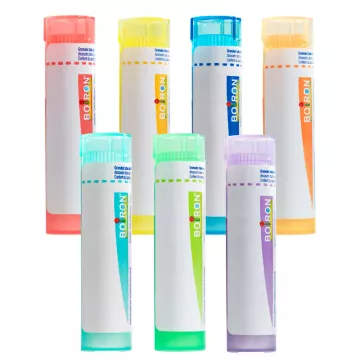
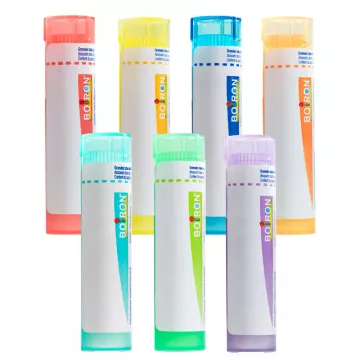
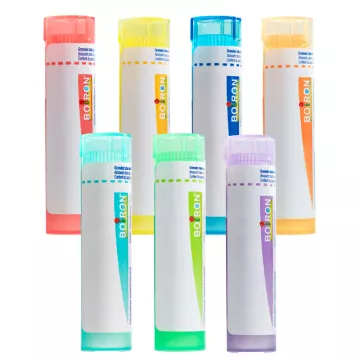
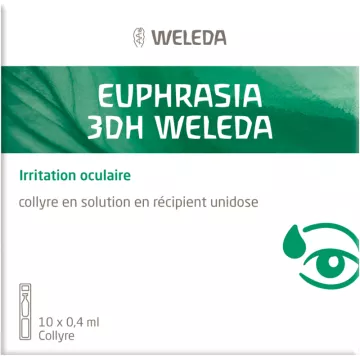
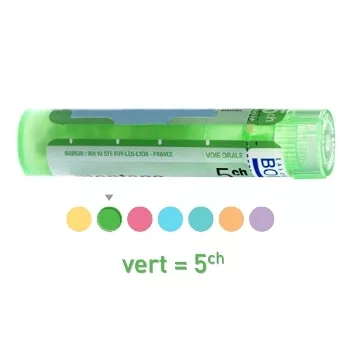
Mildeye irritation —redness, watery eyes, and a slight burning sensation without any loss of vision—is one of the well-documented indications for homeopathy in ophthalmology. Euphrasia officinalis (the “eye herb”) is the standard remedy for conjunctival irritation with profuse tearing and a burning sensation, available in granules (5 to 9 CH) and single-dose eye drops (Weleda Euphrasia). Calendula officinalis is indicated for irritations with a more pronounced local inflammatory reaction and a tendency toward mild secondary infection. Cantharis is reserved for severe irritation with a sharp burning sensation, such as after a mild chemical splash. These remedies are not a substitute for an ophthalmological consultation in cases of severe pain, vision loss, or purulent discharge.
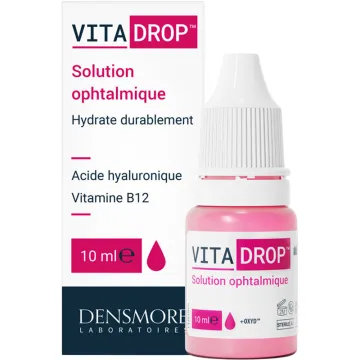
Recent studies (Chen et al., 2015; Kinori et al., 2017) have established a link between vitamin B12 deficiency and reduced density of the subbasal corneal nerve plexus—a structure essential for corneal sensitivity and the reflex regulation of tear production. Vitadrop B12 (Densmore) eye drops incorporate cyanocobalamin in a preservative-free AH base—a combination that improves eye comfort in cases of mild chronic irritation, dryness, and digital eye strain. They are exceptionally well-tolerated in a single-dose formulation.
A plant resin with broad-spectrum antibacterial properties, propolis inhibits bacterial DNA gyrase in pathogenic conjunctival flora—notably S. aureus, S. pneumoniae, and certain Gram-negative bacteria. Aboca Fitostill Plus (propolis + aloe vera in single-dose ophthalmic form) is formulated and ophthalmologically tested for mild irritations. Its use is limited to mild bacterial irritations without profuse purulent discharge—severe bacterial conjunctivitis requires antibiotic therapy prescribed by a doctor.
In the event of acute chemical or mechanical irritation, thorough eye rinsing is the first step—15 to 20 minutes under running water in the case of chemical splashes. For less severe irritations (foreign bodies, chlorine, dust), sterile single-dose saline solution (0.9% NaCl) is the standard treatment—isotonic, preservative-free, and well-tolerated. Cooper Dacryum offers a soothing isotonic eye wash specifically formulated for mild irritation.
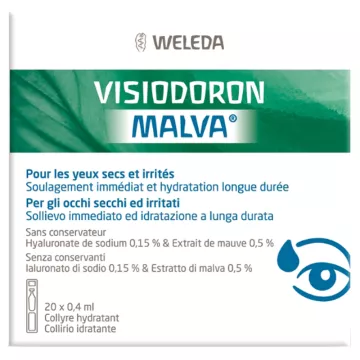
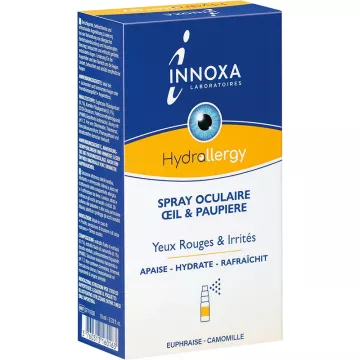
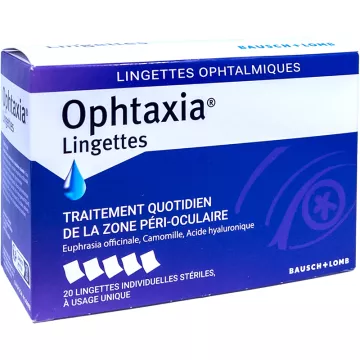
The range of products is vast: styes and eyelid inflammation can be treated with sterile eyelid wipes (Ophtaxia) for cleaning the eyelid margins. Mild conjunctival irritation can be relieved with lubricating and soothing eye drops (Innoxa Hydrallergy, Weleda Visiodoron). Irritation accompanied by dryness is relieved by single-dose AH eye drops (Vitadrop B12). The general rule: eye drops containing preservatives are not recommended for use more than 4 times a day—opt for single-dose, BKC-free formulas for prolonged use.
Certain signs associated with eye irritation require an ophthalmological consultation within 24 hours without delay. Any loss of vision, even mild; any severe photophobia; any direct trauma (penetrating foreign body, concentrated chemical); any profuse or unilateral purulent discharge, and any annular pericorneal redness (perikeratitic ring) are warning signs. Prolonged self-medication—whether homeopathic or allopathic—must never delay seeking medical attention when these signs are present. Keratitis, uveitis, or acute glaucoma may initially present as simple “irritation” and require urgent specialized medical care.