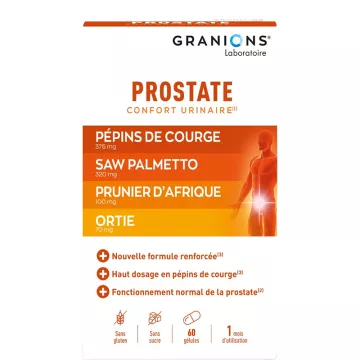
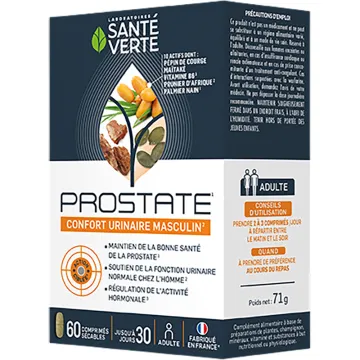
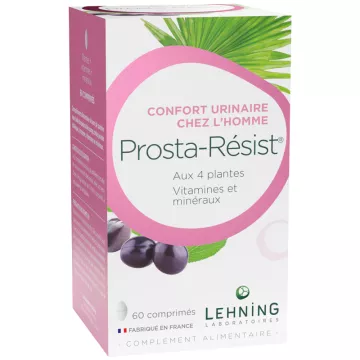
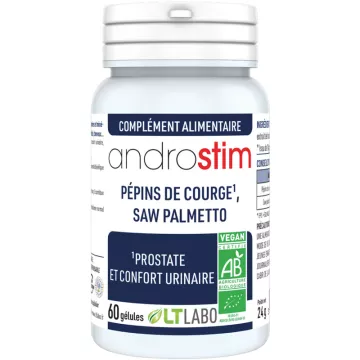
What is the dwarf palm, and how does it affect the prostate?
The berries of the saw palmetto (Serenoa repens) have been used for decades to treat benign prostatic hyperplasia (BPH). Its documented mechanisms of action:
- Inhibition of type 1 and 2 5α-reductase: reduces the conversion of testosterone to DHT, the primary stimulator of prostate growth. This mechanism is similar to but milder than that of pharmaceutical inhibitors (finasteride, dutasteride).
- Inhibition of androgen binding to prostate receptors: its free fatty acids (oleic, lauric, myristic) directly reduce the activity of androgen receptors.
- Inhibition of COX and 5-lipoxygenase: direct anti-inflammatory effects on the prostate.
- Reduction of aromatase: decreases the conversion of testosterone to estradiol in prostate tissue.
Do clinical studies confirm the effectiveness of saw palmetto?
The clinical literature is extensive but requires a nuanced interpretation:
- Favorable meta-analyses (Wilt, 1998; Cochrane 2002): significant improvement in IPSS scores, maximum urinary flow rate, and quality of life—efficacy comparable to finasteride for urinary symptoms.
- Less conclusive recent trials: the CAMUS (Barry, 2011, NEJM) and STEP (Bent, 2006, NEJM) studies did not demonstrate superiority over placebo. This discrepancy can be explained by differences in the quality of the extracts (free fatty acid content) and the study populations.
- Clear safety profile: Unlike finasteride, saw palmetto does not reduce libido and does not cause erectile dysfunction or depression. Medical advice remains essential for any persistent urinary symptoms.
Does ginseng complement saw palmetto for prostate health?
The Rh2 ginsenosides in ginseng (Panax ginseng) have been shown in vitro to inhibit the proliferation of prostate cells and induce apoptosis via caspases. Clinically, its modulation of the hormonal axis may improve the testosterone/DHT balance in BPH. A 2018 meta-analysis of 12 preclinical studies confirms an anti-proliferative effect of ginsenosides on prostate cells—based on preliminary human data. Caution: Avoid if you have uncontrolled high blood pressure.
Does pomegranate support prostate health through its polyphenols?
Its urolithins (metabolites of punicalagins produced by the microbiota) inhibit aromatase—reducing the conversion of testosterone to estradiol, which potentiates prostate stimulation. Pomegranate also inhibits NF-kB and reduces chronic prostate inflammation. A study (Pantuck, 2006) shows a doubling of the PSA doubling time in patients under active surveillance who regularly consume pomegranate juice.
Do pollen and green tea have a documented role in prostate health?
Two active ingredients with specific mechanisms of action on the prostate:
- Standardized pollen extract (Cernilton/Graminex) contains β-sitosterol, which inhibits 5α-reductase and reduces prostate inflammation via prostaglandins. Meta-analyses confirm a significant improvement in IPSS scores and a reduction in nocturia in BPH and chronic prostatitis.
- EGCG from green tea inhibits EGFR (Epidermal Growth Factor Receptor) and activates pro-apoptotic caspases in prostate cells. Asian epidemiological studies link high consumption to a reduced prevalence of prostate conditions—an effect that is preventive rather than curative.
Do AAL and magnesium complement the effects of saw palmetto?
Two active ingredients acting on complementary mechanisms:
- As a universal antioxidant that crosses prostate cell membranes,alpha-lipoic acid (ALA) reduces intracellular oxidative stress, which contributes to prostate proliferation. Preclinical studies show inhibition of IGF-1 and stimulation of apoptosis—a mechanism complementary to the inhibition of 5α-reductase.
- As a cofactor for prostatic NO synthase, magnesium improves prostatic blood flow and reduces periprostatic muscle spasms that worsen urinary symptoms—a muscle-relaxing mechanism that complements the antiandrogenic action of saw palmetto.