Why do dentures become loose, and what solutions are available?
Keeping dentures secure is a daily challenge for many wearers—especially in the lower jaw, where the absence of the palate reduces the support surface and suction. Over time, bone resorption (loss of alveolar bone following tooth extraction) alters the contours of the gums, and dentures that were initially a good fit begin to shift. Solutions range from simple denture adhesives to implant-supported overdentures. For everything related to types of dentures, their care, and their lifespan, the dedicated page provides detailed information. Denture accessories andoral hygiene products are available in the store.
- Bone resorption—the main cause of instability: without tooth roots to stimulate the bone, it resorbs at a rate of about 1 mm per year—the gums change in volume and shape—the denture loses its support—consequences: shifting during chewing and speech, painful spots, gum ulcers
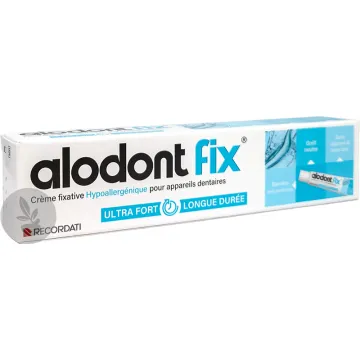
- Dental adhesives: temporarily fill the space created by resorption — do not replace a relining or prosthetic replacement — a short- to medium-term comfort solution
- Implant-supported overdentures: 2 to 4 titanium implants in the jaw + clip/ball/bar attachments—the denture “clips” onto the implants—significantly greater stability—preserves the alveolar bone (mechanical stimulation via the implants) — a dental surgical procedure — recommended as a permanent solution for cases of severe instability
- Prosthetic relining: padding of the underside of the denture by the prosthodontist — adapts the base of the denture to the new gingival volume — non-surgical procedure — extends the lifespan of the existing denture — should be performed every 3–5 years depending on the progression of bone resorption
How to Use Dental Adhesives Properly?
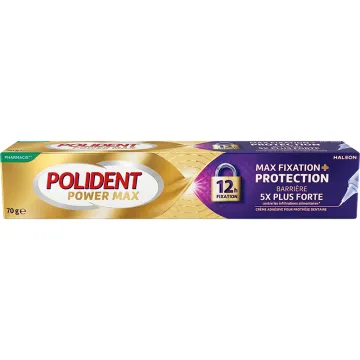
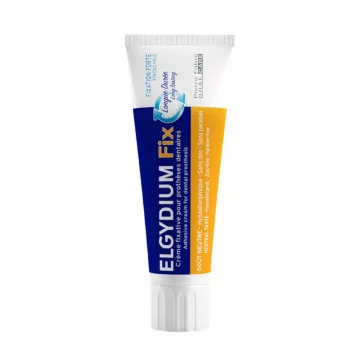
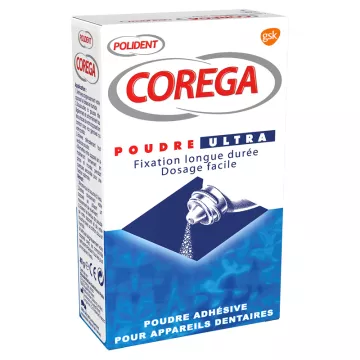
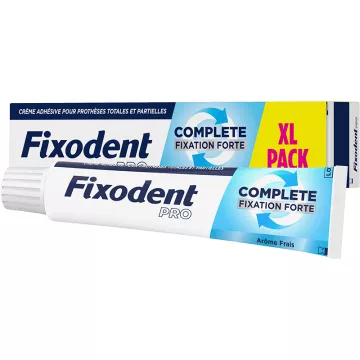
- Types of adhesives available: adhesive cream (the most common—apply in dots or thin lines to a clean, dry underside of the denture—lasts 8 to 12 hours) — adhesive powder (sprinkle onto the moistened inner surface — sets quickly, lighter hold — preferred in summer or hot weather) — adhesive strips (pre-cut strips — fixed dosage — convenient for travel)
- Optimal application technique: Clean and dry the denture before application—apply dots or lines of adhesive 5 mm from the edges (prevents overflow into the mouth) — insert the denture, pressing firmly for 10 seconds — do not use excess (hold does not improve beyond a certain amount — excess = overflow + unpleasant taste)
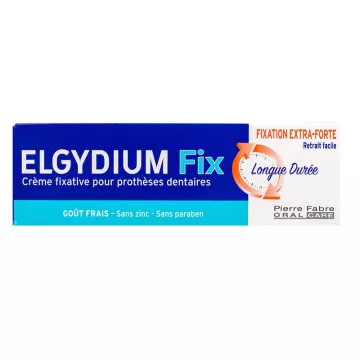
- Zinc-free adhesives — recommended: conventional formulas contain zinc (improves the cream’s consistency) — prolonged daily use with ingestion of excess product can lead to zinc accumulation → documented peripheral neuropathy — zinc-free formulas (explicitly stated on the packaging) provide the same hold without this risk
- Cleaning residual adhesive: Remove the dentures in the evening—brush off the adhesive from the dentures under lukewarm water — Rinse your mouth and gums to remove gum residue — Do not let the adhesive build up (it promotes stomatitis and bad breath)
When do dentures cause pain, and how should gum pain be managed?
- Causes of pain under dentures: localized pressure points (uneven bone resorption → poor fit) — denture margins that are too long or too sharp — denture stomatitis (chronic inflammation of the mucosa under the denture — caused by Candida and poor hygiene) — Ulcers caused by friction during chewing
- What to do: never grind the dentures yourself (risk of unbalancing the dentures) — consult a dental technician or dentist for targeted grinding — mouthwashes with warm salt water or diluted chlorhexidine relieve irritated mucous membranes — Persistent ulcers (lasting > 2 weeks without the denture) require a medical evaluation to rule out a pathological cause
- Management of denture stomatitis: Always remove the denture at night — Thoroughly clean the inner surface of the denture using an antifungal effervescent tablet — Use antifungal mouthwashes (amphotericin B) if candidiasis is confirmed — See the periodontitis page for associated gingival conditions
- Preventing bone resorption and prolonging stability: an implant-supported overdenture is the only solution that truly preserves bone—in the absence of one, maintain healthy oral mucosa, have the denture relined regularly, and plan for prosthetic replacement every 5–8 years
What signs indicate that you should consult your dentist or prosthodontist?
- Signs of a poor fit that should not be ignored: dentures that slip or fall out at the slightest opening of the mouth or while eating—inability to eat normal foods—changes in speech (whistling sounds, poorly articulated consonants)—visible sagging of the cheeks or lips (advanced bone resorption)
- Warning signs involving the gums and oral mucosa: ulcers lasting more than 2 weeks even without dentures — painful red patches under the dentures (stomatitis) — swelling or lumps — any suspicious lesions on the oral mucosa should be evaluated by a dentist or doctor
- Recommended follow-up frequency: consultation with a denturist or dentist 1 to 2 times per year, even in the absence of pain — relining every 3–5 years depending on progression — complete replacement every 5–8 years — wearers of implant-supported overdentures require specific follow-up (checking attachments, cleaning abutments)