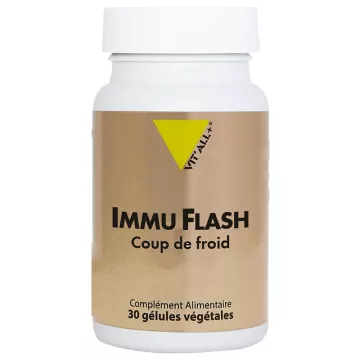
A cold refers to an acute ENT infection with sudden onset, triggered by exposure to cold or a sudden change in temperature. Cold does not directly cause the infection but weakens the nasal mucosa’s defenses through vasoconstriction, reducing mucociliary clearance and the production of secretory IgA—which explains why rhinitis can develop within a few hours. Clinically: chills, rapid nasal congestion, clear discharge, mild throat irritation, fatigue, and low-grade fever (< 38.5°C). Without complications, recovery occurs spontaneously within 5 to 10 days.
The first 24–48 hours are critical. Nasal irrigation with saline solution or hypertonic seawater mechanically removes viruses from the mucous membranes and restores the fluidity of secretions. Essential oils of cineole-type eucalyptus (via diffusion or steam inhalation) have mucolytic and antiviral properties—they thin secretions and stimulate ciliary activity. Increased hydration (2–2.5 L/day) supports phagocytic activity and prevents the development of a residual dry, irritating cough, which is common when secretions thicken due to insufficient hydration.
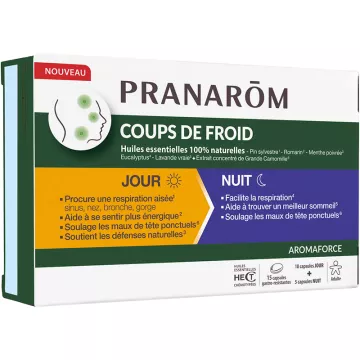
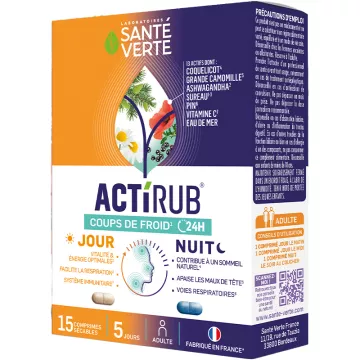
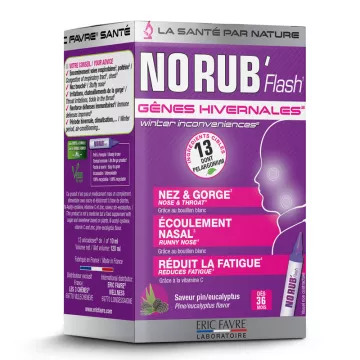
Four active ingredients form the foundation of the fast-acting formulas available at drugstores. Black elderberry (berry extracts standardized for anthocyanins) inhibits viral hemagglutinins—its effectiveness in reducing the duration of symptoms by 3 to 4 days has been documented. Propolis exerts a direct antiseptic effect on theoropharyngeal mucous membranes, inhibiting viral and bacterial replication. A high-dose of vitamin D3 (2,000–4,000 IU over 3–5 days) mobilizes the innate immune system via antimicrobial peptides (cathelicidin, defensins). Day/Night complexes in packets or tablets combine vitamin C, natural decongestants, and zinc to address daytime symptoms and promote recovery at night.
Nasopharyngitis is the most common complication—spread to the upper respiratory tract accompanied by a fever > 38.5°C and sore throat. Prolonged rhinitis (> 10–14 days) can progress to sinusitis due to obstruction of the paranasal ostia. Untreated irritation can progress to bacterial pharyngitis (a streptococcal rapid test is recommended before starting any antibiotic therapy). The onset of a fever > 39°C lasting > 48 hours or chest pain requires urgent medical attention.
A common cold develops gradually over 24–48 hours with predominant nasal symptoms and a low-grade fever or no fever at all. The flu sets in suddenly within a few hours with a high fever (39–40°C), intense muscle aches, and severe fatigue. Viral laryngitis (hoarseness, barking cough) may accompany or complicate a common cold. Tonsillitis presents with severe odynophagia, a fever > 38.5°C, and cervical lymphadenopathy—a rapid streptococcal test is recommended before starting any antibiotic therapy.
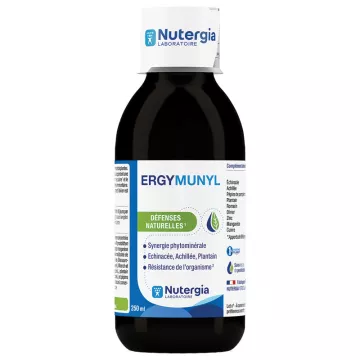
Three complementary strategies reduce the frequency of colds. Basic immune support (vitamin D3 1,500–2,000 IU/day from November to March, zinc 15–25 mg/day, probiotics) is the first line of defense. Barrier measures (daily nasal rinsing with isotonic seawater, ventilating rooms for 10 minutes a day) reduce the environmental viral load. A properly administered cold-prevention regimen (echinacea + propolis + zinc, 3–4 weeks) boosts the immune system before the next cold season.