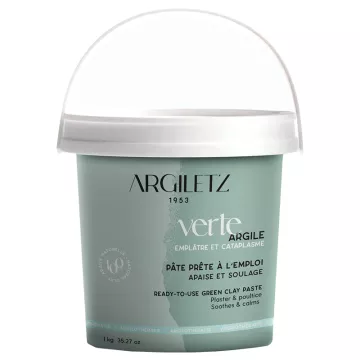
What is clay, and what are its benefits?
Clay is a natural substance rich in minerals that has been used for centuries for its cosmetic and soothing properties.
The benefits of clay for the skin span several complementary areas:
- Purification: It absorbs impurities and excess sebum, leaving skin visibly clearer.
- Gentle hydration: Certain varieties, such as white clay, provide a moisturizing and soothing effect, perfect for dry or sensitive skin.
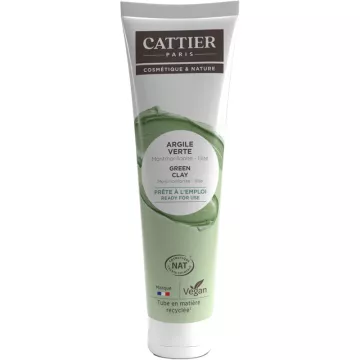
- Reducing blemishes: Green clay helps reduce pimples and blackheads thanks to its natural absorbent and antibacterial properties.
- Regeneration: Red clay stimulates microcirculation in the skin and promotes a more radiant complexion.
To incorporate these benefits into your routine, discover our selection of purifying and hydrating masks formulated with clay.
Which types of clay are best for which skin care needs?
Each typeof clay has specific properties suited to a particular skin type and specific needs:
- Green clay: Highly absorbent and purifying, it’s suitable for oily skin, acne-prone skin, andexcess sebum.
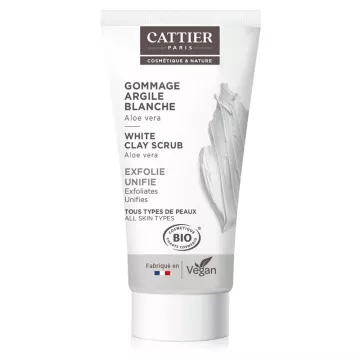
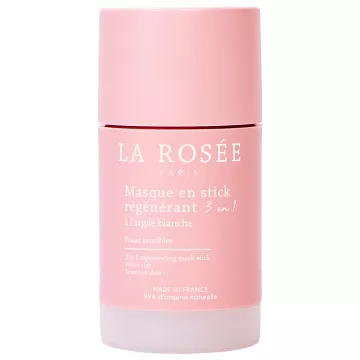
- White clay (kaolin): the gentlest, it hydrates, soothes, and is suitable for dry, sensitive, and mature skin.
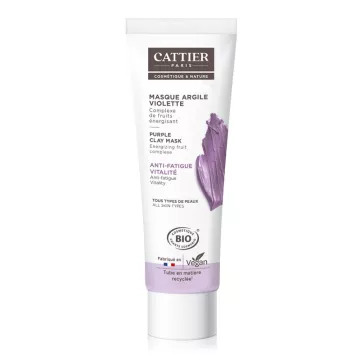
- Red clay: rich in iron oxide, it revitalizes and brightens the complexion, making it ideal for restoringradiance to dull or tired skin.
- Yellow clay: less absorbent than green clay, it revitalizes and softens combination and sensitive skin.
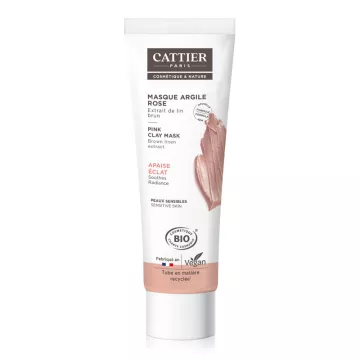
- Pink clay: a blend of red and white clay, it has a gentle, soothing effect on sensitive or reactive skin.
How do you use clay for facial care?
To fully benefit from the properties ofclay, follow these five steps in order:
- Preparation: Mix the clay powder with mineral water or floral water until you obtain a smooth paste.
- Application: Spread the paste over your face, avoiding the eye and lip areas.
- Dwell time: Leave on for 10 to 15 minutes; never let the clay dry completely, as this can dry out the skin.
- Rinsing: Rinse with lukewarm water using circular motions to gently exfoliate the skin.
- Moisturizing: Apply a suitable moisturizer to nourish and soothe the skin immediately after rinsing.
What are the possible side effects of a clay treatment?
Clay treatments are generally well tolerated, but some side effects may occur under certain conditions:
- Skin dryness: Using the treatment too frequently or leaving it on for too long can dehydrate the skin.
- Allergic reactions: These are rare but possible; always perform a patch test before first use.
- Irritation: Very sensitive skin may react, particularly if essential oils have been added to the mixture.
How often should you use clay-based skincare products?
The frequency of application should be tailored to your skin type and individual tolerance:
- Oily or acne-prone skin: 2 to 3 times a week to control sebum and minimize breakouts.
- Combination skin: 1 to 2 times a week, focusing on the oilier T-zone.
- Dry and sensitive skin: once a week, or even every two weeks, to avoid irritation or a tight feeling.
Can clay be used on other parts of the body?
Clay is versatile and can be used well beyond the face for a variety of targeted benefits:
- Hair: Clay masks purify the scalp and soothe itching on an oily scalp.
- Body: Body wraps visually firm the skin and improve skin comfort after a tiring day.
- Feet: Clay foot baths relax and relieve the sensation of heavy legs or swollen feet.
For gentle daily use, discover our clay soap, formulated to gently purify the skin.
Can clay be combined with other natural ingredients?
Combiningclay with other natural active ingredients enhances its benefits and allows you to tailor your skincare routine to your specific needs:
- Honey: It provides extra hydration and nourishment for sensitive skin.
- Essential oils: Lavender soothes sensitive skin, while tea tree oil purifies blemish-prone skin (use with caution on children, pregnant women, or nursing mothers).
- Aloe vera: It complements the clay with gentle moisturizing and healing properties.
How do you choose the right clay for your skin type?
The choice ofclay depends directly on your skin type and your main concern:
- Oily and acne-prone skin: opt for green clay for its purifying and sebum-regulating properties.
- Dry and sensitive skin: Opt for white clay (kaolin), which is gentler and naturally moisturizing.
- Dull and tired skin: Choose red clay, which stimulates microcirculation and restores radiance.
- Combination skin: Choose yellow clay, which is less absorbent and balances the skin without drying it out.
Can clay be used during pregnancy?
External use ofclay is generally well tolerated during pregnancy, provided you follow a few basic precautions.
- Avoid certain essential oils: many are not recommended during pregnancy and breastfeeding; do not add any essential oils without consulting a healthcare professional.
- Always test first: the skin becomes more sensitive during pregnancy; a preliminary skin test is essential.
- Seek advice: Consult a doctor, midwife, or pharmacist before introducing a new product into your routine.
For a selection tailored to this time in your life, check out our section dedicated to pregnant women.
What are the benefits of clay baths for the body?
Clay baths and wraps offer several benefits for the body:
- Purifying effect: Clay absorbs impurities from the skin’s surface during prolonged contact.
- Muscle relaxation: The heat of the bath, combined with minerals, soothes tired muscles.
- Stimulation of microcirculation: body wraps boost skin metabolism and leave your legs feeling lighter.
- Skin soothing: useful as a complementary treatment for skin prone to irritation,eczema, or psoriasis, in addition to medical treatment and never as a replacement.
Can you make homemade clay treatments?
Making aclay treatment at home is simple, economical, and customizable. Here’s a basic recipe for a face mask:
- Ingredients: 2 tablespoons of powdered clay, 1 to 2 tablespoons of mineral water or floral water, a few drops of neutral vegetable oil (optional).
- Preparation: Mix the clay with the liquid in a non-metallic container (wood, glass, or ceramic) until you obtain a smooth paste.
- Application: Apply to a clean face, avoiding the eyes and lips.
- Leave-on time: Let sit for 10 to 15 minutes at most, then rinse with lukewarm water.
Can clay be consumed internally?
Ingestingclay is a sensitive issue that requires great caution and prior medical advice.
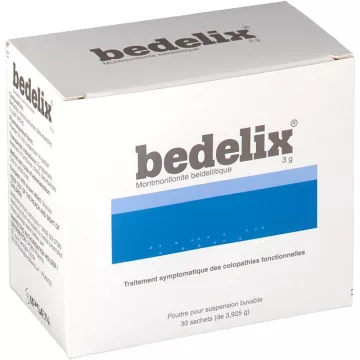
In 2019,ANSES issued an adverse opinion regarding the consumption of clay due to its natural lead content, which may lead to cumulative exposure, as well as the risks of intestinal obstruction, severe constipation, and interactions with other medications being taken concurrently.
The ANSM has also advised against certain clay-based medicinal products for children under two years of age and for pregnant women.
Clay intended for external cosmetic use is not designed or authorized for oral consumption. Only medications that are specifically formulated and authorized may be used for this purpose, upon prescription or the advice of a healthcare professional.
Before any internal use, always consult your doctor or pharmacist, who will assess its appropriateness based on your health condition and current treatments.