What is a bruise, and how does it develop?
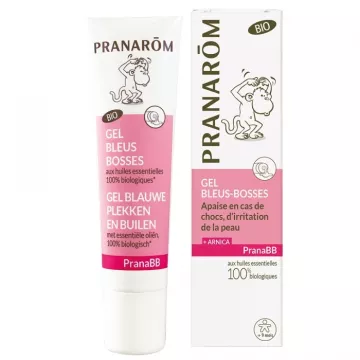
A bruise is the leakage of blood into the subcutaneous tissues resulting from the rupture of capillaries and venules, without any break in the skin. It is distinct from a hematoma (a localized, palpable collection of blood) and purpura (a non-traumatic vascular lesion). Its color changes as hemoglobin breaks down enzymatically. Treatments for bruises and contusions are available in the “Bumps and Bruises” section of the store.
- Color progression over 7 to 14 days: purplish-red (fresh oxygenated blood) → blue-black (deoxyhemoglobin) → green (biliverdin—degradation by heme oxygenase) → yellow-brown (bilirubin—final degradation) → complete disappearance
- Distinction between ecchymosis and hematoma: ecchymosis = blood diffused into the tissues (flat, superficial lesion, not palpable) — hematoma = organized collection of clotted blood, palpable, sometimes painful, and requiring medical drainage if large (subdural, retroperitoneal, periorbital hematoma)
- Distinguishing between ecchymosis and purpura: a bruise has an identifiable traumatic cause and resolves with finger pressure — purpura is spontaneous, does not resolve with finger pressure, and may indicate vasculitis, thrombocytopenia, or a coagulopathy requiring urgent medical evaluation
What factors contribute to frequent or abnormal ecchymoses?
- Nutritional capillary fragility: vitamin C deficiency (subclinical scurvy—impaired collagen synthesis in blood vessel walls)—bioflavonoid deficiency (vitamin P—increased capillary permeability)—vitamin K deficiency (defect in the synthesis of coagulation factors II, VII, IX, and X)
- Medications that cause bruising: anticoagulants (warfarin, DOACs—apixaban, rivaroxaban)—antiplatelet agents (aspirin, clopidogrel, ticagrelor) — NSAIDs (ibuprofen, ketoprofen) — long-term corticosteroids (atrophy of subcutaneous connective tissue) — SSRIs (serotonergic antidepressants — moderate thrombocytopenia) — never discontinue these medications without medical advice
- Hemostatic disorders to rule out: thrombocytopenia (complete blood count—platelets < 100,000/µL) — von Willebrand disease — hemophilia A and B — liver disease (deficiency of liver-synthesized clotting factors) — certain hematologic cancers (leukemias)
- Skin aging: senile purpura (Bateman’s purpura) — thinned skin + reduced connective tissue → bruises on the forearms and backs of the hands without identifiable trauma — benign but must be distinguished from a coagulopathy
- See a doctor if: spontaneous bruising without trauma — larger than a 2€ coin without significant impact — persists for more than 2 weeks — accompanied by fever — periorbital bruising following a head injury (a “raccoon eyes” sign — skull base fracture)
Natural Remedies and Nutrition for Bruises
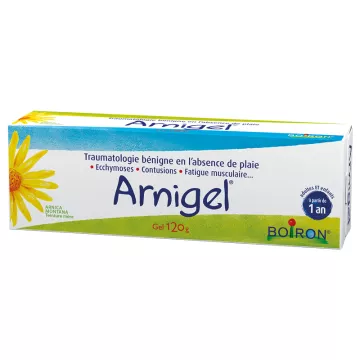
- Arnica montana: anti-inflammatory helenine and helicoside — reduces swelling and accelerates the resorption of extravasated blood — apply gel or cream 2 to 3 times daily to the bruised area — never apply to broken skin or open wounds — homeopathy (Arnica 5 CH orally, 5 granules 3 times a day)
- Aloe vera: soothing and anti-inflammatory properties — pure gel applied topically — relieves skin sensitivity in the bruised area — combined with arnica in certain combination gels
- Vitamin C: 500 to 1,000 mg per day — a cofactor in vascular collagen synthesis — strengthens capillary walls — reduces the tendency to bruise in cases of deficiency — citrus fruits, kiwi, bell peppers, fresh parsley
- Bioflavonoids (rutin, hesperidin, quercetin): reduce capillary permeability and fragility — enhance the action of vitamin C — clinical data on vascular fragility — as a supplement or through berries, citrus fruits, onions, green tea
- Zinc: a cofactor in wound healing and tissue repair — 10 to 15 mg/day — oysters, red meat, legumes, nuts