0
Menu

Bar soap: Is it more eco-friendly and economical than liquid soap?

Filter
Number of products : 10
Sort
Sort
Close
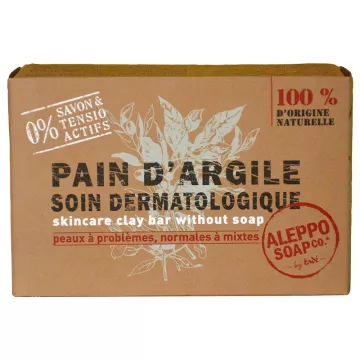
Tadé Clay Bar Soap-Free Dermatological Care 320 g Tadé Clay Bar Soap-Free Dermatological Care 320 g
€4.99
Shipped within 24h
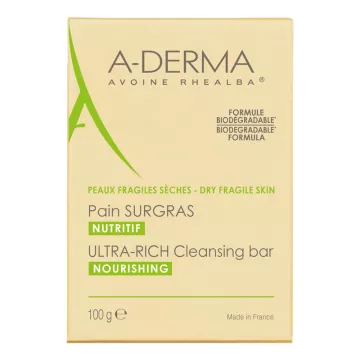
A-Derma Rhealba Oat Surgras Soap A-Derma Rhealba Oat Surgras Soap
1 unit box of 2
€6.49
Add to cart
Shipped within 24h
Ladrôme Pur' Tea Tree Moisturizing Soap 105 g Ladrôme Pur' Tea Tree Moisturizing Soap 105 g
€6.49
Shipped within 24h
Vitry Les Essentiels Exfoliating Body Wash 150 g Vitry Les Essentiels Exfoliating Body Wash 150 g
€11.65
Shipped within 24h
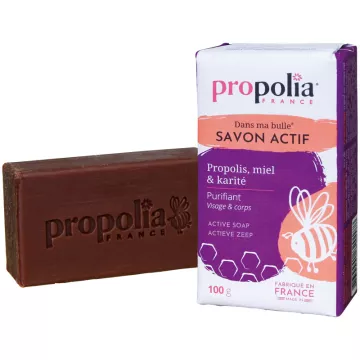
Propolia Active Purifying Face and Body Soap Bar, 100 g Propolia Active Purifying Face and Body Soap Bar, 100 g
€4.49
Shipped within 24h
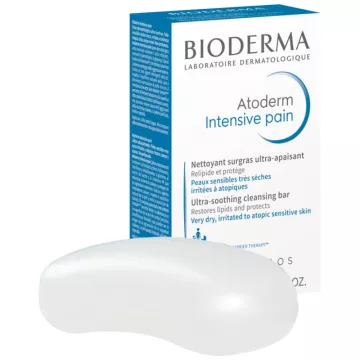
Bioderma Atoderm Intensive Pain Surgras Bioderma Atoderm Intensive Pain Surgras
1 unit box of 2
€10.90
Add to cart
Shipped within 24h
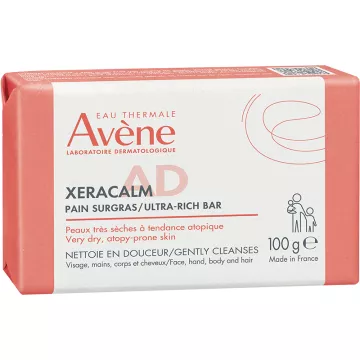
Avene Xeracalm A.D Superfatted Cleansing Bar 100g Avene Xeracalm A.D Superfatted Cleansing Bar 100g
€6.90
Shipped within 24h
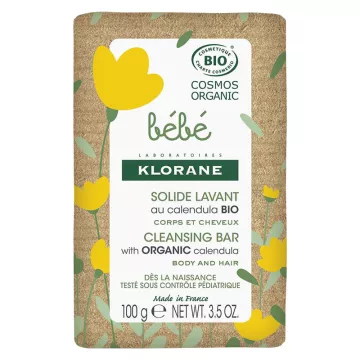
Klorane Bébé Bio Pain Solide Lavant 100 g Klorane Bébé Bio Pain Solide Lavant 100 g
€6.90
Shipped within 24h

What is a bar of soap, and how is it made?

A bar of soap is a solid hygiene product obtained through saponification: a chemical reaction that transforms vegetable or animal oils into soap and glycerin when treated with an alkaline solution (caustic soda). The quality of a bar of soap depends largely on the oils used. Olive oil provides softness and nourishing properties;coconut oil creates a rich lather and offers cleansing properties; shea butter enriches the formula with emollients. The glycerin naturally produced during saponification is a valuable humectant that industrial processes often remove, unlike artisanal soaps, which retain it.

What are the advantages of bar soap compared to liquid soaps?

Bar soap offers several concrete benefits:

  • Less plastic packaging: Most bar soaps are sold unwrapped or in minimal cardboard packaging.
  • Longer shelf life: A 100-gram bar is generally equivalent to 2 to 3 bottles of liquid soap of the same weight.
  • More concentrated formulas, with less water and fewer chemical preservatives.
  • Suitable for sensitive skin when the formula is free of fragrances and dyes.
  • Easier to transport and store: lighter to use and easier to take along when traveling.

Liquid soap remains more practical in hospital settings or shared spaces (public hygiene), but for everyday household use, bar soap is the simplest and most economical option. The pH level is worth considering: most traditional bar soaps are alkaline (pH 9–10), which can slightly disrupt the skin’s natural acid mantle. Thorough rinsing and a superfatted formula help counteract this effect.

How do you choose the right bar of soap for your skin type?

The formula must match your skin’s needs:

  • Dry skin: ultra-moisturizing soap enriched with shea butter, sweet almond oil, or avocado oil—the ultra-moisturizing content (5–20%) ensures a protective residue on the skin.
  • Sensitive skin: a hypoallergenic, fragrance-free formula containing oats or aloe vera for their soothing properties.
  • Oily or acne-prone skin: soap made withclay (green or white) to regulate sebum without stripping the skin’s barrier.
  • Normal to combination skin: olive oil or goat’s milk soap, which is well-tolerated and versatile.

It’s important to check the formula’s pH: an alkaline bar of soap can disrupt the skin’s hydrolipidic film. Syndet (synthetic detergent) soaps, which are pH-neutral, are better suited for highly reactive skin.

Is bar soap hygienic for family use?

Yes: although bacteria can settle on the surface, they do not multiply and do not survive long on a dry bar of soap. The lather produced during washing washes away germs. To maximize hygiene and extend the bar’s lifespan:

  • Use a soap dish with drainage holes that allows water to drain away.
  • Rinse the soap with water before use to remove the thin surface layer.
  • Do not let the bar of soap sit in water between uses.
  • Wrap it in a breathable cloth during long periods of non-use.

What are the environmental impacts of bar soap?

The environmental footprint of bar soaps is generally more favorable than that of liquid soaps: less water in the formula, less packaging, and less transportation (lower weight for the same number of washes). Formulas made with vegetable oils from organic farming, free of sulfates and silicones, are more biodegradable. Choosing a vegan soap—free of uncertified palm oil or made with RSPO-certified palm oil—further enhances this eco-friendly profile. Local, artisanal production further reduces the carbon footprint.