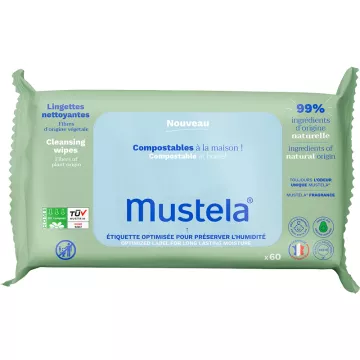
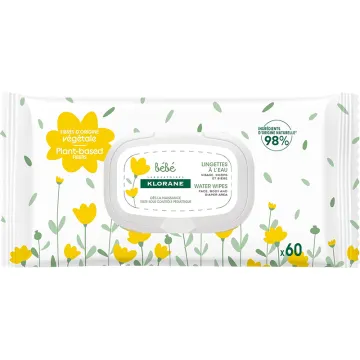
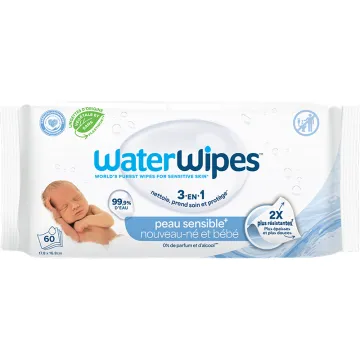
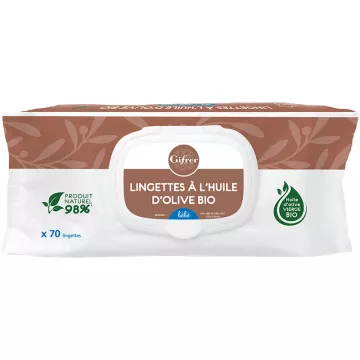
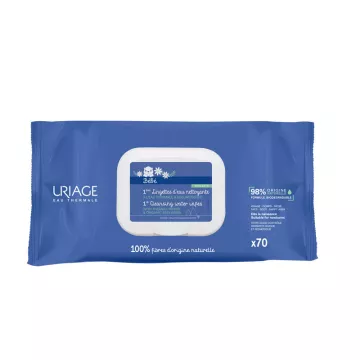
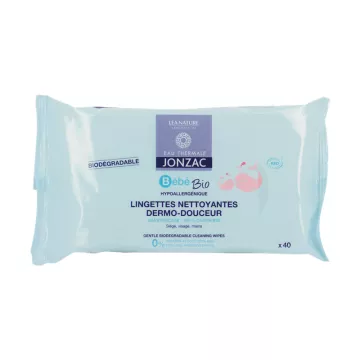
What is a baby wipe, and what is its main use?
Baby wipes are soft, pre-moistened cloths designed for the daily care of infants and young children. Their main uses are:
- Cleaning the bottom during diaper changes
- Cleaning the face and hands after meals
- Personal hygiene on the go, when there’s no access to running water
- Refreshing the baby in the summer or when they’re sweaty
- Spot cleaning in case of spit-up or messes
They are part of a dailybaby hygiene routine, complementing other care products (cleansing gel, liniment, micellar water). At home, oil-and-calcium liniment remains a popular classic as an alternative or for alternating use.
What are the benefits of baby wipes?
Several benefits explain their popularity in parenting routines:
- Immediateconvenience —no preparation required
- On-the-go hygiene: single-use, ready to use
- Gentle, pre-measuredformulas with soothing and moisturizing active ingredients
- Suitable for sensitive skin in specially formulated versions
- Wide variety: fragrance-free, hypoallergenic, organic, biodegradable
- Preservation of the hydrolipidic film in high-quality formulations
- Saves parents valuabletime
However, they are not a substitute for proper cleansing with water during bath time or after a large bowel movement: their use is complementary.
How to choose the best baby wipes?
The choice depends on several criteria:
- Alcohol-free, fragrance-free, dye-free
- Phenoxyethanol-free in wipes intended for the diaper area of children under 3 years old (prohibited under EU Regulation 2019/1257)
- Free of long-chain parabens, MIT/MCIT (methylisothiazolinone), and EDTA
- Soothing ingredients: aloe vera, chamomile, calendula, vegetable glycerin
- Soft, non-wovenfabric with no abrasive texture
- Labeled “tested under dermatological and pediatric supervision”
- Eco-labels: Cosmebio, Ecocert, Cosmos Organic, European Ecolabel
- Airtight,resealable packaging to preserve moisture
Consult your pharmacist if you have particularly sensitive or atopic skin to identify the most suitable formulas.
What are the best practices for daily use?
For best results:
- Close the package tightly after each use to prevent the product from drying out
- Use a separate wipe for the face and for the diaper area to prevent cross-contamination
- Wipe from front to back for girls to minimize the spread of intestinal bacteria
- Do not flush down the toilet: risk of clogging and significant environmental impact
- Dispose of in the designatedtrash can, ideally one with a lid
- Limit use to occasional instances at home and opt for water during bath time
- Gently patthe skin dry after use to prevent maceration
For a daily routine that’s gentle on the skin, alternating with a traditional diaper change using water and liniment remains a best practice.
Are baby wipes suitable for sensitive skin?
Yes, several product lines are specifically formulated for the most delicate skin:
- Labeled “hypoallergenic” in accordance with Regulation (EC) No. 655/2013
- Free of the 26 allergens required to be listed on the label
- Strictly fragrance-free, with no identified allergenic preservatives
- Minimalist formulation with a short, easy-to-read INCI list
- Documenteddermatological and pediatric testing
- Formula suitable for newborns (“from birth”)
Always perform a patch test on a small area (inside of the forearm or thigh) 48 hours before regular use, especially for babies with a family history of atopic conditions. If a reaction occurs, discontinue use and switch to a gentler formula or cotton pads and water for diaper changes.
What are some eco-friendly alternatives to conventional wipes?
Several eco-friendly options are available for environmentally conscious families:
- Washable organic cotton wipes: reusable, cost-effective in the long run, washable at 60°C
- Certifiedbiodegradable or compostable wipes: minimize environmental impact
- Cotton and lukewarm water: the simplest solution at home
- Cotton and an oil-and-calcium-based liniment as a natural alternative
- Baby micellar water on reusable cotton pads
- Bamboo wipes—soft and durable
According to institutional estimates, a baby uses several thousand disposable wipes before becoming potty-trained. Reusable alternatives significantly reduce this impact.
Using baby wipes on the face: Is it safe?
Yes, as long as you follow a few rules:
- Choose wipes specifically designed for the face or gentle, multi-purpose formulas
- Fragrance-free, alcohol-free, hypoallergenic
- Test on a small area of skin before regular use
- Avoid the eye area and mucous membranes
- Use a dedicated wipe—never one that has been used for the diaper area
- Do not rub: gently pat the skin
For daily facial routines, however, a cleansing water applied with a cotton pad is often preferable, as it is gentler on an infant’s delicate facial skin.
Do baby wipes prevent diaper rash?
The right wipes can help prevent it, provided they are chosen carefully:
- Alcohol-free and fragrance-freeformulas that do not cause irritation
- Soothing ingredients: aloe vera, panthenol, glycerin
- Gentle cleansing without excessive rubbing
- Thorough drying after use to limit maceration
- Frequent diaper changes as a supplement (every 2 to 3 hours)
- Apply a zinc oxide-basedprotective cream if the skin is sensitive
Ifdiaper rash has already set in, wipes can paradoxically worsen the irritation: in this case, clean the area with lukewarm water and a cotton pad, followed by a targeted cream. Redness that persists for more than 3 to 5 days, is oozing, or has white spots (suggesting a fungal infection) requires a pediatrician’s evaluation.
How should you store baby wipes properly?
To ensure they remain effective and safe to use:
- Seal the packagetightly after each use
- Store at room temperature (15 to 25 °C), away from direct sunlight
- Do not store in a car in hot weather: rapid deterioration
- Observe the PAO (Period After Opening) indicated on the packaging
- Check before each use for mold, unusual odors, or a dry or abnormal texture
- Do not rehydrate dried wipeswith water (risk of contamination)
A package that has been opened for several weeks, especially in a humid environment, should be systematically inspected visually and by smell before use on a baby’s delicate skin.