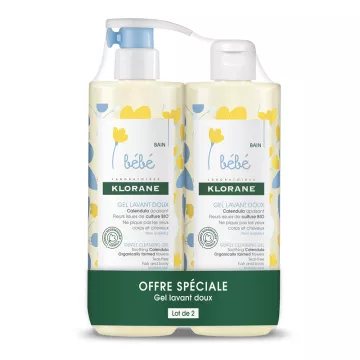
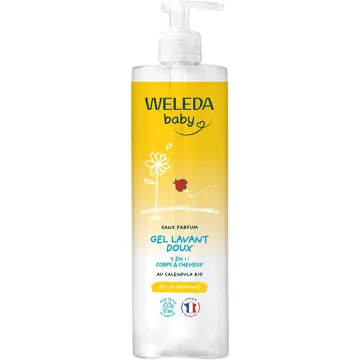
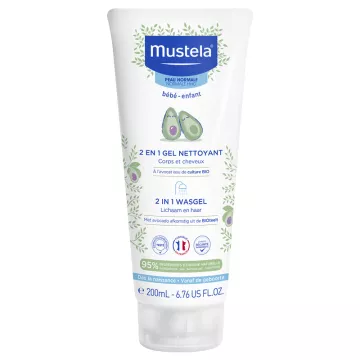
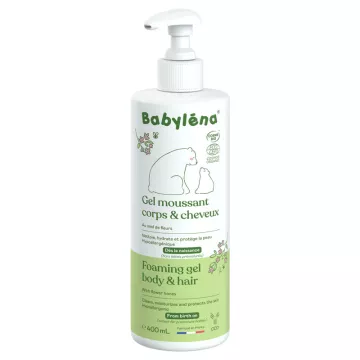
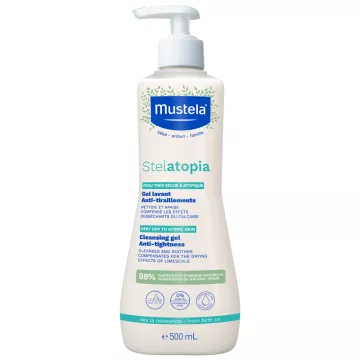
What is baby wash gel, and what is its role in daily care?
Baby wash is a cosmetic cleanser specially formulated to be gentle on the delicate skin of infants and young children. Unlike traditional soaps:
- A physiological pH close to that of a baby’s skin (approximately 5.5)
- A gentle cleansing base (syndet) free of harsh surfactants
- A simple, hypoallergenicformula designed to minimize the risk of irritation
- Preserves the hydrolipidic film, which is essential for the skin barrier
- Ophthalmologically tested toensure it does not sting the eyes
An infant’s skin is three to five times thinner than an adult’s, with an immature skin barrier and a slightly higher pH. An unsuitable cleanser strips away this protective film and promotes dryness, irritation, and skin imbalance. A baby’s daily cleansing routine therefore directly impacts the long-term health of their skin.
What ingredients should you look for in a baby wash?
Several ingredients are known for their gentleness and compatibility with an infant’s skin:
- Calendula: a floral extract traditionally valued for its gentle effect on sensitive skin
- Sweet almond oil: emollient and nourishing; should only be used if there is no nut allergy
- Aloe vera: moisturizing and soothing for irritated skin
- Colloidal oatmeal: known for soothing skin prone to atopic conditions
- Vegetable glycerin: a gentle humectant that helps maintain moisture
- Shea butter: restores skin suppleness
- Allantoin: known for its skin-soothing properties
Conversely, avoid products containing long-chain parabens, harsh sulfates (SLS, SLES), allergenic synthetic fragrances, artificial dyes, or phenoxyethanol—which is banned in products for the diaper area of children under 3 years of age under European Regulation 2019/1257. A short, easy-to-read ingredient list remains the best indicator of quality.
How to Use Baby Cleansing Gel Effectively?
Applying the wash gel follows a simple sequence that quickly becomes a soothing ritual for both baby and parents:
- Prepare the bath at 37°C, checking the temperature with a thermometer or by testing it on the inside of your wrist
- Gently wet the baby’sskin with lukewarm water
- Scoop a small amount of gel (about the size of a hazelnut) onto a soft washcloth or directly into your hand
- Gently massage the entire body in circular motions, without rubbing
- Pay special attention to skin folds (neck, armpits, groin) where moisture tends to accumulate
- Rinse thoroughly with clear lukewarm water to remove all residue
- Pat dry with a soft towel, paying special attention to the skin folds
- Apply a moisturizer or suitable body lotion immediately after the bath to lock in moisture
For newborns, limit bath time to 5–10 minutes to prevent the skin from drying out. The recommended frequency is 2 to 3 baths per week for an infant, with daily care of the diaper area and face between baths.
What are the advantages of baby wash gel compared to other products?
Baby cleansing gel offers several advantages over other formats:
- Tear-free formula: doesn’t sting the eyes, ideal for both shampooing and body washing
- A fluid texture that’s easy to dispense and spread
- Rinses off easily and completely without leaving a residue
- Preserves the hydrolipidic film thanks to gentle cleansing agents (syndet)
- Economical formats with pumps or foam-generating bottles
- Convenient storage (long shelf life after opening)
- Versatility: often suitable for both body and hair (2-in-1 formulas)
Compared to traditional soap, which can strip the skin, or ultra-moisturizing soap (popular but more drying over the long term if too harsh), cleansing gel offers an optimal balance of gentleness, effectiveness, and ease of use for the sensitive skin of infants.
Can baby wash be used from birth?
Yes, most baby cleansing gels are formulated for use from birth, provided certain precautions are followed:
- Check the packaging forthe label “from birth”
- Opt for ultra-minimalist formulas during the first few months
- Limit bath frequency to 2–3 times a week during the first few weeks
- Perform a patch test on a small area before using the product on the entire body for the first time
- Monitor the skin for 48 hours after introducing a new product
Before the umbilical cord falls off (around 7 to 15 days), cleaning with plain water is sufficient. The face and bottom should be washed daily with a specific, appropriate product (cleansing milk, baby micellar water, liniment). If you have any doubts about a newborn with special needs (family history of atopic conditions, prematurity), ask your pediatrician or pharmacist for advice.
What certifications should you look for on a baby cleansing gel?
Several certifications attest to the reliability of a formulation and the quality of its ingredients:
- Cosmebio: the French standard for organic and eco-friendly cosmetics
- Ecocert: a rigorous independent certification body
- Cosmos Organic: a harmonized European standard
- Natrue: an international label for organic and natural cosmetics
- Nature et Progrès: among the most stringent standards in organic cosmetics
- Slow Cosmétique: criteria for transparency and artisanal manufacturing
- Statement: “Tested under pediatric and dermatological supervision”
- “Hypoallergenic” claim governed by Regulation (EC) No. 655/2013
These certifications guarantee the absence of harmful substances, the use of ingredients derived from renewable resources, and environmentally friendly manufacturing processes. However, they do not systematically prevent individual allergies: caution is still advised during the first few uses.
How much cleansing gel should be used per bath?
The proper amount prevents overloading the skin and reduces the risk of irritation:
- Infant (0–6 months): half a hazelnut-sized amount is enough for the entire body
- Infant (6–24 months): a hazelnut-sized amount in the hand or on the washcloth
- Children (2 years and older): adjust according to body size and activity level
- Alternative method: Add a few drops to the bathwater for a gentler cleanse
Never use too much product: an excess of surfactants, even mild ones, strips the skin and promotes dryness. It’s better to use a small amount applied evenly than a large amount that isn’t rinsed off properly. For particularly dry skin, spacing out baths and applying an emollient after each wash is more effective than increasing the amount of cleanser.
Is baby wash suitable for the hair?
Many 2-in-1 cleansing gels are designed to clean both your baby’s body and hair with a single product:
- Maximum convenience: just one product in the bathroom
- Formula suited to an infant’s delicate, sensitivescalp
- Tear-free formula, particularly useful for shampooing
- Dermocosmetic compatibility for fine or curly hair
Always check the label for “body and hair” or “2-in-1” before using it on the hair. Some products are intended solely for the body and require a specific baby shampoo for the scalp, particularly when cradle cap is present, which calls for targeted care.
How to choose a cleansing gel for atopic skin?
For a baby prone to atopic dermatitis, choosing the right cleansing gel is especially important:
- Look for “atopic skin” or “sensitive skin” on the packaging
- Containscolloidal oatmeal, known for its skin-soothing properties
- Shea butter or other nourishing lipids to restore the skin’s protective barrier
- Fragrance-free, alcohol-free, and dye-free
- Free of identifiedallergens (the 26 allergens that must be listed on the label)
- Documenteddermatological and pediatric testing
- Emollient and ultra-moisturizingtexture to help prevent dryness
- Recommended by a pediatrician or dermatologist for recurrent flare-ups
Product lines designed for atopic skin are specifically formulated to address this condition. Professional advice remains invaluable for tailoring the overall skincare routine (frequency of baths, duration, water temperature, post-bath care).
Should you always rinse off the baby wash after use?
Thorough rinsing is essential to protect the baby’s skin:
- Complete removal of any residue that could dry out or irritate the skin
- Prevents contact allergies caused by residual surfactants
- Maintains optimal skinhydration
- Preserves the hydrolipidic film by preventing maceration
- Minimizes skin rashes and discomfort
Use lukewarm water (37°C maximum) to rinse thoroughly, gently running your hand over the skin to ensure no lather remains, especially in skin folds (neck, armpits, groin). Gently patting the skin dry, followed by a moisturizer suitable for a baby’s skin, is the ideal way to complete the routine.
Which cleansing gel should you choose for a baby with eczema?
For a baby with atopic eczema, the choice of cleanser directly affects the frequency and severity of flare-ups:
- A cleansing gel or ultra-moisturizing cleansing oil specifically formulated for skin prone to atopic conditions
- Strictly fragrance-free, free of identified allergenic preservatives
- Soothing ingredients: vegetable glycerin, allantoin, panthenol, colloidal oats
- Physiological pH that respects the skin’s microbiome
- Ultra-gentle cleansing bases (syndet, sucrose esters)
- Suitable for fragile and dehydratedskin
- Compatible with emollient skincare products applied after bathing
Foreczema in infants, a consultation with a dermatologist or pediatrician is essential to tailor the overall treatment plan. Gentle cleansing, daily application of an emollient, and managing triggers (heat, wool clothing, fragrances) are the cornerstones of the recommended routine. In the event of a severe flare-up with weeping lesions, medication may be prescribed in addition to skincare products.