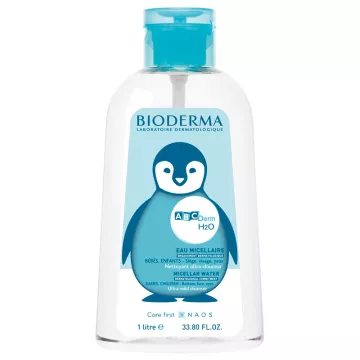
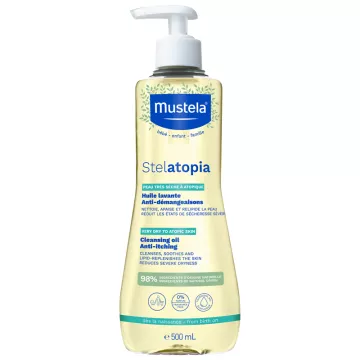
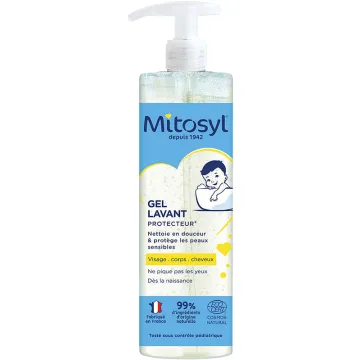
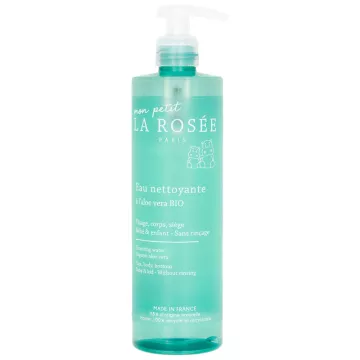
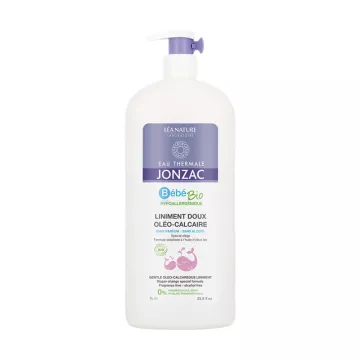
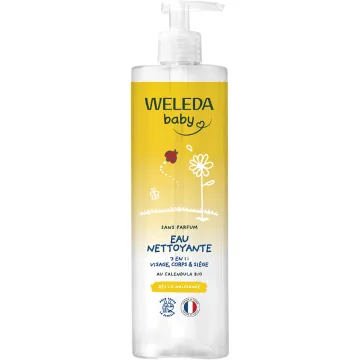
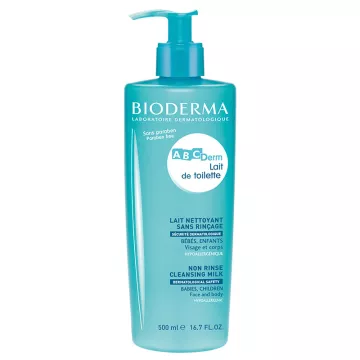
What is a baby cleanser, and why is it essential?
A baby cleanser is specially formulated to be gentle on an infant’s thin, delicate skin, whose still-developing skin barrier remains particularly susceptible to external irritants. Its key features:
- Mild surfactants, free of harsh sulfates (SLS, SLES)
- A physiological pH close to 5.5
- Formulas free of long-chain parabens and synthetic fragrances
- Preserves the protectivehydrolipidic film
- Frequently tested forophthalmic tolerance
This gentleness is crucial because an unsuitable product can quickly strip a baby’s skin, leading to dryness, irritation, and infections. For a baby’s daily bath routine, choosing a truly suitable cleanser lays the foundation for long-term skin health.
What ingredients should you look for in a baby cleanser?
Several ingredients are known for their compatibility with an infant’s skin:
- Aloe vera: moisturizing and soothing
- Sweet almond oil: nourishing (unless the baby is allergic to nuts)
- Chamomile extract: a traditional choice gentle on delicate skin
- Vegetable glycerin: maintains natural moisture
- Panthenol (provitamin B5): soothes the skin
- Calendula: known for its use on sensitive skin
Avoid: harsh sulfates (SLS, SLES), long-chain parabens, allergenic synthetic fragrances, denatured alcohol, artificial dyes, and phenoxyethanol for the diaper area of children under 3 years of age (prohibited under EU Regulation 2019/1257). A short list of ingredients remains an excellent indicator of quality.
How to choose the best baby cleanser?
Criteria to help you find a formula that’s truly suitable:
- Labeled “hypoallergenic” in accordance with Regulation (EC) No. 655/2013
- “Tested under pediatric and dermatological supervision”
- “Soap-free” (syndet formulas with pH-balanced formulations)
- Eco-labels: Cosmebio, Ecocert, Cosmos Organic
- Short, easy-to-readINCI list
- Protective packaging (pump bottle or tube)
- Personalizedpharmaceutical advice for specific skin conditions
For babies with a family history of atopic conditions, consult your pharmacist to identify a formula that is truly suited to the child’s sensitivity.
How often should you use a baby cleanser?
An infant’s skin does not require frequent cleansing with a cleansing product:
- Clean the face and diaper area daily with a gentle cleanser or water and a cotton pad
- Givea full bath with a cleanser 2 to 3 times a week for an infant, up to 3–4 times a week between 6 and 12 months
- Additional spot cleaning as needed after spitting up, on a hot day, or after messy activities
- Warm water at 37°C; limit bath time to 5–10 minutes
- Rinse thoroughly and pat the skin dry carefully, paying special attention to the skin folds
Excessive cleansing strips away the hydrolipidic film, disrupts the skin microbiome, and promotes dryness. For a baby with dry skin, space out cleanser use even further and prioritize daily moisturizing to strengthen the protective barrier.
Are there any risks associated with using these products?
Baby cleansers are formulated to be gentle, but individual reactions are still possible:
- Allergic contact reaction: redness, itching, stinging
- Contact eczema in individuals with atopic skin
- Paradoxical worsening of dryness in cases of incompatibility
Before regular use begins, perform a 48-hour patch test in the crook of the elbow. If a reaction occurs, discontinue use and switch to a gentler formula. A severe reaction (generalized hives, swelling, difficulty breathing) requires an immediate call to 15—an extremely rare risk, but one you should be aware of.
How can you recognize a high-quality baby cleanser?
A few reliable indicators help identify products that are truly well-formulated:
- Organic certifications: Cosmebio, Ecocert, Cosmos Organic, Natrue
- Eco-labels: European Ecolabel, Nature et Progrès
- Free of denatured alcohol, artificial colors, and non-biodegradable silicones
- Documented clinical tests conducted under pediatric and dermatological supervision
- Transparent ingredient list with legible INCI names
- Professional recommendations (midwives, pediatricians, pharmacists)
The Yuka or INCI Beauty apps can help with initial screening, though they are no substitute for informed pharmaceutical advice for the most sensitive skin types.
Can baby cleanser be used all over the body?
Yes, most baby cleansers are designed for use on the entire body:
- Suitable for the face, provided it does not come into direct contact with the eyes
- Suitable for the diaper area and free of phenoxyethanol for children under 3 years of age (French regulation)
- Safe for use in skin folds (neck, armpits, groin)
- Can also be used on the hair in 2-in-1 formulas; check the label
- For thick hair, a specific baby shampoo is still preferable
For leave-on cleansers (cleansing waters, cleansing milks), which are particularly useful for the face and daily diaper changes, check the packaging for age-appropriate labeling.
Can adults use baby cleansers?
Absolutely: Adults with sensitive, irritation-prone, or atopic skin can benefit from these gentle formulas. They preserve the skin’s natural moisture while gently cleansing. Pregnant or breastfeeding women and older adults particularly appreciate their gentle formula. For oily skin, long hair, or colored hair, a suitable adult product is more effective.
Liquid or bar: what’s the difference?
Both formats coexist and offer complementary features:
- Liquid cleanser: easy to measure out, rinses off quickly, ideal for babies who don’t like to stay in the water for long
- Dermatological bar soap or syndet bar: more economical, less packaging, often preservative-free; should be stored in a well-drained area to minimize degradation
- Micellar water or cleansing milk: no rinsing required, convenient for facial cleansing or while on the go
The choice depends on family preferences, the situation (bathing at home, diaper changes, travel), and the child’s skin tolerance. For a comprehensive routine, check out our tips onbaby hygiene.
How should you store baby cleansers properly?
Proper storage conditions preserve the product’s quality:
- A cool, dry place, away from direct sunlight
- Stable room temperature (15–25°C)
- Cap or pump bottle tightly closed after each use
- Observe the PAO (Period After Opening) indicated on the packaging (often 6M, 9M, or 12M)
- Check before each use: smell, texture, color
- Do not store for extended periods in a very humidbathroom
Any change in smell, texture, or color indicates that the product has deteriorated: it’s better to replace the product than to take any risk with your baby’s delicate skin.