What causes age spots?
Age spots, also known as solar lentigines or senile lentigines, are benign areas of hyperpigmentation. Main causes:
- Cumulative sun exposure over decades (the main factor)
- Localizedaccumulation of melanin due to overactivity of certain melanocytes
- Skin aging: slowed cell turnover
- Fair skin type: skin types I through III are more susceptible
- Genetic predisposition in certain families
- History of repeatedsunburns, particularly during childhood
- Prolonged outdoorwork or recreational activities (gardening, farming, water sports)
- Previous use oftanning beds
- Long-term use ofphotosensitizing medications
Lentigines typically develop after the age of 40–50 on areas chronically exposed to the sun: the face, the backs of the hands, the décolletage, the forearms, and the tops of the ears. They are a sign of accumulated photoaging of the skin.
How can their appearance be prevented?
Prevention relies on rigorous sun protection, ideally starting in youth:
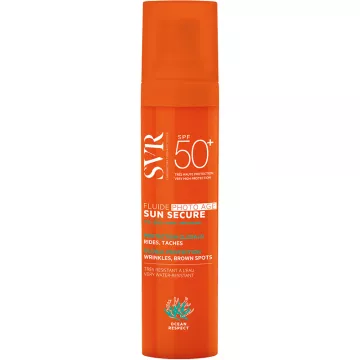
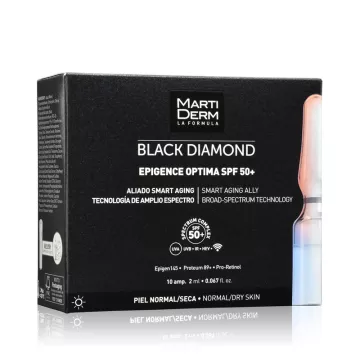
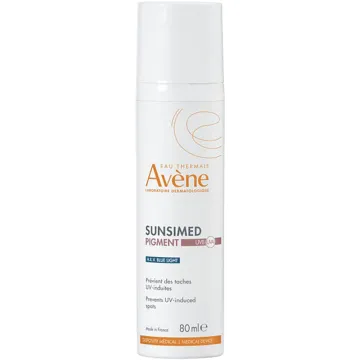
- Broad-spectrum UVA/UVBSPF 50+ sunscreen applied daily, even in winter
- Apply a sufficient amount: 2 mg/cm² (one teaspoon for the face; double that amount for the body)
- Reapply every 2 hours during sun exposure and after swimming
- Apply to the hands and décolletage, which are often overlooked
- Weara wide-brimmed hat during prolonged sun exposure
- UV-protective clothing or long-sleeved shirts
- Seek shade during the hottest hours (10 a.m.–4 p.m.)
- Strictly avoid tanning beds (proven carcinogen)
- UVA-blocking tinted windows or protective film in the car
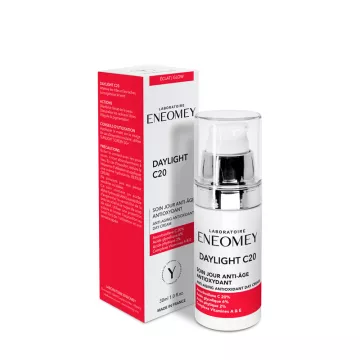
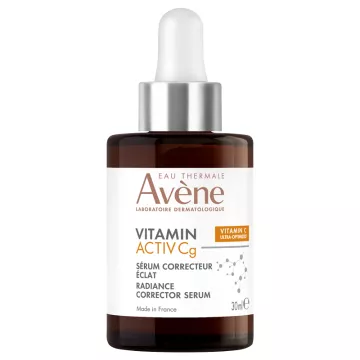
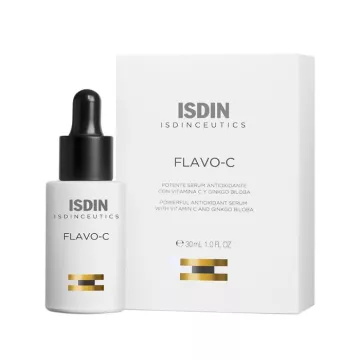
- Antioxidants in your morningserum (vitamin C, vitamin E)
- Dietary antioxidants and carotenoids during the summer months
- Properhydration and daily skincare
Our high-protection sunscreen section offers products specifically designed to prevent age spots.
What treatments are available to reduce lentigines?
Several treatment options are available; consult a dermatologist:
- Cosmetic lightening creams containing vitamin C, kojic acid, azelaic acid, niacinamide, and arbutin
- Hydroquinone: a depigmenting agent available by prescription in France, used in short courses under medical supervision (contraindicated during pregnancy and breastfeeding)
- Retinoic acid (tretinoin): a prescription medication, contraindicated during pregnancy and breastfeeding (teratogenic)
- Superficial to mediumchemical peels (glycolic, mandelic, salicylic acids; mild TCA) performed in a doctor’s office
- Microdermabrasion: mechanical exfoliation for superficial spots
- Intense Pulsed Light (IPL): suitable for well-defined lentigines on fair skin
- Q-switched or picosecondlasers: highly effective on well-defined solar lentigines
- Liquid nitrogencryotherapy: suitable for isolated lentigines
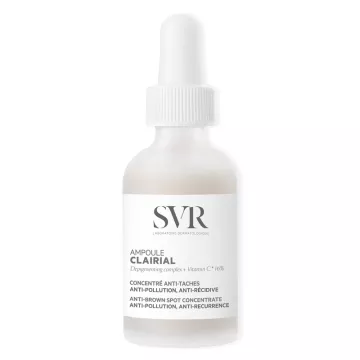
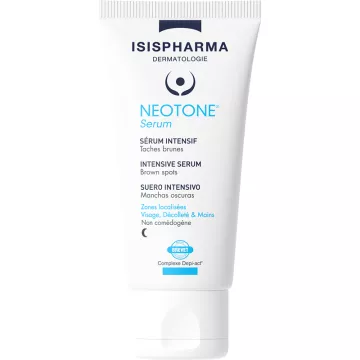
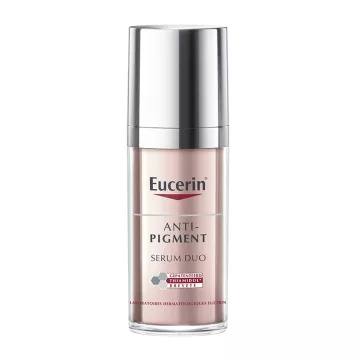
The choice depends on the type of spot, its depth, location, skin type, and personal preferences. Our anti-spot section offers dermo-cosmetic skincare products. Medical procedures are performed by a dermatologist.
Are age spots dangerous?
Solar lentigines are benign lesions, but monitoring remains essential:
- No risk of progression in the vast majority of cases
- No documentedcases of malignant transformation for typical lentigines
- Monitoring is nevertheless recommended because sun-exposed areas are also at risk for melanoma
- The ABCDE rule for identifying a suspicious lesion: Asymmetry, Irregular borders, Multiple colors, Diameter > 6 mm, Change over time
- Warning signs: a spot that rapidly changes in shape, size, or color; one that itches, bleeds, or becomes raised
- Annual dermatological monitoring is recommended for at-risk individuals (fair skin, personal or family history of melanoma, chronic sun exposure)
- Dermoscopy during a consultation helps distinguish benign lesions from suspicious ones
If you have any concerns about a lesion, don’t delay in seeking medical advice. Melanoma diagnosed early has an excellent prognosis. Sun protection also remains the primary measure for preventing melanoma.
How can you tell them apart from other skin spots?
Several types of spots can coexist on mature skin:
- Solar lentigines: flat, uniform brown spots with well-defined borders on sun-exposed areas
- Senile lentigines: a type that appears with age without specific sun exposure
- Seborrheic keratoses: raised brown or black spots with a wart-like appearance; they may resemble melanoma but are benign
- Ephelides (freckles): small, light-colored spots on fair skin, often hereditary
- Melasma: diffuse patches on the face, often hormone-related
- Post-inflammatory hyperpigmentation: marks left by acne or eczema
- Melanocytic nevus: a mole that should be monitored
- Melanoma: a changing, asymmetrical spot requiring urgent diagnosis
- Actinic keratoses: precancerous lesions on areas highly exposed to the sun (balding scalp, ears, backs of the hands)
Only a dermatological evaluation with dermoscopy can provide a definitive diagnosis. Dedicated resources are available to help understand pigmentation in all its forms.
How do they differ from freckles?
Ephelides (freckles) are different from solar lentigines:
Ephelides:
- Small size: 1 to 5 mm
- Light color: light brown, sometimes reddish
- Early onset: childhood, adolescence
- Seasonal variation: fade in winter, become more pronounced in summer
- Hereditary in most cases
- Mostlyphototype I–II (fair skin, light hair)
- Location: face, shoulders, arms, décolletage
Solar lentigines:
- Variable size: 5 mm to several centimeters
- Darker color: dark brown to black
- Late onset: starting at age 40–50
- No seasonal variation: permanent
- Developed through cumulative sun exposure
- All skin types, but especially types I through IV
- Location: areas chronically exposed to sunlight (face, hands, décolletage)
Freckles are generally not treated because they are benign and appreciated by many. Lentigines, on the other hand, may be treated for cosmetic reasons.
Can the spots reappear after treatment?
Recurrence is possible and common without long-term preventive measures:
- Recurrence on treated areas if there is further unprotected sun exposure
- Appearance of new spots on other sun-exposed areas
- Deep lentigines are more difficult to remove permanently
- Darker skin types have an increased risk of recurrence or paradoxical pigmentary disorders
- Poor adherence to post-treatmentsun protection: the primary factor in recurrence
Strategies for maintaining results:
- Strict, lifelong sun protection: SPF 50+ daily
- Maintenance care with mild skin-lightening ingredients
- Regular dermatological follow-up
- Occasionaltouch-ups every 1 to 3 years, as needed
- Topical and dietary antioxidants for support
- A protective lifestyle: avoiding tobacco, maintaining a balanced diet
Understanding that this is a long-term process helps maintain motivation for daily sun protection.
Which natural remedies should be used with caution?
Certain natural ingredients are traditionally used, with some precautions:
Use with caution:
- Purealoe vera gel: soothing and moisturizing (test on a small area for 48 hours first)
- Rosehip seed oil: use only in the evening
- Licorice extract (glabridin): a gentle skin-lightening agent when formulated into cosmetics
- Topicalgreen tea: a natural antioxidant
- Cosmetically formulatedvitamin C serums
Absolutely avoid:
- Lemon juice on the skin: highly phytophototoxic, can cause photosensitivity burns and worsen dark spots instead of lightening them (the opposite of the desired effect)
- Undiluted apple cider vinegar: irritating, disrupts the pH balance
- Citrus essential oils (lemon, bergamot, bitter orange): photosensitizing
- Pure topical turmeric: stains the skin yellow, risk of allergic reaction
- Homemade recipes containing caustic ingredients, which can cause burns and lead to post-inflammatory hyperpigmentation
Before trying a home remedy, consult your pharmacist or dermatologist. Cosmetically formulated skincare products offer more predictable results and are better tolerated.
What is the psychological impact, and how can it be managed?
Age spots can affect self-image:
- Lower self-esteem, particularly on the face and hands
- A markedsense of physicalaging
- Dailyconcerns about appearance
- Social avoidance or systematic use of concealing makeup
- Discomfort with the appearance of the hands during social or professional interactions
Strategies for coping better with these spots:
- Consult with a healthcare professional: primary care physician, dermatologist, or pharmacist
- Information on available treatments and their realistic outcomes
- Medical-grade corrective makeup (camouflage) for periods of discomfort
- Dailyskincare routines that allow you to take an active role
- Gradualacceptance of the skin’s natural aging process
- Support groups or online resources for sharing experiences
- Psychological support in cases where quality of life is significantly impacted
- A holistic approach to skin aging: care focused on the skin as a whole, not just age spots
The appearance of lentigines is part ofthe skin’s natural aging process. The goal is to find a balance between acceptance and targeted care that meets your personal expectations. For mature skin, a comprehensive approach combining sun protection, daily skincare, and, if desired, aesthetic treatments yields the best results.