What is the 3M Transpore Microperforated Adhesive Bandage (5 m x 25 mm) used for?
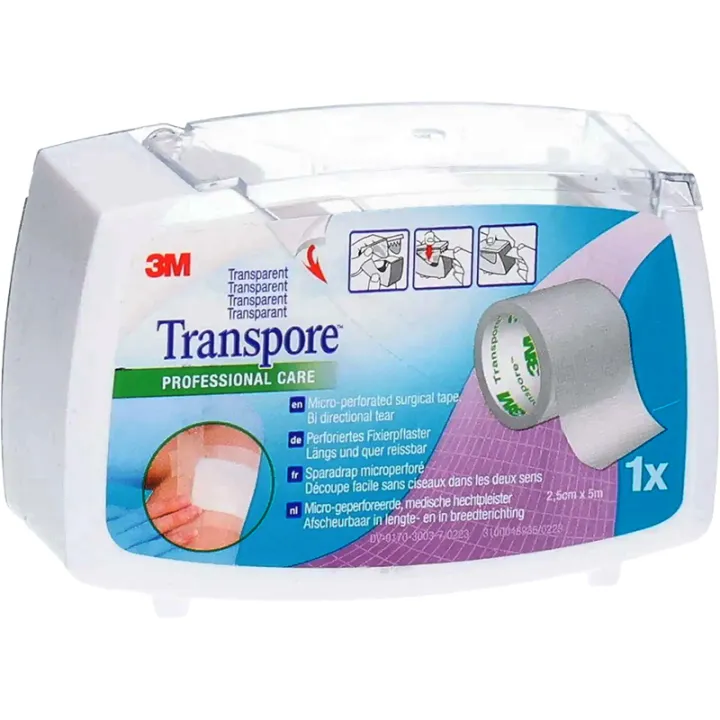
Discover a new-generation adhesive bandage: the Transpore Microperforated Adhesive Bandage. Made of plastic, transparent, and comfortable, this product is revolutionizing wound care. Its flexibility and hypoallergenic adhesive combine to provide a secure and discreet hold.
This adhesive tape offers unmatched discretion when securing dressings, even on the most visible areas. Whether you need to secure a thick eye patch or hold catheters, drains, and other medical devices in place, the Transpore Microperforated Adhesive Tape is the solution for you. Thanks to its microperforations, it can be easily cut without scissors, both lengthwise and crosswise.
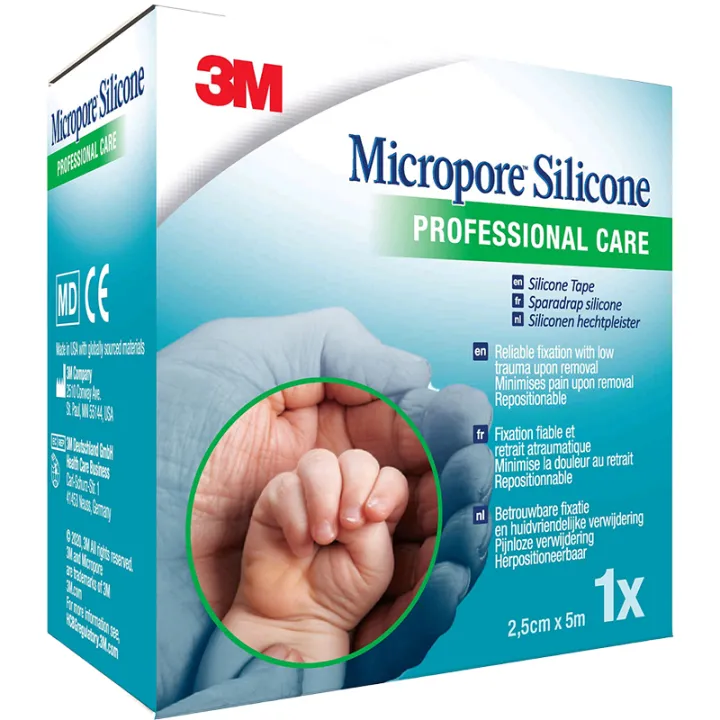
The Transpore Microperforated Adhesive Tape is an innovative product designed to provide reliable and discreet fixation for dressings and other medical devices. Its transparent, microperforated plastic design makes it an ideal choice for securing dressings to all parts of the body, even the most visible ones.
This adhesive tape is specially designed toadapt to the body’s movements, providing optimal comfort for the user. Its flexible plastic texture and microperforations ensure a secure hold while allowing the skin to breathe. In addition, its hypoallergenic adhesive ensures a secure hold without the risk of skin irritation, even on sensitive skin.
The Transpore Microperforated Adhesive Tape comes in a convenient dispenser, making it easy to use. Its compact size and ability to be easily torn without scissors—both lengthwise and widthwise—make it an essential item in any first-aid kit. Measuring 5 meters long and 25 mm wide, this adhesive bandage provides optimal coverage for any situation.
We also offer Efirub Cold Relief (30 Tablets) at 3C Pharma, at the best price in our online pharmacy.
How should this product be used for wound care?
- Clean and dry the area before application
- Apply the adhesive bandage to secure the dressing or bandage
- Cut to the desired length using the dispenser or by hand
- Smooth it out to ensure optimal adhesion
- Replace if necessary or if it comes loose
Share your feedback on the usage instructions and dosage for 3M Transpore Microperforated Adhesive Tape 5 m x 25 mm with our partner. Reviews are verified after your purchase.
Precautions for Use
- For external use only
- Keep out of reach of children
- Be sure to check for any allergies to adhesives before use.
- If in doubt, test on a small area of skin before applying to a larger area.
What are the ingredients in this 3M product?
Composition
Polyethylene backing and acrylate copolymer adhesive.
Packaging
Presented on a convenient dispenser, this 5-meter-long, 25mm (2.5 cm) wide adhesive bandage is ready to use. It will accompany you everywhere, in all your activities, thanks to its discreet design and ease of use.
Expert Pharmacy Advice
Before treating a minor wound, wash your hands thoroughly. In case of moderate bleeding, apply pressure to the area with a clean gauze pad for a few minutes. Then rinse the wound with water, gently clean it with soap, and dry the surrounding area. Cover it with a sterile gauze pad and apply the bandage only to healthy skin, without pulling it too tightly. Replace the bandage if it becomes damp, dirty, or comes loose. Also, make sure your tetanus vaccination is up to date. Seek medical attention promptly if you have a deep wound, a bite, persistent bleeding, or signs of infection.
FAQ
Can the Transpore adhesive bandage be applied directly to a wound?
No. The adhesive bandage is used to secure a compress or dressing. It should adhere to the healthy skin surrounding the wound, not to the wounded area itself.
When should the dressing be changed?
Change the dressing when it becomes damp, soiled, saturated, or partially detached. When changing the dressing, inspect the wound, clean it if necessary, and use a new sterile dressing.
What signs require medical attention?
Seek medical attention if you have a deep or extensive wound, a bite, a foreign object, persistent bleeding, or an uncertain tetanus vaccination history. Spreading redness, swelling, increasing pain, discharge, or a fever may indicate an infection.