0
Menu
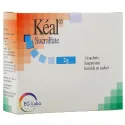
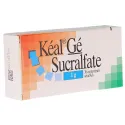
Kéal Sucralfate - Duodenal ulcer
Over-the-counter medication

Kéal Sucralfate - Duodenal ulcer

Brand : EG Labo EG Labo

Keal Sucralfate is indicated for the treatment and prevention of duodenal ulcers. Thanks to its protective action, it forms a barrier on the digestive mucosa and promotes healing. Available in tablet or sachet form, it helps reduce gastric pain and improves digestive comfort on a daily basis.

€12.71 EXCL. VAT €13.99 INCL. VAT
Replenishment in progress Pre-order Secure payment
Reference : 3400933397562
You must be logged in to add this product to a list. Customer login
See delivery conditions

Our doctors of pharmacy advise you

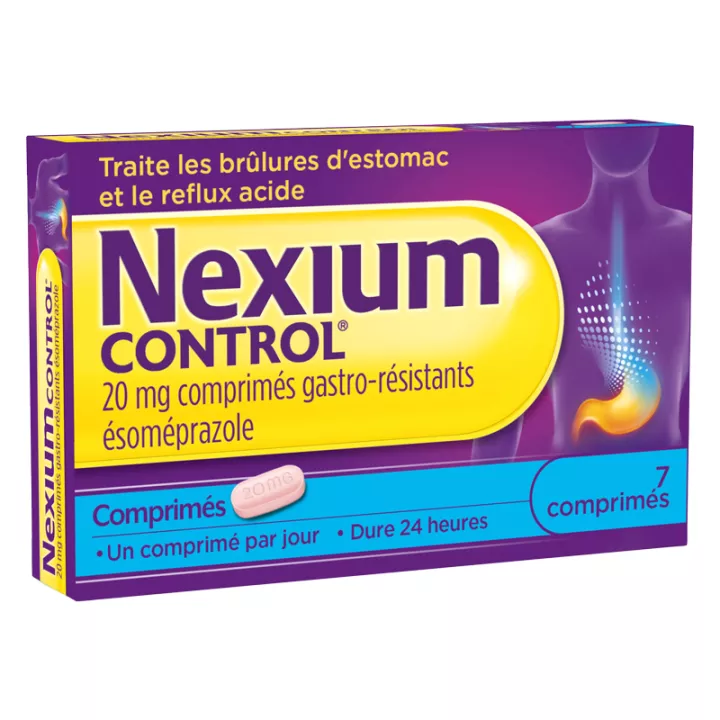
Esomeprazole 20 mg Heartburn Mylan 14 capsules Esomeprazole 20 mg Heartburn Mylan 14 capsules
€7.49
Add to cart
Shipped within 24h
Omeprazole Remontées Acides 20 mg Mylan 14 capsules Omeprazole Remontées Acides 20 mg Mylan 14 capsules
€6.95
Add to cart
Shipped within 24h
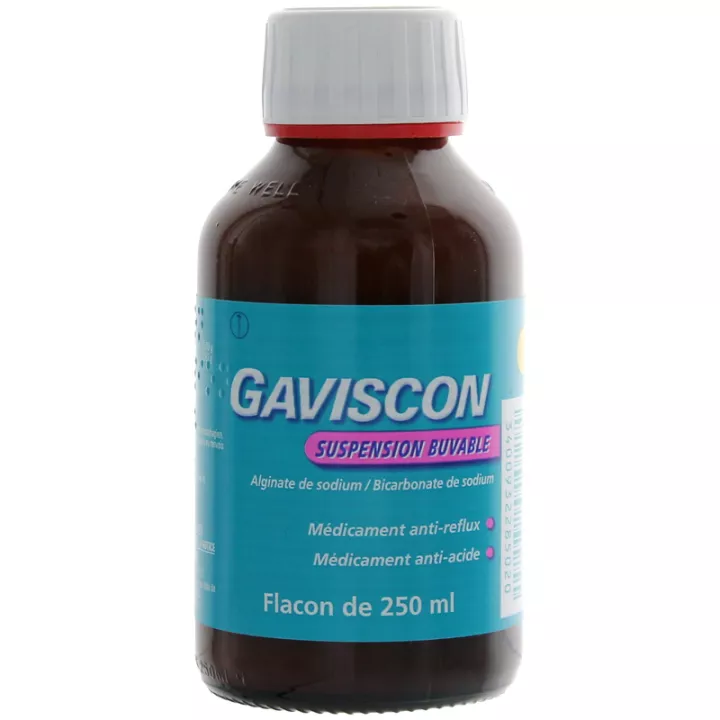
Gaviscon Drinkable Suspension 250 ml bottle Gaviscon Drinkable Suspension 250 ml bottle
€4.99
Shipped within 24h
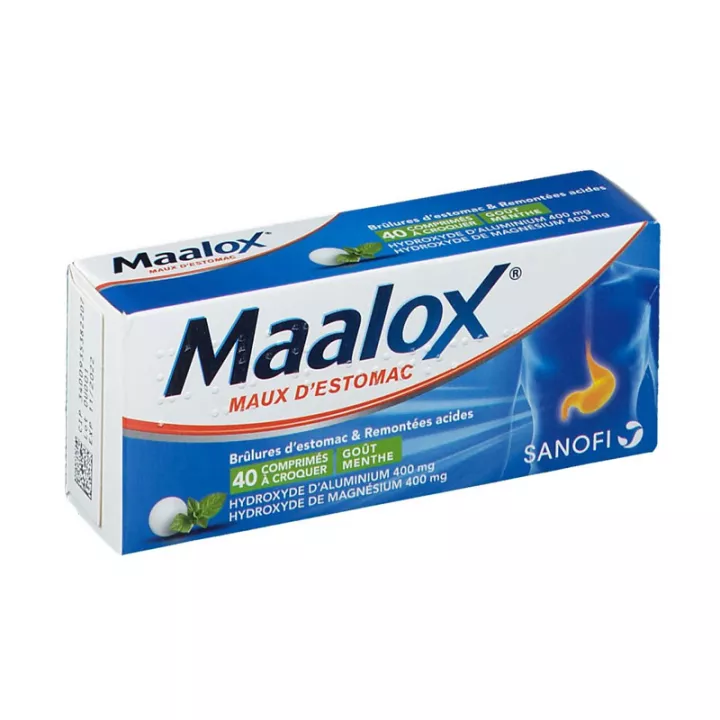
Maalox anti acid stomachache Mint tablets Maalox anti acid stomachache Mint tablets
40 tablets
€6.95
Add to cart
Shipped within 24h

When should Keal Sucralfate be used to relieve duodenal ulcers?

When your stomach becomes sensitive, when pain appears after meals or on an empty stomach, it's possible that an ulcer is to blame. Keal Sucralfate is designed to help in just such situations, whether to treat an active duodenal ulcer or prevent its recurrence. It acts locally, directly where the digestive mucosa is weakened.

Its active ingredient, sucralfate, works like a protective bandage. Imagine a wound on the inside of your stomach: this drug is deposited on top to form a physical barrier. This protective layer shields the mucosa from acid attacks, often responsible for pain and inflammation.

At the same time, it stimulates the body's natural defenses. The result? The gastric environment becomes more favorable to healing. This helps to improve digestive comfort on a daily basis, notably by reducing sensations of burning or irritation after meals.

This treatment is particularly interesting for people suffering from duodenal ulcers unrelated to Helicobacter pylori, or when eradication of this bacterium has not been possible. It can also be used as a maintenance treatment to limit relapses, which is essential when symptoms recur regularly.

In practice, this drug acts without passing into the general circulation, thus limiting systemic effects. It remains localized in the digestive tract, where its action is most useful. You benefit from targeted action to soothe gastric pain and support natural repair.

To reinforce the protective effect against acidity, you can combine this treatment with Gaviscon Suspension buvable sachets, which form a floating barrier above the gastric contents and perfectly complement this approach.

How to use Keal Sucralfate

Keal Sucralfate is taken orally, in the form of 1 g tablets or 1 g or 2 g sachets of drinkable suspension. The choice of dosage depends on your situation and the recommendations of your healthcare professional.

To treat a gastric or duodenal ulcer in the active phase, two regimens are possible for 4 to 6 weeks:

  • With 1 g sachets or tablets: take 1 dose, 4 times a day (before the 3 main meals and at bedtime)
  • With 2 g sachets: take 1 sachet, 2 times a day (in the morning on an empty stomach and in the evening, around 2 hours after dinner).

To prevent duodenal ulcer relapses, you can :

  • Take 1 sachet (1 g) 2 times a day
  • Or 1 sachet (2 g) in the evening, as advised by your doctor.

In all cases, take this medicine preferably between meals: about 30 minutes to 1 hour before, or 2 hours after, your evening meal. Tablets should be swallowed with a little water, and can be crushed if necessary. The drinkable suspension is ready-to-use and particularly suitable for children under 6.

Give your opinion on the directions for use and dosage of Keal Sucralfate with our partner Avis Vérifiés after your purchase.

Precautions

  • Not recommended during pregnancy or breast-feeding without medical advice.
  • May cause constipation in some patients
  • Ask your pharmacist for advice in case of associated treatment
  • For optimum efficacy, take at regular intervals.

What is the composition of this medicine to protect the stomach?

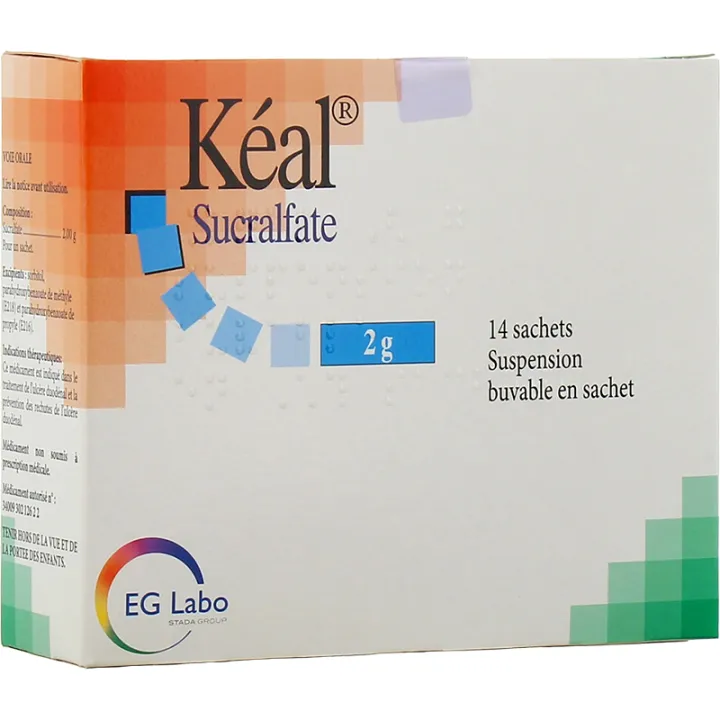
Keal Sucralfate Drinkable suspension 2 g - Sachets (box of 14) : Sucralfate 2 G, Guar gum, Sorbitol 70% non-crystallizable, Saccharine Sodium, Sodium Parahydroxybenzoate Methyl (9 Mg/Sachet), Sodium Parahydroxybenzoate Propyl (4,5 Mg/Sachet), Sorbic Acid, Flavor 26G55, Purified Water, Ethyl Acetate, Ethyl Alcohol, Limonene, Benzoic Aldehyde, Linalool, Neral, Geranial, Gamma Undecalactone, Vanillin. Excipients À Effet Notoire : Sorbitol (1,5 G/Sachet), Parahydroxybenzoate De Méthyle (E218) (7,8 Mg/Sachet), Parahydroxybenzoate De Propyle (E216) (4 Mg/Sachet)

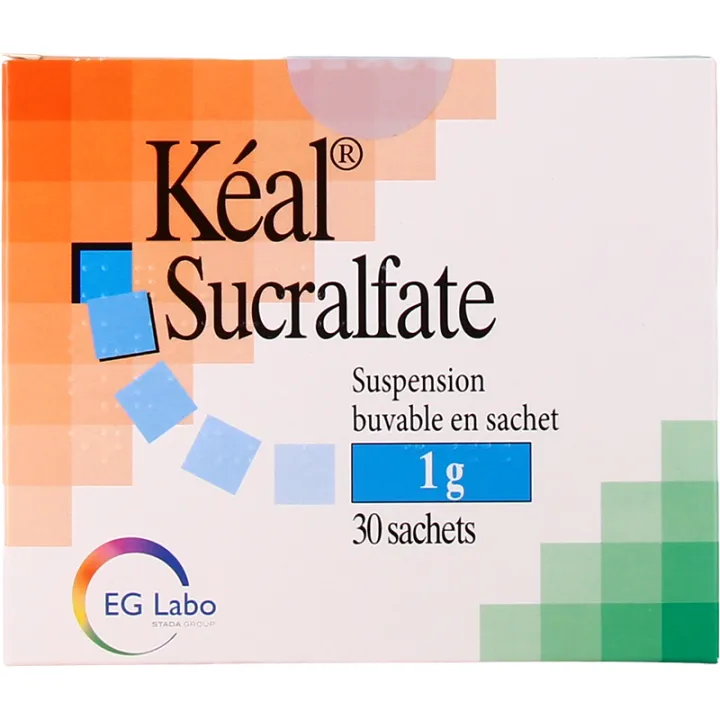
Keal Sucralfate Drinkable suspension 1 g - Sachets (box of 30) : Sucralfate 1 G, Guar gum, 70% non-crystallizing sorbitol, sodium saccharin, sodium parahydroxybenzoate methyl, sodium parahydroxybenzoate propyl, sorbic acid, 26G55 flavor, purified water, ethyl acetate, ethyl alcohol, limonene, benzoyl aldehyde, linalool, mineral, geranial, gamma undecalactone, vanillin. Excipients À Effet Notoire : Sorbitol, Parahydroxybenzoate De Méthyle (E218), Parahydroxybenzoate De Propyle (E216)

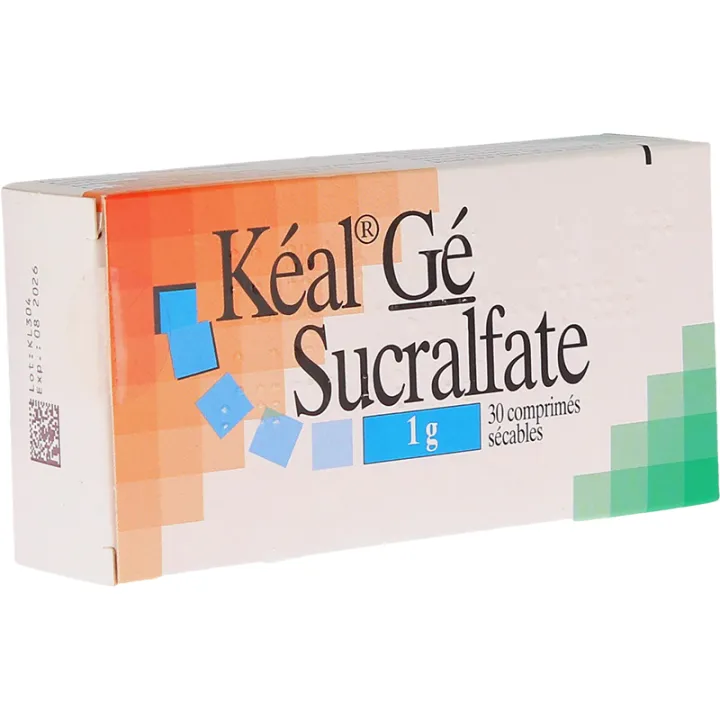
Keal Sucralfate Tablets 1 g - Box of 30 : Sucralfate 1 G, Excipients : Gomme Guar, Sorbitol, Saccharine Sodique, Parahydroxybenzoate De Méthyle, Parahydroxybenzoate De Propyle, Acide Sorbique. Excipients À Effet Notoire : Sorbitol, Parahydroxybenzoate De Méthyle (E218), Parahydroxybenzoate De Propyle (E216)

Presentation:

  • Box of 14 Sachets of powder for oral suspension dosed at 2 g
  • Box of 30 Sachets of powder for drinkable suspension containing 1 g
  • Box of 30 1 g tablets

Our expert advice on Keal Sucralfate for digestive comfort

To optimize treatment efficacy, take Keal Sucralfate at least 2 hours apart from other medications. This avoids digestive interactions. And don't forget to adapt your diet: eat light, low-acid meals in small portions. Stress and certain irritating foods (coffee, alcohol, spices) can slow healing, so limit them for the duration of your treatment.

FAQ

Does Keal Sucralfate act quickly on pain?
Keal Sucralfate acts progressively, protecting the mucosa. Relief may appear within a few days, but complete healing takes several weeks.

Is Keal Sucralfate suitable for long-term use?
Yes, as a maintenance treatment to prevent relapses, as recommended by your healthcare professional.

Should I take it with an antacid?
Not systematically, but an association with a product like Gaviscon can improve comfort in cases of associated acid reflux.

Pharmacovigilance Report an adverse drug reaction(s)

Download PDF leaflet

NOTICE

ANSM - Updated on : 15/03/2021

Product name

KEAL 1 g, drinkable suspension in sachet

Sucralfate

Sidebar

Please read this leaflet carefully before taking this medicine, as it contains important information for you.

You must always take this medicine exactly as instructed in this leaflet or by your doctor or pharmacist.

- Keep this leaflet. You may need to read it again.

- Ask your pharmacist for any advice or information you may need.

- If you experience any side effects, talk to your doctor or pharmacist. This also applies to any side effects not mentioned in this leaflet. See section 4.

- You should contact your doctor if you do not feel any improvement or if you feel less well.

What does this leaflet contain?

1. What is KEAL 1 g, drinkable suspension in sachet and what is it used for?

2. What do I need to know before taking KEAL 1 g, drinkable suspension in sachet?

3. How do I take KEAL 1 g, drinkable suspension in sachet?

4. What are the possible side effects?

5. How should KEAL 1 g, Oral suspension in sachet, be stored?

6. Package contents and other information.

1. WHAT IS KEAL 1 g, drinkable suspension in sachet AND WHAT IS IT USED FOR?

ANTI-ULCEREAL (A: digestive system and metabolism)

This medicine is indicated for the treatment of gastric or duodenal ulcers and the prevention of duodenal ulcers.

2. WHAT DO I HAVE TO KNOW BEFORE TAKING KEAL 1 g, drinkable suspension in sachet?

Never take KEAL 1 g, drinkable suspension in sachet

- if you are allergic to sucralfate or to any of the other ingredients listed in section 6;

- in premature and immature newborn infants.

IF IN DOUBT, ASK YOUR DOCTOR OR CHEMIST FOR ADVICE.

Warnings and precautions

Ask your doctor or pharmacist before taking KEAL.

A few cases of bezoars (obstructions of the digestive tract) have been reported in patients hospitalized in intensive care units, mainly in association with tube feeding, and in neonates, particularly premature and immature newborns.

Use with CAUTION in cases of :

- chronic renal failure (impaired kidney function);

- decrease in blood phosphorus levels.

IF IN DOUBT, ASK YOUR DOCTOR OR PHARMACIST FOR ADVICE.

For proper use of this medicine, regular medical supervision is essential; this may include stomach examinations (fibroscopy).

Children and adolescents

Not applicable.

Other medicinal products and KEAL 1 g, drinkable suspension in sachet

Tell your doctor or pharmacist if you are taking, have recently taken or may take any other medicines.

Sucralfate may reduce the effect of certain drugs taken at the same time. Sucralfate should be taken within 2 hours of another medicine.

KEAL 1 g, oral suspension in sachet with food, drink and alcohol

Not applicable.

Pregnancy, breast-feeding and fertility

If you are pregnant or breastfeeding, think you may be pregnant or are planning to become pregnant, ask your doctor or pharmacist for advice before taking this medicine.

It is preferable not to use this medicine during pregnancy.

If you discover that you are pregnant during treatment, consult your doctor, as only he or she can decide whether you should continue.

The use of sucralfate during breast-feeding is not recommended.

Driving and using machines

Not applicable.

KEAL 1 g, suspension buvable en sachet contains sorbitol, methyl parahydroxybenzoate, propyl parahydroxybenzoate and sodium.

This medicine contains 0.75 g sorbitol per sachet.

This medicine contains 3.9 mg methyl parahydroxybenzoate and 1.99 mg propyl parahydroxybenzoate per sachet and may cause allergic reactions (possibly delayed).

This medicine contains less than 1 mmol (23 mg) sodium per sachet, i.e. it is essentially "sodium-free".

3. HOW TO TAKE KEAL 1 g, drinkable suspension in sachet?

Dosage

Gastric ulcer healing

1 sachet 4 times a day:

- 1 sachet half an hour to 1 hour before each of the 3 main meals,

- 1 sachet at bedtime, approximately 2 hours after the evening meal.

Healing duodenal ulcers

Two treatment modalities are possible:

- 1 sachet 4 times a day, or :

o 1 sachet half an hour to 1 hour before each of the 3 main meals,

o 1 sachet at bedtime, approximately 2 hours after the evening meal.

- 2 sachets morning and evening:

o 2 sachets in the morning on waking, half an hour to 1 hour before breakfast,

o 2 sachets in the evening, approximately 2 hours after the evening meal.

Preventing duodenal ulcer relapses

Two treatment modalities are possible:

- 1 sachet 2 times a day, or :

o 1 sachet in the morning on waking, half an hour to 1 hour before breakfast,

o 1 sachet in the evening, either half an hour to 1 hour before the meal, or at bedtime, around 2 hours after the evening meal.

- 2 sachets in the evening, either half an hour to 1 hour before the meal, or at bedtime, approximately 2 hours after the evening meal.

Method and route of administration

Take by mouth.

To drink the contents of the sachet, open along the dotted line, then squeeze the sachet, holding the open end between the lips.

Duration of treatment

Healing of gastric or duodenal ulcers: 4 to 6 weeks.

If you have taken more KEAL 1 g, drinkable suspension in sachet than you should have

Not applicable.

If you forget to take KEAL 1 g, Oral suspension in sachet

Not applicable.

If you stop taking KEAL 1 g, Oral suspension in sachet

Not applicable.

4. WHAT ARE THE POSSIBLE SIDE EFFECTS?

Like all medicines, this product may cause undesirable effects, but they do not occur systematically in everyone.

- constipation;

- rarely: dry mouth, nausea, vomiting, rash, dizziness;

- in the case of long-term administration of high doses, there is a theoretical risk of a decrease in blood phosphorus levels;

- some cases of bezoars (obstructions of the digestive tract) have been reported in certain patients (see "Warnings and precautions").

Reporting side effects

If you experience any side effects, please tell your doctor or pharmacist. This also applies to any side effects not mentioned in this leaflet. You can also report adverse reactions directly via the national reporting system: Agence nationale de sécurité du médicament et des produits de santé (ANSM) and the network of Centres Régionaux de Pharmacovigilance - Website: www.signalement-sante.gouv.fr.

By reporting adverse reactions, you contribute to providing more information on drug safety.

5. HOW TO CONSERVE KEAL 1 g, drinkable suspension in sachet?

Keep out of sight and reach of children.

Do not use this medicine after the expiration date indicated on the packaging. The expiration date refers to the last day of that month.

Store at temperatures not exceeding +25°C.

Do not dispose of any medicine in the drain with household waste. Ask your pharmacist to dispose of any medicines you no longer use. These measures will help protect the environment.

6. CONTENTS AND OTHER INFORMATION

What KEAL 1 g, drinkable suspension in sachet, contains

- The active substance is :

sucralfate............................................................................................................................. 1 g

- The other components are :

Guar gum, 70% non-crystallizable sorbitol, sodium saccharin, sodium methyl parahydroxybenzoate, sodium propyl parahydroxybenzoate, sorbic acid, 26G55 flavoring, purified water.

What KEAL 1 g, suspension buvable en sachet is and what it contains

Marketing authorization holder

EXOD

6 PARC DE MONTRETOUT

92210 SAINT CLOUD

Marketing authorization holder

E.G. LABO - LABORATOIRES EUROGENERICS

CENTRAL PARK

9-15 RUE MAURICE MALLET

92130 ISSY-LES-MOULINEAUX

Manufacturer

PHARMATIS

Z.I. LE FOSSÉ DE L'ETANG

BP 20

60190 ESTREES SAINT DENIS

Product names in member states of the European Economic Area

Not applicable.

The last date on which this leaflet was revised was :

[to be completed subsequently by the holder]

< {MM/YYYY}>< {month/YYYY}.>

Other

Detailed information on this drug is available on the ANSM (France) website.

VIDAL DE LA FAMILLE

KÉAL

Revised on March 25, 2022
Drug family : Antiulcer agents

This medicine is a generic of ULCAR

Indications

This drug belongs to the anti-ulcer family. It acts by binding to the ulcer, protecting it by covering it with a film that insulates it from stomach acids. It stimulates the secretion of substances that tend to fight stomach acidity.

It is used to treat ulcers of the stomach and duodenum, and to prevent relapses of duodenal ulcers in the absence of Helicobacter pylori infection (which would justify specific treatment).

Presentations

KÉAL Gé 1 g : scored tablet (white); box of 30
Optional prescription - Not reimbursed - Free price
KÉAL Gé 1 g : drinkable suspension; box of 30 sachets
Optional prescription - Not reimbursed - Free price
KÉAL 2 g : drinkable suspension; box of 14 sachets
Optional prescription - Non-refundable - Free price

Prices do not include dispensing fees.

Composition

p cpp sachetp sachet
Sucralfate1 g1 g2 g
Sorbitol0,75 g1,5 g
Methyl propyl parahydroxybenzoate++

Contraindications

Not for use in premature infants.

Warning

The disappearance of pain does not mean that the ulcer has healed: the duration of treatment must be respected.

If you suffer from renal insufficiency, tell your doctor so he/she can adjust the dosage.

Drug interactions

It is advisable to wait at least 2 hours between taking this drug and taking an anticoagulant, a quinolone antibiotic or a drug containing phenytoin or digoxin.

Fertility, pregnancy and breast-feeding

Pregnancy:

The effect of this drug on the unborn child is not well known. Only your doctor can assess the need for treatment and its risk during pregnancy.

Breast-feeding:

It is not known whether this drug passes into breast milk. Do not use while breast-feeding without medical advice.

Directions for use and dosage

This medicine is best taken half an hour to an hour before meals, or two hours after the evening meal.

Tablets should be swallowed whole with a little water, or crushed if swallowing is difficult.

The drinkable suspension should be taken as it is. Only this form can be used in children under 6 years of age.

Usual dosage :

Varies according to indication: 2 to 4 g daily, usually in 1 to 4 doses.

Treatment of ulcers lasts at least 4 to 6 weeks, even if symptoms diminish or disappear before that.

Advice

If you are a smoker, continued smoking will impair the efficacy of the treatment.

Taking this medication does not exempt you from any dietary measures that your doctor may advise.

Aspirin, anti-inflammatory drugs and corticosteroids can be harmful to the stomach: do not take them without your doctor's advice.

Possible side effects

Constipation.

Rarely: dry mouth, nausea, vomiting, dizziness, skin rash.

LEXICON

anti-inflammatory

Drug that fights inflammation. It can be either cortisone-derived (steroidal anti-inflammatory) or non-cortisone-derived (non-steroidal anti-inflammatory or NSAID).

antibiotic

Substance capable of blocking the multiplication of certain bacteria or killing them. The spectrum of an antibiotic is the set of bacteria on which the product is usually active. Unlike bacteria, viruses are not sensitive to antibiotics. The first antibiotics were extracted from fungal cultures: penicillium (penicillin), streptomyces (streptomycin). Today, they are produced by chemical synthesis. Antibiotics are divided into families: penicillins, cephalosporins, macrolides, tetracyclines (cyclins), sulfonamides, aminoglycosides, lincosanides, phenicoles, polymyxins, quinolones, imidazoles and others.

Inappropriate use of antibiotics can encourage the emergence of resistance: use antibiotics only when prescribed by a doctor, respect their dosage and duration, and do not give or advise another person to take an antibiotic you have been prescribed.

See article: Antibiotic families

anticoagulant

A drug that prevents blood from clotting, thus preventing the formation of clots in blood vessels.
Anticoagulants are mainly used to treat or prevent phlebitis and pulmonary embolism, particularly after surgery. They are also used to prevent the formation of clots in the heart during rhythm disorders such as atrial fibrillation, or in patients with artificial heart valves.
There are three categories of anticoagulants:

  • direct oral anticoagulants (DOACs), which specifically block certain enzymes involved in coagulation, such as thrombin or factor Xa. Their use usually requires no blood monitoring.
  • anti-vitamin K (AVK) drugs, which block the action of vitamin K, and whose effectiveness must be regularly monitored by a blood test known as INR.
  • injectable anticoagulants, derived from heparin. Their use requires regular measurement of blood platelets.

Anticoagulants should not be confused with antiaggregants such as aspirin, which fight blood clots by a different mechanism and do not have the same indications.

See article: Anticoagulant treatments

constipation

Slowing of intestinal transit resulting in fewer stools.

See article: Constipation in adults or Constipation in babies and children

corticoid

A substance similar to cortisone. Natural corticoids, necessary for the body to function properly, are produced by the adrenal glands. Synthetic corticoids, chemical derivatives of cortisone, are used as powerful anti-inflammatories.

duodenum

Part of the intestine into which food from the stomach enters.

rash

Appearance of pimples or patches on the skin. These lesions may be caused by a food or a drug, and may reflect an allergy or toxic effect. Many viruses can also cause rashes: rubella, roseola and measles are the best known.

Helicobacter pylori

Bacteria involved in the development of stomach or duodenal ulcers. It prevents healing and favors recurrence when treatment is discontinued. Its elimination enables definitive healing. Treatment combining anti-ulcer drugs with antibiotics represents a major advance for patients suffering from chronic stomach or duodenal ulcers.

kidney failure

Inability of the kidneys to eliminate waste products or drug substances. Advanced renal failure does not necessarily mean a reduction in the quantity of urine eliminated. Only a blood test and creatinine level can reveal this condition.

dosage

Quantity and distribution of a drug dose according to the patient's age, weight and general condition.

quinolones

A family of antibiotics used to treat urinary tract, genital, gastrointestinal and respiratory infections. They include pefloxacin, ciprofloxacin, ofloxacin and sparfloxacin. Also known as fluoroquinolones, these antibiotics are effective against a wide range of germs. Their use is contraindicated in pregnant and breastfeeding women, and in children, due to their possible toxicity on cartilage growth.

See article: Quinolones.

scored

Can be cut or divided.

sorbitol

Sorbitol is a sugar found in certain fruits (prunes, for example). Because it has fewer calories than industrial sugar (sucrose), it is used as a sweetener (under the acronym E420) and also as a stabilizer, for example in certain medicines. During digestion, sorbitol is converted into fructose (fruit sugar). Some people have difficulty digesting fructose, and consequently experience intestinal problems (diarrhoea) when ingesting products containing sorbitol.

symptoms

Disturbance experienced by a person suffering from an illness. The same symptom may reflect different illnesses, and the same illness does not necessarily give rise to the same symptoms in all sufferers.

ulcer

A sunken lesion in the skin, mucous membranes or cornea.

  • Leg ulcer: chronic wound caused by poor blood circulation.
  • Peptic ulcer: localized wound in the mucosa of the stomach or duodenum, caused by excess acidity and very often the presence of bacteria (Helicobacter pylori). Stress, alcohol, smoking and certain medications (aspirin, NSAIDs, etc.) can all contribute to the development of ulcers.
vertigo

A symptom that may refer to an impression of loss of balance (common sense) or, more strictly, a sensation of spinning around oneself or the environment (medical sense).

See article: Vertigo.