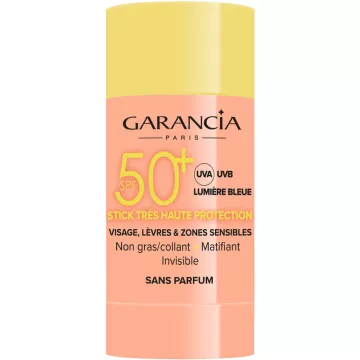
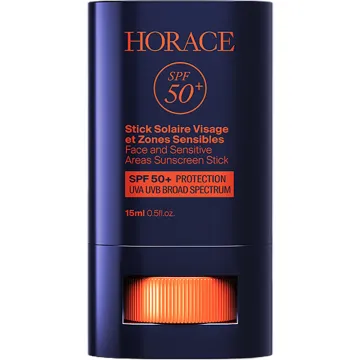
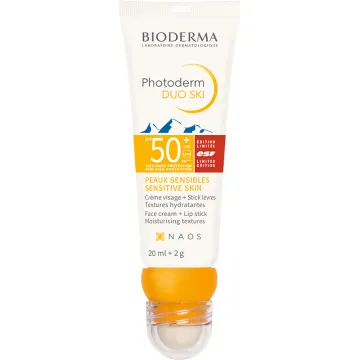
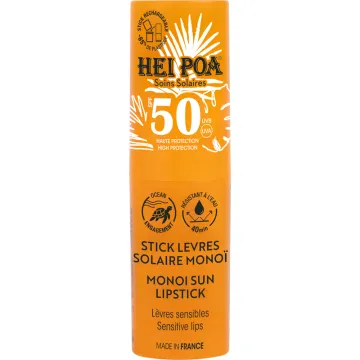
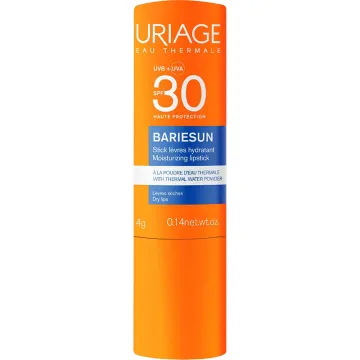
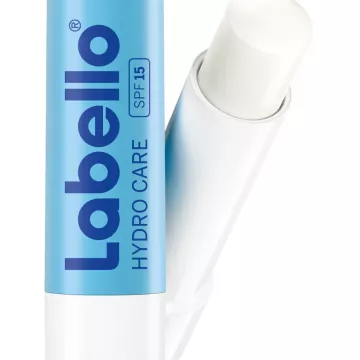
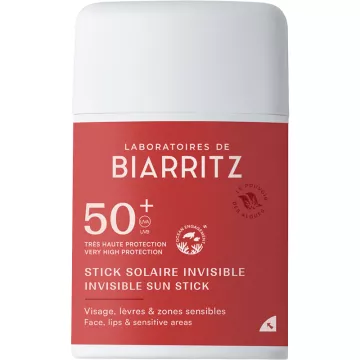
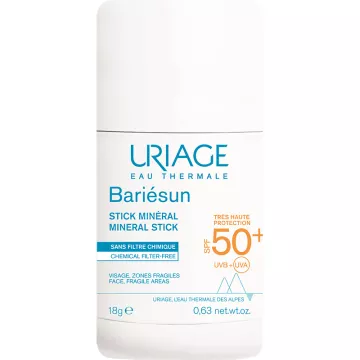
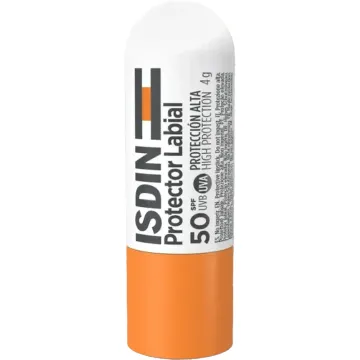
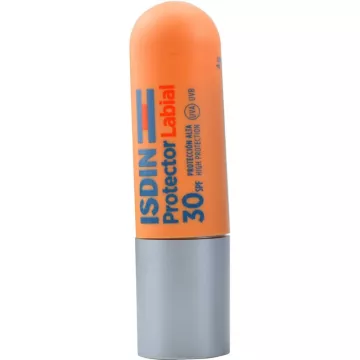
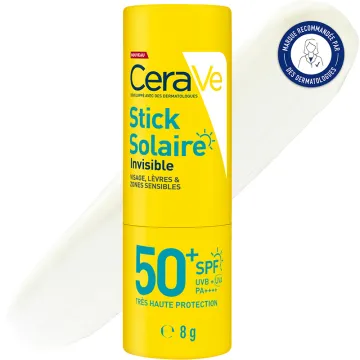
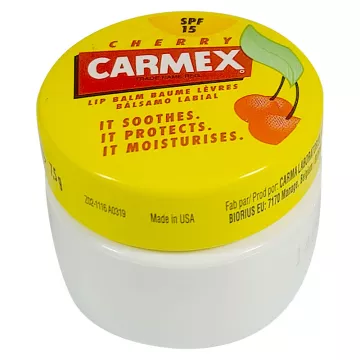
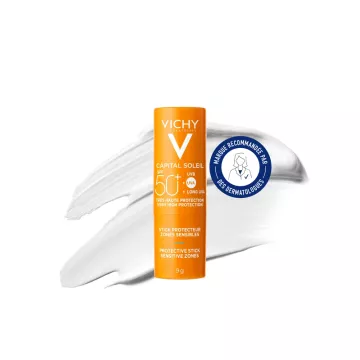
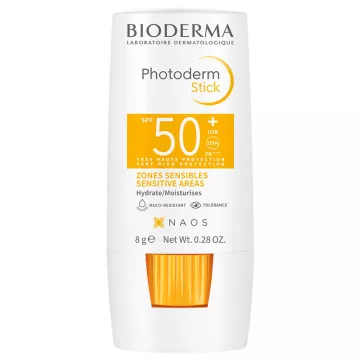
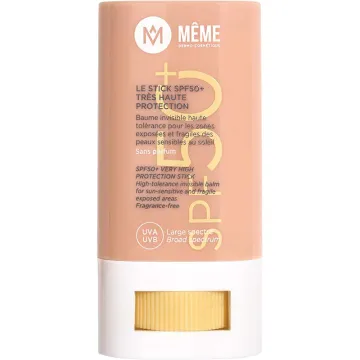
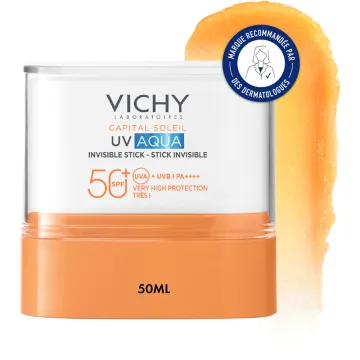
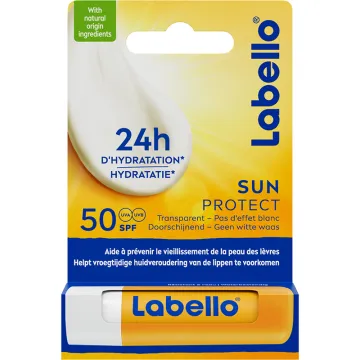
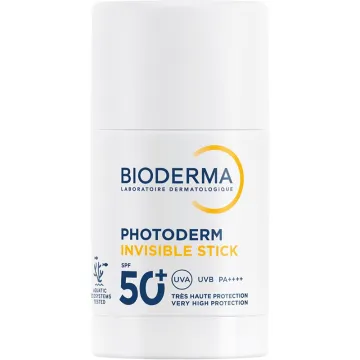
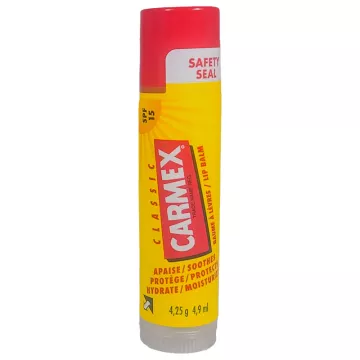
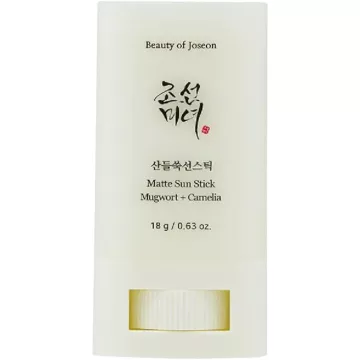
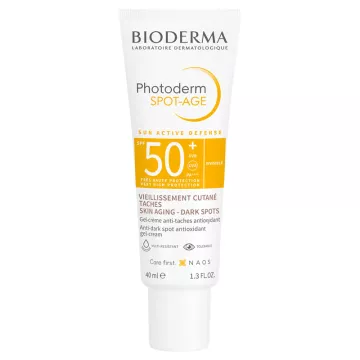
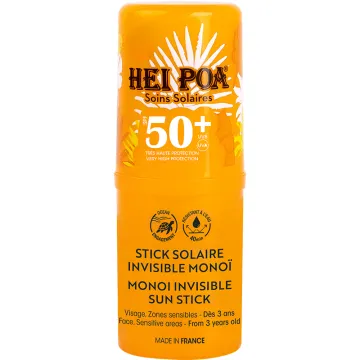
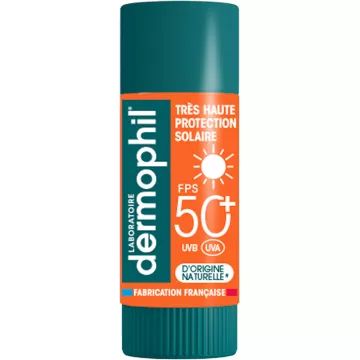
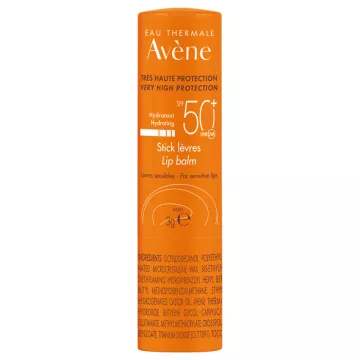
The sunscreen lip balm is a lip sun protection product designed to protect the thin, delicate skin of the lips from UVA and UVB rays. Lacking protective melanin and a hydrolipidic film, the lips are particularly vulnerable to sun damage: sunburn, outbreaks of cold sores, premature aging, and, in the long term, actinic cheilitis. Soin et Nature offers a selection of SPF 30 to SPF 50+ lip sunscreens, recommended by your pharmacist for targeted sun protection of the face and sensitive areas.
More details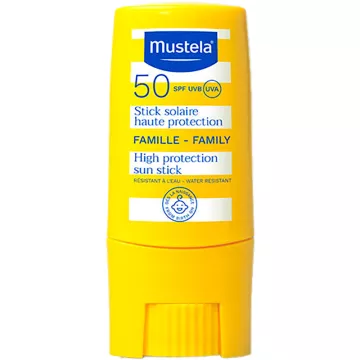
The lips are one of the areas of the face most exposed to UV rays and, paradoxically, one of the least naturally protected. Unlike the rest of the skin, their epidermis produces virtually no melanin, the pigment that filters UV rays. The absence of a hydrolipidic film and sebaceous glands further increases this vulnerability. As a result, unprotected exposure quickly causes sunburn on the lips, which can progress to blisters, scabs, and peeling.
In the long term, chronic UV exposure can cause actinic cheilitis, a precancerous lesion of the lower lip characterized by thickening, loss of the vermilion border, and persistent scaling. This condition, well known to dermatologists, alone justifies the regular use of a sunscreen lip balm among people who are repeatedly exposed to the sun—such as outdoor athletes, construction workers, sailors, and mountaineers.
The sun is also a major contributing factor in triggering recurrences of cold sores. In people who carry the HSV-1 virus, intense sun exposure can reactivate the virus and cause a cold sore to appear within hours. In this case, a sunscreen lip balm is a simple and effective preventive measure.
Altitude significantly increases UV intensity—about 10% more UV radiation for every 1,000 meters of elevation. Added to this is the glare from snow, which reflects up to 80% of the sun’s rays onto the face and lips. Cold, wind, and altitude-related dehydration further increase lip sensitivity. A water- and cold-resistant SPF 50 or 50+ lip balm is essential for days spent skiing, hiking in the Alps, or mountaineering.
Sand, sea foam, and seawater also reflect UV rays, and swimming weakens the protective barrier provided by skincare products. A water-resistant SPF 50+ lip balm is recommended for water activities, with regular reapplication after each swim or when drying off.
Cycling, running, sailing, golf, water sports: any prolonged outdoor activity exposes the lips to intense UV rays. Choose a lip balm with a sports formula that’s sweat-resistant and has a smooth, non-greasy texture so it doesn’t interfere with your activity.
In the city, on your commute, while sitting on a patio, or if you work outdoors, an SPF 15 to 30 lip sunscreen is sufficient for daily protection. It fits easily into your morning routine and can be reapplied throughout the day.
Four main criteria will help you identify the sunscreen lip balm best suited to your needs.
SPF (Sun Protection Factor) measures the product’s ability to filter UVB rays:
A good sunscreen lip balm should offer broad-spectrum protection covering both UVB rays (which cause sunburn) and UVA rays (which cause skin aging and certain actinic lesions). Look for the word “UVA” enclosed in a circle, which guarantees a UVA protection ratio that meets European recommendations.
For water activities, sports, or exposure to intense heat, choose a formula labeled “water-resistant” or “sweat-resistant .” Water resistance does not eliminate the need to reapply after swimming or drying off with a towel.
Lips are regularly in contact with the mouth: the formula must be safe in case of accidental ingestion. Opt for fragrance-free, hypoallergenic sunscreen lip balms that have been dermatologically tested, especially if you have sensitive or reactive lips. Some formulas contain additional moisturizing ingredients (shea butter, beeswax, vitamin E) that provide a 2-in-1 benefit of protection and hydration.
Mineral filters (zinc oxide, titanium dioxide) act as a physical barrier that reflects UV rays: they are well tolerated by sensitive skin and children. Organic (chemical) filters absorb UV rays and often offer a lighter, more invisible texture. The choice depends on your skin’s sensitivity and your personal preferences.
With eighteen years of experience in the pharmacy, I’ve noticed that sun protection for the lips remains vastly underestimated, even among people who diligently apply sunscreen to their faces. Yet the lips pose a real dermatological risk: in some cases, actinic cheilitis precedes the development of labial squamous cell carcinoma, one of the most common skin cancers among highly exposed individuals.
For people with recurrent cold sores, sun protection in the summer and winter (in the mountains) is one of the three pillars of prevention, along with stress management and maintaining good overall health. A single application in the morning is not enough: the frequency of reapplication is just as important as the SPF itself.
For daily moisturizing care not intended for sun protection, please see our lip care section, which features all our products dedicated to lip hydration, repair, and comfort.
Soin-et-Nature offers a complete range of sun protection products to meet all your skin’s needs when it comes to sun exposure. Here are the available categories:
These sun protection products, available on Soin-et-Nature, effectively address your skin’s needs before, during, and after sun exposure, while adhering to a natural and safe approach.