NOTICE
ANSM - Updated on : 22/05/2023
Product name
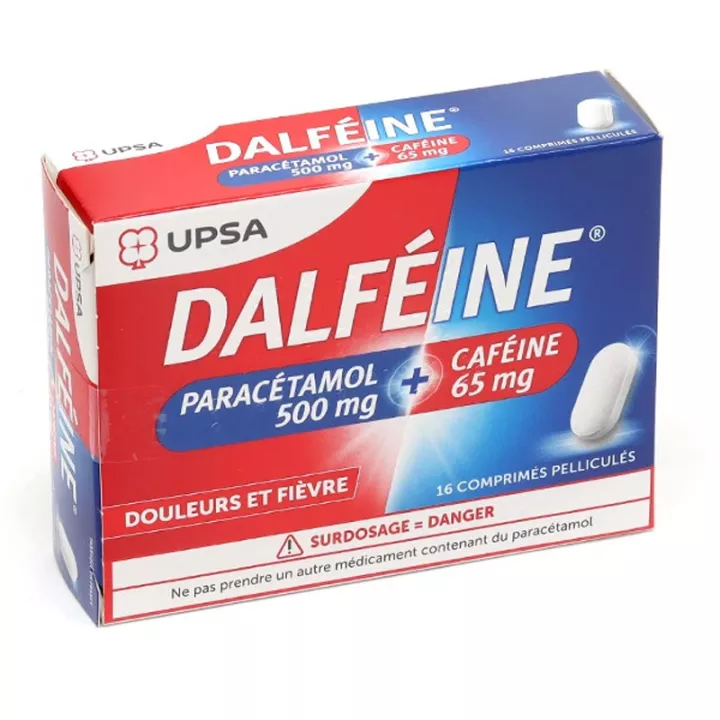
DALFEINE, film-coated tablet
Paracetamol 500 mg / Caffeine 65 mg
Sidebar
Please read this leaflet carefully before taking this medicine, as it contains important information for you.
Always take this medicine exactly as it is prescribed by your doctor, pharmacist or nurse.
- Keep this leaflet. You may need to read it again.
- Ask your pharmacist for any advice or information you may need.
- If you experience any side effects, talk to your doctor, pharmacist or nurse. This also applies to any side effects not mentioned in this leaflet. See section 4.
- You should contact your doctor if you do not feel any improvement or if you feel worse after 3 days in the case of fever and after 5 days in the case of pain.
What does this leaflet contain?
1. What is DALFEINE, film-coated tablet and what is it used for?
2. What do I need to know before taking DALFEINE, film-coated tablet?
3. How should DALFEINE, film-coated tablet be taken?
4. What are the possible side effects?
5. How should DALFEINE film-coated tablets be stored?
6. Package contents and other information.
1. WHAT IS DALFEINE, film-coated tablet AND WHAT IS IT USED FOR?
Pharmacotherapeutic class - OTHER ANTALGICS AND ANTIPYRETICS - ANILIDES, PARACETAMOL, ASSOCIATIONS EXCLUDING PSYCHOLEPTICS
ATC Code: N02BE51
DALFEINE, film-coated tablet contains paracetamol, used to relieve pain (analgesic) and to lower your temperature when you have a fever, and caffeine, used to help relieve the pain produced by paracetamol and stimulate wakefulness.
This medication is used for the symptomatic treatment of mild to moderate pain and/or fever in adults and children over 15 years of age.
This medicine is available without prescription. However, you should always take DALFEINE, film-coated tablet with care to obtain the best results.
2. WHAT DO I HAVE TO KNOW BEFORE TAKING DALFEINE, film-coated tablet?
Never take DALFEINE, film-coated tablet:
- if you are allergic to paracetamol, caffeine or any of the other ingredients listed in section 6.
- if you have liver problems.
- if you are under 15 years of age or weigh less than 50 kg.
IF IN DOUBT, ASK YOUR DOCTOR OR PHARMACIST FOR ADVICE.
Warnings and precautions
Talk to your doctor or pharmacist before taking DALFEINE, film-coated tablet.
In case of overdose or if you have taken too much by mistake, consult your doctor immediately.
This medicine contains paracetamol and caffeine. Other medicines contain caffeine and paracetamol.
Check that you are not taking any other medicines containing paracetamol or caffeine, including medicines obtained without a prescription, or from food sources.
Do not combine them, so as not to exceed the recommended daily dose (see section 3 "How to take DALFEINE, film-coated tablet").
If pain persists for more than 5 days or fever for more than 3 days, or in the event of insufficient efficacy or any other sign, do not continue treatment without your doctor's advice.
Ask your doctor's advice before taking DALFEINE, film-coated tablet in the following cases :
- if you have kidney or liver problems (including Gilbert's syndrome), you may need to reduce your dose,
- if you have hepatitis (inflammation of the liver),
- if you have glucose-6-phosphate dehydrogenase (G6PD) deficiency,
- if you have hemolytic anemia (a form of anemia caused by the breakdown of red blood cells),
- if you are or were an alcoholic,
- if you suffer from asthma and are allergic to aspirin,
- if you are dehydrated or suffer from chronic malnutrition,
- if you suffer from gout,
- if you have hyperthyroidism (overactive thyroid),
- if you have arrhythmia (abnormal heart rhythm).
Do not take DALFEINE, film-coated tablet without a doctor's prescription if you have alcoholism or liver problems, and do not use DALFEINE, film-coated tablet with alcohol. The effect of alcohol is not increased by taking this medicine.
Uric acid and blood glucose test results may be affected by paracetamol.
IF IN DOUBT, ASK YOUR DOCTOR OR PHARMACIST FOR ADVICE.
Children and adolescents
This medicine should not be used in children under 15 years of age or weighing less than 50 kg.
Other medicines and DALFEINE, film-coated tablet
Tell your doctor or pharmacist if you are taking, have recently taken or may take any other medicines, in particular:
- clozapine (used, for example, to treat schizophrenia),
- beta-blockers such as atenolol, metoprolol, oxprenolol or propranolol (used to treat high blood pressure and heart disease),
- disulfiram (used to treat alcoholism),
- fluvoxamine, monoamine oxidase inhibitors and lithium (used to treat anxiety, depression and other psychological disorders),
- diazepam (used to treat anxiety or as a sedative),
- St. John's Wort (used to treat mild forms of depression),
- phenylpropanolamine and ephedrine (decongestants) or theophylline (for asthma),
- other drugs containing paracetamol,
- cholestyramine (used to treat high cholesterol and reduce the amount of fat in the blood),
- metoclopramide and domperidone (used to control discomfort or illness),
- oral anticoagulants (used to prevent blood clotting),
- dipyridamole (often used during hospital tests for heart disease),
- methoxsalen (used to treat skin psoriasis),
- carbamazepine, phenobarbital, phenytoin, stiripentol and lamotrigine (used to treat epilepsy),
- levothyroxine (used to treat thyroid disorders),
- pipemidic acid (used to treat infections),
- probenecid (used to treat gout),
- salicylamide (used to treat fever or mild pain),
- isoniazid (used to treat tuberculosis),
- zidovudine (used to treat HIV),
- mexiletine (used to treat abnormal heart rate),
- chloramphenicol, ciprofloxacin, norfloxacin, enoxacin, rifampicin (antibiotics),
- flucloxacillin (penicillin antibiotic). You should contact your doctor if you are taking flucloxacillin because of the increased risk of metabolic acidosis, particularly if you have risk factors for glutathione deficiency such as severe renal failure, sepsis (severe systemic infection of the body with pathogens), malnutrition or chronic alcoholism.
DALFEINE, film-coated tablet with beverages and alcohol
Do not take this medicine with alcoholic beverages.
DALFEINE, film-coated tablet contains caffeine. To avoid excessive caffeine intake, limit consumption of caffeine-containing beverages (coffee, tea, soft drinks) during treatment with DALFEINE, film-coated tablet.
Pregnancy and breast-feeding
If you are pregnant or breast-feeding, think you may be pregnant or are planning to become pregnant, ask your doctor or pharmacist for advice before taking this medicine.
DALFEINE, film-coated tablet is not recommended during pregnancy or while breast-feeding. If use is deemed necessary, the drug should be administered immediately after breast-feeding.
Driving and use of machinery
Not applicable.
DALFEINE, film-coated tablet contains sodium.
This medicine contains less than 1 mmol (23 mg) of sodium per film-coated tablet, i.e. it is essentially "sodium-free".
3. HOW DO I TAKE DALFEINE, film-coated tablet?
Always take this medicine exactly as instructed in this leaflet or as directed by your doctor or pharmacist. Check with your doctor or pharmacist if in doubt.
Dosage
This presentation is reserved for adults and children (aged 15-18) weighing over 50 kg.
The lowest effective dose should generally be used, for the shortest possible duration.
|
Weight
(Age)
|
Dose
per dose
|
Interval
minimum
between each administration
|
Maximum dose per day
|
|
Adolescents and adults between > 50 and 60 kg
(15 years and older)
|
1 tablet
or
500 mg paracetamol
+ 65 mg caffeine
|
4 to 6 hours as needed
|
3 tablets per day
or
1500 mg paracetamol
+ 195 mg caffeine
|
|
Adolescents and adults > 60 kg
(from age 15)
|
1 to 2 tablets
or
500 to 1000 mg paracetamol
+ 65 to 130 mg caffeine
|
4 to 6 hours as needed
|
6 tablets per day
or
3000 mg paracetamol
+ 390 mg caffeine
|
For adolescents and adults weighing over 60 kg, never exceed 3000 mg paracetamol per day (6 x 500 mg tablets), or the dose prescribed by your doctor: a higher dose will not relieve your pain, but may have serious consequences for your liver.
If you feel that the effect of DALFEINE, film-coated tablet is too strong or too weak, consult your doctor or pharmacist.
IF IN DOUBT, ASK YOUR DOCTOR OR PHARMACIST FOR ADVICE.
Patients with impaired renal or hepatic function, Gilbert's syndrome (familial non-hemolytic jaundice)
Always take this medicine exactly as prescribed by your doctor. Check with your doctor or pharmacist if in doubt.
Duration of treatment
Unless medically indicated, the duration of treatment is limited:
- to 5 days in case of pain,
- to 3 days in case of fever.
If pain persists for more than 5 days or fever for more than 3 days, or if they worsen, do not continue treatment without your doctor's advice.
Method and route of administration
Take by mouth.
Swallow tablets whole with a glass of water.
For short-term treatment only.
Do not take more medicine than indicated on the package. If your condition does not improve, talk to your doctor. If fever persists for more than 3 days, or if pain lasts for more than 5 days or worsens, or if other symptoms appear, stop taking this medication and consult a physician.
IF IN DOUBT, ASK YOUR DOCTOR OR PHARMACIST FOR ADVICE.
If you have taken more DALFEINE, film-coated tablet than you should have
TALK TO A DOCTOR IF YOU HAVE TAKEN TOO MUCH MEDICINE, EVEN IF YOU FEEL WELL. BECAUSE TOO MUCH PARACETAMOL CAN CAUSE SEVERE LATE LIVER DAMAGE.
If you forget to take DALFEINE, film-coated tablet
Always take this medicine exactly as instructed. If you forget to take a dose, take it as soon as you remember. Do not take a double dose to make up for the single dose you forgot to take.
If you stop taking DALFEINE, film-coated tablet
Not applicable.
If you have any further questions about the use of this medicine, please ask your doctor or pharmacist.
4. WHAT ARE THE POSSIBLE SIDE EFFECTS?
Like all medicines, this drug may cause undesirable effects, but they do not occur systematically in everyone.
The following side effects have been reported in post-marketing experience.
Common (may affect up to 1 in 10 people):
- insomnia,
- agitation,
- anxiety,
- nervousness,
- dizziness,
- headaches,
- gastrointestinal disorders,
Rare (may affect up to 1 in 1,000 people):
- anaphylactic reaction (severe allergic reaction),
- allergic dermatitis,
- rash,
- angioedema (swelling of the dermis),
- Stevens-Johnson syndrome (skin reaction),
- toxic epidermal necrolysis (life-threatening skin condition).
Very rare (may affect up to 1 in 10,000 people):
- severe skin reactions,
- bronchospasm,
- abnormal liver function (liver problems),
- increased transaminases (symptoms of liver damage),
- thrombocytopenia (reduced platelet count),
- agranulocytosis (decreased white blood cell count).
Undetermined frequency (frequency cannot be estimated from available data)
- irritability,
- palpitations,
- tachycardia (increased heart rate).
When the recommended dose is combined with dietary caffeine intake, the higher dose of caffeine may increase the risk of caffeine-related side effects such as nervousness, dizziness, insomnia, restlessness, anxiety, irritability, headache, gastrointestinal disorders and palpitations.
If you develop any of the side effects described above, please inform your doctor. At the first sign of a hypersensitivity reaction, stop taking DALFEINE, film-coated tablet. Your doctor will then assess the severity of the reaction and decide what further measures may be necessary.
Reporting side effects
If you experience any side effects, please tell your doctor, pharmacist or nurse. This also applies to any side effects not mentioned in this leaflet. You can also report adverse reactions directly via the national reporting system: Agence nationale de sécurité du médicament et des produits de santé (ANSM) and the network of Centres Régionaux de Pharmacovigilance - Website : https://signalement.social-sante.gouv.fr/.
By reporting adverse reactions, you are helping to provide more information on drug safety.
5. HOW TO CONSERVE DALFEINE, film-coated tablet?
Keep out of sight and reach of children.
Do not use this medicine after the expiration date indicated on the box after EXP. The expiration date refers to the last day of this month.
No special storage precautions.
Do not dispose of any medicine with your household waste . Ask your pharmacist to dispose of any medicines you no longer use. These measures will help protect the environment.
6. CONTENTS AND OTHER INFORMATION
What DALFEINE, film-coated tablet contains
- The active ingredients are :
Paracetamol.................................................................................................................. 500 mg
Caffeine............................................................................................................................ 65 mg
For one film-coated tablet
- The other ingredients are
Pregelatinized starch, povidone, crospovidone, stearic acid, microcrystalline cellulose, colloidal anhydrous silica, croscarmellose sodium*, magnesium stearate. *See section 2.
Film coating :
Opadry II 85F18422 (polyvinyl alcohol, macrogols, talc, titanium dioxide (E171)).
What is DALFEINE, film-coated tablet and what does it contain?
DALFEINE, film-coated tablets are white, oblong, film-coated tablets.
Boxes of 4, 6, 8, 10, 12, 14, 16 tablets.
Not all presentations may be marketed.
Marketing authorization holder
UPSA SAS
3 RUE JOSEPH MONIER
92500 RUEIL-MALMAISON
Marketing authorization holder
UPSA SAS
3 RUE JOSEPH MONIER
92500 RUEIL-MALMAISON
Manufacturer
DELPHARM REIMS
10 RUE COLONEL CHARBONNEAUX
51100 REIMS
Or
DELPHARM BRETIGNY
USINE DU PETIT PARIS
91220 BRETIGNY SUR ORGE
Drug names in member states of the European Economic Area
This drug is authorized in the member states of the European Economic Area under the following names: In accordance with current regulations.
[to be completed later by the holder].
The last date on which this leaflet was revised was :
[to be completed later by the holder]
{month YYYY}.
Other
Detailed information on this drug is available on the ANSM (France) website.