Instructions for Using Myristica Sebifera in Homeopathy
Myristica Sebifera is a homeopathic remedy made from a plant in the Myristicaceae family, closely related to the nutmeg tree. It is a shrub also known asOcoba virola.
Registered Medication: EH01803
Origin: Plant-based
In homeopathy, this remedy is primarily indicated for infectious conditions accompanied by suppuration. Myristica Sebifera helps accelerate the process of pus formation, bringing the abscess to maturity so that it can drain on its own. Thanks to this homeopathic remedy, infections can be effectively treated without the need for surgical procedures or antibiotics, which are often very taxing.
Please refer to the package insert for Myristica Sebifera 3CH, 4CH, 5CH, 6CH, 7CH, 9CH, 12CH, 15CH, 30CH
Which Myristica Sebifera dilution to choose in homeopathy
Depending on the type of symptoms you wish to treat, different dilutions should be used.
- Low dilutions (4CH–5CH) are used for local symptoms
- Medium dilutions (7CH–9CH) are used to treat more general symptoms
- High dilutions (15CH–30CH) are intended for behavioral disorders
Myristica sebifera, also known as Brazilian nutmeg, is a plant used in homeopathy for its anti-inflammatory and antiseptic properties; it is particularly recognized for accelerating the healing of infections and abscesses.
Origin and Properties
Derived from the fruit of Virola sebifera, a tropical tree native to South America, Myristica sebifera is used to extract an oil rich in medicinal properties. In homeopathy, this plant is prepared in a way that concentrates its beneficial effects, particularly for treating skin conditions and inflammation.
Indications and Dosage
The homeopathic physician selects the appropriate dilution of Myristica sebifera for each condition or symptom.
Therapeutic Indications
- For superficial abscesses: Myristica sebifera helps accelerate the maturation of the abscess and the formation of pus, thereby promoting resolution without surgical intervention.
- For boils: Effective against bacterial infections, particularly staphylococci, Myristica Sebifera acts as an anti-inflammatory agent and helps stop the spread of bacteria.
- For nail infections (whitlow): This remedy is also useful in the early stages of nail infections, as well as in more advanced cases where pus is present.
- For acute parotitis: Used to treat inflammation of the salivary glands.
A chalazion is a small, relatively hard cyst that forms on the eyelids. It is caused by the blockage of an eyelid sebaceous gland that secretes sebum. A chalazion may gradually resolve when treated with homeopathic remedies. It is important to treat a chalazion early to prevent an infection that could damage the eye.
Homeopathic treatments for chalazions that have not yet become suppurative:
Suppuration refers to a stage in which the chalazion becomes infected and leads to a discharge of pus. Homeopathic treatments help prevent the chalazion from worsening and promote pus formation to dissolve the cyst. Therefore, Pyrogénium diluted to 7 or 9 CH should be taken regularly. Myristica at 9 CHshould be administered every hour if palpation reveals the presence of an unusual cyst on the eyelids.
Like Pyrogénium, Myristica will stimulate suppuration. If pus has not formed and the goal is to halt the progression of the chalazion, Hépar Sulfur in 15 CH may be taken as a single dose if suppuration has not yet begun.
Note: The dosage recommendations above are for informational purposes only. For use tailored to your specific case, please consult a homeopathic healthcare professional.
Recommendations for Use of Myristica Sebifera and Instructions for Use
Twist the tube to dispense the desired number of granules into the cap, then place the Myristica Sebifera homeopathic granules (3CH, 4CH, 5CH, 6CH, 7CH, 9CH, 12CH, 15CH, 30CH under your tongue.
Recommended Dosages
- For abscesses and boils: Take 2 granules of Myristica Sebifera 4 CH per dose, 3 times a day.
- For whitlows: Use a 5 CH dilution, with a dose of 5 granules, to be taken 3 to 4 times a day.
- In drop form: Myristica 3X can be taken at a dose of 10 drops, 4 to 6 times a day.
Directions for Use
- Turn the tube upside down and twist the cap to release the granules.
- Place the granules directly under the tongue and let them dissolve completely.
- For the drops, measure the indicated amount and take it orally as is or dilute it in a little water.
Directions for Use
- It is best to take Myristica Sebifera between meals.
- Avoid consuming substances that may interfere with the treatment’s effectiveness, such as tobacco, coffee, or mint.
- For children, adjust the dosage according to the advice of a healthcare professional and consider diluting it in water if necessary.
Warnings and Precautions
- Consult a doctor if symptoms persist or worsen.
- Homeopathy can complement conventional treatment but should not replace appropriate medical care, especially in cases of severe infections.
Storage
- Store the granules and drops in a dry place, away from light and heat.
Packaging
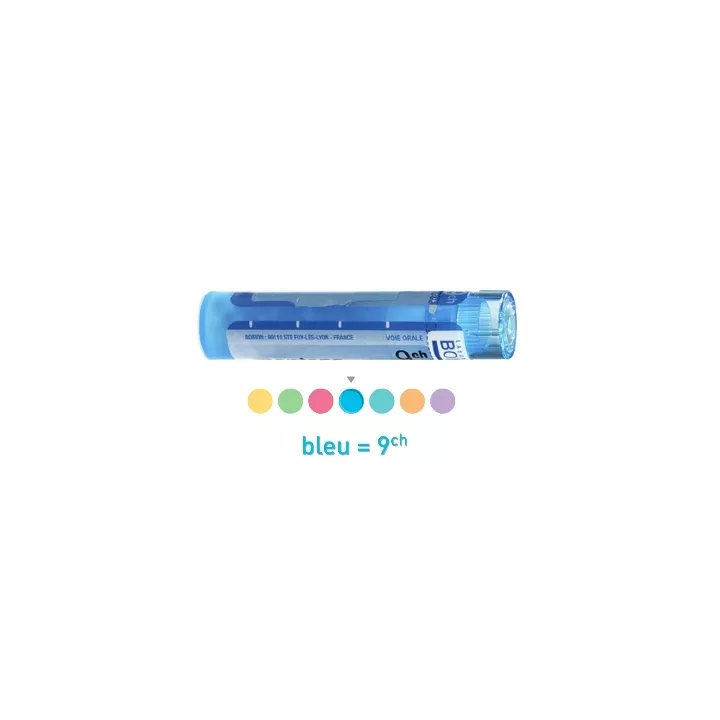
Translucent tube of granules. Weight: 4 g. Approximately 80 homeopathic granules of Myristica Sebifera 3CH, 4CH, 5CH, 6CH, 7CH, 9CH, 12CH, 15CH, 30CH
Myristica Sebifera is a homeopathic remedy often prescribed for the treatment of superficial infections such as abscesses and boils. The remedy is derived from the ojoba shrub (Virola sebifera), a relative of the nutmeg tree belonging to the Myristicaceae family. It is prepared from the sap extracted from the bark of this shrub.
Dosages and Packages:
- Myristica Sebifera is available in homeopathic doses and in tubes of granules.
- Available dilutions range from 4 CH to 30 CH, allowing the treatment to be tailored to the severity and nature of the symptoms.
Compounded Preparations:
The remedy can be prepared in Hahnemannian dilutions starting at 3 CH, according to specific prescriptions for the patient, allowing for personalized treatment.