What types of wipes are available at drugstores, and what are they used for?
The term “wipes” covers a very broad range of single-use products—what they all have in common is convenience, but their ingredients, intended uses, and precautions for use vary considerably. Understanding the different types helps prevent inappropriate use, especially on sensitive skin.
- Cleansing wipes: gentle cleansing of the face, body, or hands—generally alcohol-free—for daily cosmetic use
- Antiseptic/disinfectant wipes: isopropyl alcohol or chlorhexidine—for medical use (wound care, skin preparation)—may cause irritation with repeated use
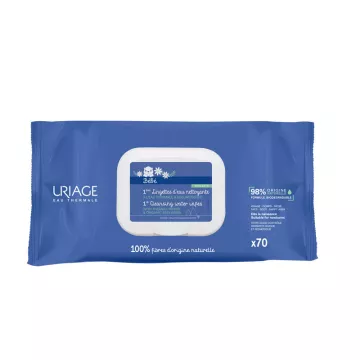
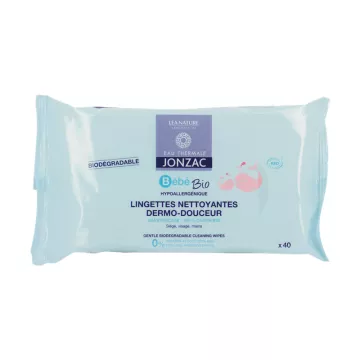
- Baby wipes: alcohol-free, fragrance-free, pH-neutral—formulated specifically for infants—not interchangeable with adult wipes
- Intimate wipes: pH balanced for vaginal flora (3.8–4.5)—free of harsh detergents—for external use only
- Makeup-removing wipes: emollient active ingredients + mild surfactants — see our eye care line and eye wipes
- Biodegradable wipes: natural fibers (cotton, bamboo, lyocell) — decompose in 30 to 90 days — eco-friendly alternative to synthetic wipes
How do you read the ingredients on a wipe to avoid irritants?
The INCI list for a wipe is just as important as that for a body wash—the ingredients remain in prolonged contact with the skin without being rinsed off, which increases the risk of irritation or sensitization as part of a daily hygiene routine.
- Ethyl or isopropyl alcohol: an effective disinfectant but drying with repeated use—reserved for medical or antiseptic wipes, not for daily-use wipes
- MIT/CMIT (methylisothiazolinone): a highly sensitizing preservative—banned in leave-on products in the EU since 2017—its presence in a wipe is a sign of regulatory noncompliance
- Fragrance: the leading cause of contact allergies in wipes—those with sensitive skin should always choose fragrance-free products
- Propylene glycol: a common humectant but irritating at high concentrations on sensitized skin
- Good ingredients to look for: aloe vera, panthenol, glycerin, chamomile extract—soothing active ingredients that balance the cleansing effect
Can wipes replace washing your hands or face?
This is a common practical question when traveling or on the go, addressed in our guide to dailyhygiene.
- Hands: A cleansing wipe reduces the surface bacterial load but does not replace a 20-second wash with soap and water for eliminating pathogens—a supplement when on the go, not a substitute
- Face: Makeup-removing wipes are acceptable as a temporary solution—but exclusive daily use without rinsing leaves behind surfactant residues that can irritate sensitive skin over the long term
- Body: cleansing wipes for situations without access to water (travel, limited mobility)—priority areas: underarms, groin folds, hands—see our personal hygiene page for targeted cleansing
- Waterless skincare systems: specialized all-in-one wipes for people with limited mobility or in palliative care—formulations richer in emollient active ingredients
How to choose eco-friendly wipes without sacrificing effectiveness?
Conventional wipes are one of the most problematic types of plastic waste—they contain synthetic fibers (polyester, polyethylene) that do not biodegrade. Our page on biodegradable wipes details certifications and practical alternatives.
- 100% natural fibers (organic cotton, bamboo, lyocell): biodegradable under industrial conditions in 30–90 days — OK Biobased or EN13432 certifications
- Never flush a wipe down the toilet —even “flushable” wipes do not dissolve quickly enough and clog pipes and wastewater treatment plants
- Reusable washable cotton wipes: the most eco-friendly alternative—can be washed 80 to 100 times, equivalent to several hundred disposable wipes
- Check for certifications: Cosmos Organic for organic cosmetic wipes, Oeko-Tex Standard 100 for textile fibers free of chemical residues