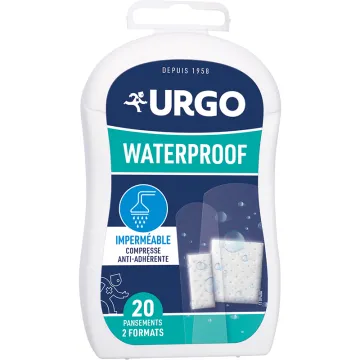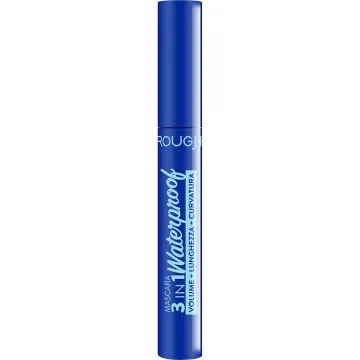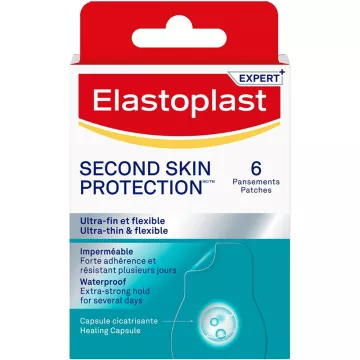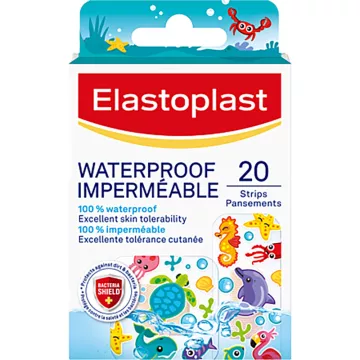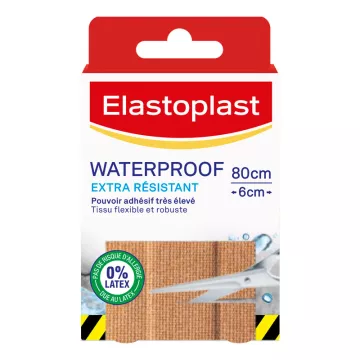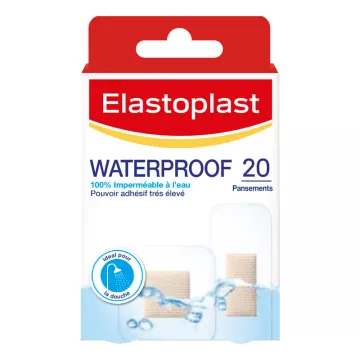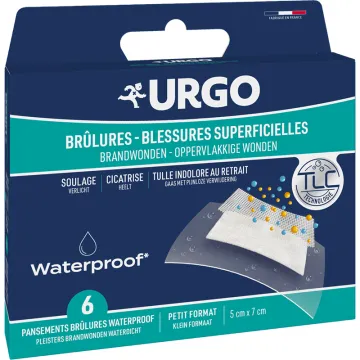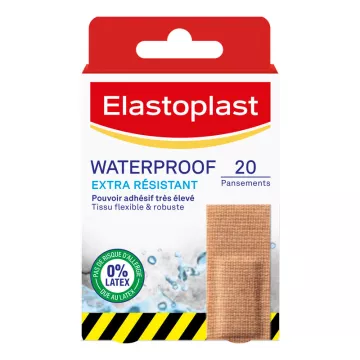
A water-resistant product is formulated to retain its essential properties even when exposed to moisture or immersion.
This characteristic applies to two main product categories: cosmetics (mascara, foundation, sunscreen, eyeliner) and medical dressings designed to protect a wound or superficial injury.
These products undergo documented efficacy testing (resistance to 20 or 40 minutes of immersion for sunscreens; graded waterproofing for bandages).
They are particularly well-suited for water activities, sports, or daily use in humid environments.
When choosing a water-resistant bandage, several criteria can help you find the right product:
An allergy to acrylic adhesive (a common component of bandages and adhesive bandages) is still possible; if redness appears at the application site, switch to a different product.
Water-resistant cosmetics are formulated to suit most skin types, including sensitive skin.
Read the INCI list carefully to identify any potentially allergenic ingredients (fragrances, preservatives, synthetic dyes).
For highly reactive skin or skin prone to allergies, opt for products that are dermatologically tested and labeled “fragrance-free.”
Perform a skin test on the inside of your elbow 48 hours before using a new product, especially around the eyes.
To ensure the effectiveness of a water-resistant bandage, a few precautions are essential.
Apply to clean, completely dry skin: even the slightest moisture prevents the adhesive from sticking properly.
Avoid touching the adhesive side with your fingers to prevent contamination; press the bandage firmly against the skin, smoothing the edges to seal the area.
Change the bandage regularly as recommended (usually daily or as soon as it becomes saturated) to maintain hygiene and support the healing process.
Water-resistant cosmetics made from natural ingredients do exist, formulated with waxes (carnauba, candelilla, beeswax) and structuring plant oils.
These formulas can meet the demand for organic or certified (Ecocert, COSMOS, Cosmébio) cosmetic alternatives.
Some avoid synthetic organic filters, synthetic fragrances, and prioritize preservatives authorized in organic cosmetics (ingredients commonly cited as “parabens, silicones, sulfates” are also regulated by European Regulation 1223/2009).
Check the certification directly on the packaging to ensure the product’s authenticity.
Water-resistant cosmetics are generally formulated to provide long-lasting wear, sometimes up to 24 hours depending on the product.
The actual duration depends on the formula, exposure conditions (immersion, sweating, friction), and the initial application.
For waterproof sunscreen, resistance is generally tested for 20 minutes (“water-resistant”) or 40 minutes (“very water-resistant”) of immersion.
Regardless of the claimed durability, regular reapplication is still recommended after swimming, exercise, or heavy sweating.
Water-resistant bandages can be used on most parts of the body, choosing the appropriate size for the area to be protected.
Common areas of use: hands, fingers, arms, legs, and back. For joints (knees, elbows, fingers), choose a bandage with enough elasticity to conform to movement.
Areas to avoid or use with caution: inside the ear canal (never), immediately around the eyes and lips, heavily oozing wounds (seek medical advice), and very hairy areas (shave around the area if necessary).
If you have any doubts about whether a bandage is suitable for a particular area, ask your pharmacist or doctor for advice.
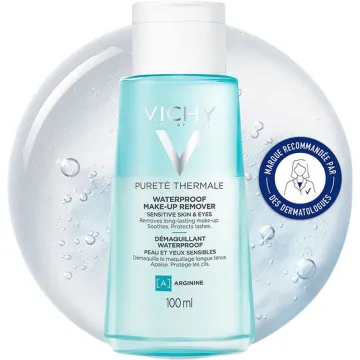
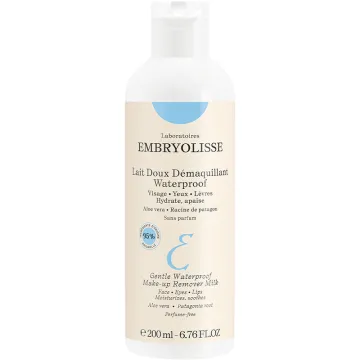
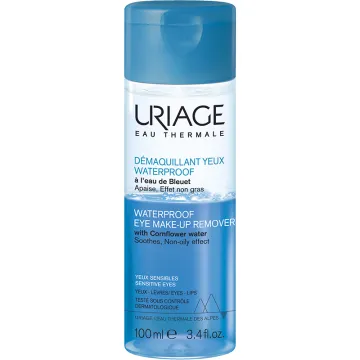
To effectively remove a water-resistant cosmetic, use a makeup remover specifically formulated for waterproof products.
Two-phase makeup removers (oil + micellar water) or makeup-removing oils are the most effective at dissolving oil-soluble pigments without rubbing.
Soak a cotton pad and place it on the area for a few seconds to let the makeup remover work, then gently wipe from top to bottom (eyelashes, eyebrows, eyelids).
Avoid rubbing aggressively, especially around the eyes, where the skin is thinner and more delicate.
Many water-resistant bandages are designed to be discreet and blend in with the skin’s natural color.
Several finishes are available: clear, semi-transparent, skin-tone, classic white, or colored (for children or fun uses).
Transparent hydrocolloid or polyurethane film bandages are particularly popular because they’re virtually invisible while still providing effective protection.
For darker skin tones, some brands now offer products in several skin-tone shades for better visual blending.
Water-resistant cosmetics are particularly well-suited for indoor or outdoor sports activities.
They withstand sweat, rain, and immersion without running or smudging on the face during physical activity.
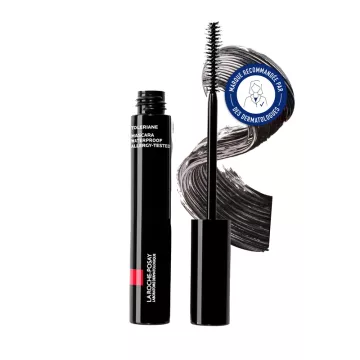
Particularly popular products include waterproof mascara, waterproof eyeliner, long-lasting foundation, long-wearing lip balm, and waterproof sunscreen for water sports.
Remember to always use a waterproof sunscreen specifically designed for outdoor activities, and to reapply it every 2 hours, even if the label says otherwise.
Water-resistant bandages are suitable for minor cuts and scrapes, as well as for protecting a wound during the superficial healing phase.
For a more serious injury, consult a healthcare professional: heavy bleeding that won’t stop, a deep wound, a weeping wound, the presence of a foreign object, a wound to the eye or face, a wound caused by an animal or human (risk of infection), or a deep bite.
Check your tetanus vaccination status (booster every 20 years between the ages of 25 and 65).
Water-resistant bandages offer protection against water but are not a substitute for specialized medical care.
When used correctly and removed with a suitable makeup remover, water-resistant cosmetics generally do not have a negative impact on skin health.
For sensitive or reactive skin, opt for formulas labeled “non-comedogenic,” “hypoallergenic,” or “dermatologically tested.”
Always remove your makeup in the evening: residues of waterproof pigments left on the skin can clog pores and lead to breakouts.
If you experience a reaction (redness, itching, or a burning sensation), stop using the product and consult a dermatologist.
Applying sunscreen under a waterproof bandage is technically possible but requires a few precautions.
Allow the sunscreen to fully absorb (5 to 10 minutes) and dry before applying the bandage, so as not to compromise its adhesion.
On a fresh scar, sun protection is essential to reduce the risk of post-inflammatory hyperpigmentation (long-lasting dark spots).
On damaged skin or an unhealed wound, do not apply any cosmetics without medical advice; on a closed scar, SPF 50 is generally recommended for 6 to 12 months.
There are several reliable indicators to confirm a cosmetic’s water resistance.
Look for explicit statements on the packaging: “waterproof,” “water-resistant,” or “highly water-resistant,” often accompanied by a tested immersion time.
For sunscreen products, the term “water-resistant” corresponds to 20 minutes of tested immersion, while “very water-resistant” corresponds to 40 minutes (COLIPA standard).
Also check verified user reviews, which often detail real-world usage experiences (sports, swimming, tears, sweat).