What is transient constipation, and how can you recognize it?
Transient constipation is a temporary disruption of bowel movements—fewer than 3 bowel movements per week or hard stools that are difficult to pass—lasting less than 3 weeks. It differs from chronic constipation (lasting more than 3 months) and responds well to simple home remedies. Our “Flat Stomach” supplement line offers quick and natural solutions to restore regular bowel movements.
- Travel: the leading cause of transient constipation—changes in eating patterns, dehydration, prolonged inactivity, and jet lag disrupting the gut’s circadian rhythm—traveler’s constipation affects 40% of people on the go
- Sudden dietary changes: reduced fiber intake (fast food, hotel meals), increased intake of animal proteins and saturated fats, reduced fluid intake
- Acute stress: cortisol → inhibits colonic motility → slowed bowel movement — exams, family events, moving
- Constipating medications: opioids (codeine, morphine, tramadol—constipation in 90% of cases), tricyclic antidepressants, oral iron, calcium, certain antihypertensives (verapamil)—consult your doctor to adjust your medication if constipation is severe
- Associated symptoms: bloating + pelvic heaviness + abdominal discomfort + pellet-like or very hard stools — see our constipation page for a complete overview
Quick natural remedies to relieve temporary constipation
- Warm or hot water on an empty stomach (1–2 large glasses as soon as you wake up): triggers the gastrocolic reflex—morning colon contractions are the strongest of the day—add 1 teaspoon of lemon juice to enhance the natural laxative effect
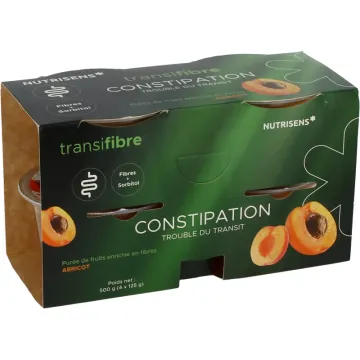
- Prunes (4–8 dried prunes or 150 mL of prune juice): sorbitol (a natural osmotic agent) + soluble fiber—results expected within 6–12 hours—consume in the evening for a morning effect—the most well-documented remedy for temporary constipation
- Marine magnesium (300–400 mg in the evening): mild osmotic effect on the colon—draws water into the intestinal lumen → softens stools—results in 8–12 hours—ideal for temporary constipation not associated with irritable bowel syndrome
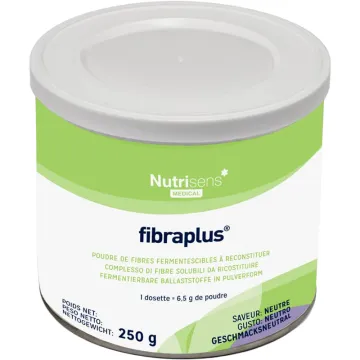
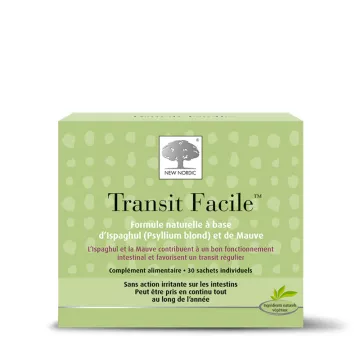
- Blond psyllium (3–5 g in a large glass of water): mucilaginous fibers that increase stool volume and soften stools—drink enough water to activate the mucilage—see our intestinal supplements
- Step stool under your feet while using the toilet (squatting position): improves the anorectal angle — reduces straining during bowel movements — particularly effective when combined with a gentle, clockwise circular abdominal massage
Diet and hydration for temporary constipation
- Natural laxative foods to prioritize: prunes, figs, kiwi (2 kiwis/day = proven effectiveness against constipation), apples with skin, pears, rhubarb, soaked flaxseeds—incorporate these at the first signs of constipation
- Legumes and high-fiber vegetables: green beans, peas, lentils, artichokes, spinach—increase intake over 3–4 days to avoid temporary bloating
- Increased fluid intake: at least 2 L/day, including 500 mL first thing in the morning—water softens stools and activates fiber in the colon—avoid diuretic beverages (more than 2 cups of coffee, alcohol) that worsen dehydration
- Olive oil on an empty stomach (1 tablespoon): lubricates the colon lining + gently stimulates bile production → mild laxative effect — a traditional method that is well tolerated
- Foods to temporarily limit: white rice, white bread, unripe bananas, chocolate, fatty meats—all of which slow down bowel movements
Occasional laxatives, exercise, and when to seek medical advice
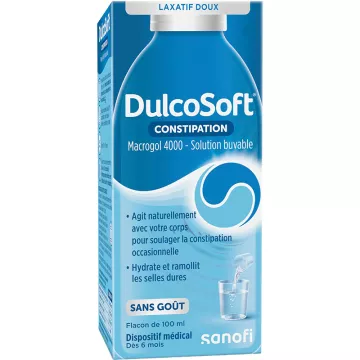
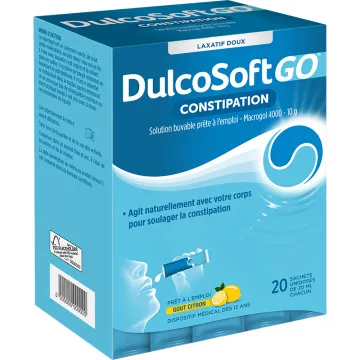
- Osmotic laxatives (macrogol, lactulose): draw water into the colon → soften stools — well-tolerated, non-habit-forming — use if natural measures are insufficient after 48 hours — available over the counter in our “Improve Bowel Movement” line
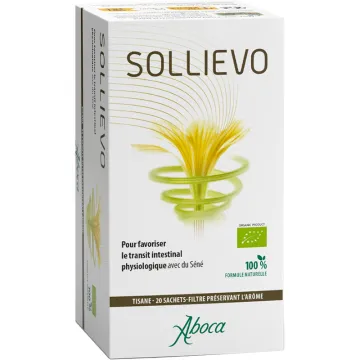
- Stimulant laxatives (bisacodyl, senna): fast-acting (6–12 hours) — for occasional use only (max 3–5 days) — risk of dependence and hypokalemia with repeated use — reserved for temporary constipation resistant to other measures
- Glycerin suppositories: local rectal action — rapid effect (15–30 min) — no systemic risk — ideal for relieving distal (rectal) constipation
- Physical exercise 30 min/day: brisk walking + yoga (twisting poses, knees-to-chest) — directly stimulates peristaltic contractions — avoid lying down or sitting still when constipated
- Seek medical advice if: temporary constipation lasting > 3 weeks despite all measures — blood in the stool — severe abdominal pain — weight loss — onset of constipation after age 50 with no obvious cause — bowel movements showing all warning signs