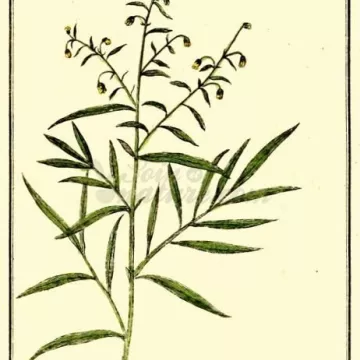
Tarragon (Artemisia dracunculus) is one of the most effective antispasmodic essential oils—particularly for digestive spasms, cramps, and nervous contractions. Its warm, anise-like scent is instantly recognizable. However, it is also an essential oil that should be used with caution: its estragole content (60–80%) is the subject of regulatory warnings from the EFSA and ANSES regarding prolonged use. Effective, targeted, and for limited-term use. Explore our aromatherapy line.
Tarragon and Digestive Spasms: The Go-To Antispasmodic?
For stomach cramps, tarragon is often the first essential oil that aromatherapists reach for.
- Estragole and methyl chavicol in tarragon essential oil have a powerful antispasmodic effect on the smooth muscles of the digestive tract—among the fastest-acting in the aromatherapy pharmacopoeia
- Intestinal cramps and abdominal spasms: 2 drops diluted to 5% in jojoba oil, applied with a clockwise circular abdominal massage—relief within 10–15 minutes
- Irritable bowel syndrome with a spastic component: tarragon is often more effective than peppermint for cramp-like pain—as a short course of treatment lasting no more than 2 weeks
- Nausea and bloating: 1 drop applied to the solar plexus after dilution — rapid carminative and antispasmodic effect
- Herbal tea: 1 c.c. of dried leaves in 200 mL, steep for 8 min—take after meals—a gentler form than essential oil, with a much lower estragole content
Tarragon and nervous tension?
Its antispasmodic effects extend beyond the digestive system—skeletal muscles and the nervous system also benefit.
- Spasms related to stress and nervous tension: tarragon + marjoram (2:1) in vegetable oil—tarragon relieves the spasm, marjoram blocks the nerve signal
- Menstrual cramps with a strong spasmodic component: 3% in calophyllum oil, applied via lower abdominal massage—one of the most potent essential oils
- Stress-related neck and backmuscle tension: tarragon + spike lavender for massage—up to twice a day, limited to 1–2 weeks
- Combination with lemon balm: for cases of anxiety + digestive spasms + disturbed sleep—as a combined herbal tea in the evening
Tarragon and sleep?
A lesser-known use—yet tarragon is one of the most potent sedatives in aromatherapy.
- Methylchavicol acts on GABA-A receptors—producing a mild to moderate sedative effect depending on the dose
- Diffusion just 5 minutes before bedtime: 5–6 drops—warm anise note—do not exceed this amount (mild olfactory sedation possible at high doses)
- Apply to the solar plexus and the arch of the foot: 2 drops of a 5% solution in vegetable oil—helps promote sleep in people with a “body that won’t shut down”
- Combine with marjoram: the most effective sedative-antispasmodic combination in aromatherapy for tension accompanied by spasms
Estragole and safety: what have the EFSA and ANSES highlighted?
An important regulatory point—often omitted from product labels.
- Estragole (methyl chavicol), the major component of tarragon essential oil (60–80%), is classified as a potentially genotoxic substance by EFSA and ANSES—at high doses and over long periods
- Practical implications: tarragon essential oil is strictly reserved for adults—use is limited to a maximum of 2–3 weeks without interruption—never for prolonged daily use
- Herbal tea made from dried leaves is much safer—it has a very low free estragole content compared to the essential oil—and can be used more regularly
- Never use tarragon essential oil internally without a prescription from a qualified aromatherapist or physician
- Exotic basil has the same profile—same estragole precaution
Precautions?
- Pregnant and breastfeeding women: contraindicated (estragole and uterotonic properties)
- Children under 12: contraindicated as essential oil
- Allergy to Asteraceae (mugwort, chamomile, dandelion): risk of cross-reactivity—perform a skin test before use
- Anticoagulants: the coumarins in tarragon may potentiate their effects—seek medical advice
- Duration: 2–3 weeks maximum for essential oil; mandatory break before resuming use — herbal tea: more flexible use