What is scabies, and how is it spread?
Human scabies is a contagious skin parasitic infection caused by a microscopic mite, Sarcoptes scabiei var. hominis. The adult female (about 0.4 mm) burrows tunnels (scabies burrows) into the stratum corneum of the epidermis, where she lays her eggs and deposits her feces. It is primarily the parasite’s antigens that trigger the allergic reaction responsible for the intense itching.
Transmission occurs primarily through prolonged skin-to-skin contact (>15 to 20 minutes):
- Close family contact: sharing a bed, daily care.
- Community living: nursing homes, boarding schools, shelters, prisons, barracks, and temporary housing facilities.
- Sexual contact—scabies is now classified as a sexually transmitted infection by the WHO.
- Indirect contact via clothing, bedding, towels, or stuffed animals recently used by an infested person (plays a lesser role, except in hyperkeratotic scabies).
The incubation period is long following initial infestation: 3 to 6 weeks before itching begins. In the case of reinfestation in a person who has already been exposed, symptoms may appear in as little as 1 to 3 days. Scabies is not a sign of poor hygiene: it affects all social groups and all age groups. See also “mites” for a broader overview of mite-related conditions.
What are the symptoms of scabies?
Characteristic clinical signs:
- Intense, generalizeditching that worsens at night (a highly suggestive sign).
- Knowledge of similar cases among close contacts (home, school, community, partner)—a major diagnostic clue.
- Scabies burrows: fine white or grayish lines ranging from a few millimeters to 1–2 cm in length, sometimes ending in a small, beaded vesicle (the “scabies pearl”).
- Vesicles and pustules between the fingers.
- Scabies nodules on the male genitalia (scrotum, penis) and in the armpits: highly suggestive, sometimes persistent after treatment.
- Diffuse scratch marks (excoriations, crusts) that may obscure the initial furrows.
- Frequent secondary eczematization.
Preferred sites:
- Interdigital spaces of the hands, anterior surfaces of the wrists, and inner surfaces of the arms and elbows.
- Axillary and submammary folds.
- Periumbilical region, waistline, buttocks.
- Inner thighs, external genitalia (men), areolas (women).
- The inner sides of the ankles and the outer edges of the feet.
- The face and scalp are spared in adults (but affected in infants and the very elderly—atypical forms to be aware of).
How is scabies diagnosed?
The diagnosis is primarily clinical:
- Patient history (inquiry into similar cases in the household, nighttime itching, history of close contact).
- Careful dermatological examination of the typical sites.
- Dermatoscopy: signs of the “delta wing” (or “paraglider”) pattern and the “Y” structure at the ends of scabies burrows—a quick, painless, sensitive, and specific examination when performed by a trained professional.
- Cutaneous parasitology via scraping and microscopic examination (detection of the mite, eggs, or feces): diagnostic confirmation, with sensitivity varying depending on the examiner.
- Differential diagnosis: atopic eczema, irritant dermatitis, urticaria, dermatitis herpetiformis, senile pruritus, insect bites, pruritus in the elderly, pediculosis, and occasionally cutaneous lymphoma. Skin that is sensitive to aggressive treatments may complicate the presentation of symptoms.
- No routine laboratory tests are necessary in the classic form.
What are the treatment options for scabies?
Management relies on prescription scabicides, to be applied according to specific guidelines (HCSP recommendations):
- Topical:
- 5% permethrin cream (Topiscab): Apply a single, even layer over the entire body (excluding the face and scalp in adults; including the face and scalp in infants and the very elderly). Dwell time: 8 to 14 hours (often overnight). Repeat systematically on days 7–14. First-line treatment. Precautions for infants <2 months (based on specialist advice), pregnant women, and breastfeeding women (use may be possible according to updated recommendations).
- 10% benzyl benzoate ± sulfiram (Ascabiol): 2 applications 24 hours apart (with rinsing in between), to be repeated on days 7–14. Frequent transient burning sensation. Precautions for children under 2 years of age, pregnant women (from the first trimester onward, according to protocols), and breastfeeding women (temporary suspension of breastfeeding).
- Oral route:
- Ivermectin (Stromectol): 200 µg/kg as a single dose on an empty stomach, to be repeated on day 14. Useful when topical treatments are difficult to administer (in group settings, for dependent individuals, or for mass treatment). Avoid use in children weighing less than 15 kg, pregnant women (except in specific situations assessed by a physician), and breastfeeding women (breastfeeding should be suspended for 24 hours after taking the medication).
- Simultaneous treatment of all close contacts, even asymptomaticones: essential to prevent the “cycle of reinfestations” (“scabies ping-pong”). This includes: spouses, children living in the household, recent sexual partners, and caregivers with prolonged contact.
- Antihistamines for pruritus (generally second-generation H1 blockers).
- Prescription topical corticosteroids, after confirmed parasite eradication, in cases of persistent eczematous rash.
- Prescription antibiotic therapy in cases of bacterial superinfection (secondaryimpetigo is common in children and in cases of intense scratching). Antiseptic treatment as needed with a mild product such as aqueous chlorhexidine.
- Emollient treatments to restore the skin barrier after eradication.
How can scabies transmission be prevented?
Several measures are essential, in addition to medical treatment:
- Limit prolonged direct skin-to-skin contact for up to 3 days after the start of effective treatment.
- Treat all contacts simultaneously (even if they are asymptomatic).
- Decontaminate linens and the environment on the day of treatment:
- Wash all clothing worn in the past 3 days, as well as towels and bed linens, in the washing machine at a minimum of 60°C, and tumble dry on high heat when possible.
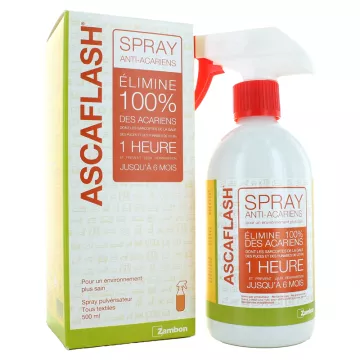
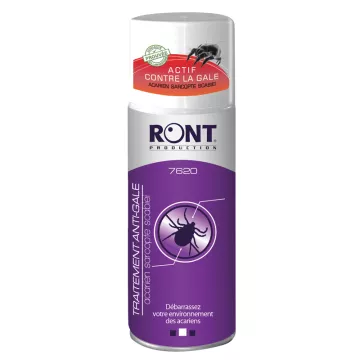
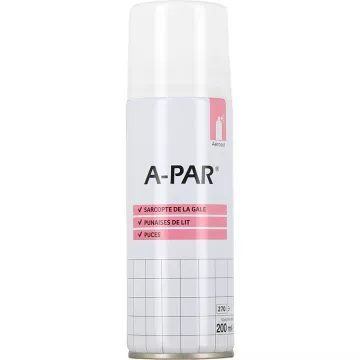
- For textiles that cannot be washed at 60 °C (coats, down pillows, stuffed animals, shoes, sofa covers): Use an acaricide spray such as A-Par or Sprégal for 12 to 24 hours in a closed room, then ventilate; or place items in a sealed plastic bag for at least 7 days at room temperature (dust mites and their eggs do not survive outside human skin for more than a few days).
- Vacuum carpets, sofas, chairs, and mattresses, then dispose of the vacuum bag.
- Exclusion from school or other group settings for up to 3 days after effective treatment (HCSP recommendations).
- Notify the primary care physician and the occupational health physician if necessary (scabies in a group setting).
- Provide support and information to family and friends to reduce stigma and promote collective care.
What are the possible complications of scabies?
The most common complications:
- Bacterial superinfection: impetigo, ecthyma, abscesses (scratch lesions colonized by Staphylococcus aureus or Streptococcus pyogenes). Risk of post-streptococcal glomerulonephritis in children.
- Diffuse secondaryeczematization, sometimes lasting several weeks.
- Post-treatment pruritus: itching that may persist for 2 to 4 weeks after the parasites have been eradicated—this is an immuno-allergic reaction to residual antigens, not a treatment failure.
- Persistent scabies nodules on the genitals, underarms, and skin folds: may last several months despite eradication, without indicating an active infestation.
- Hyperkeratotic scabies (Norwegian or crusted scabies): a severe, atypical form seen in immunocompromised individuals (advanced HIV, hematologic disorders, corticosteroid therapy, chemotherapy, malnutrition) and the very elderly. Thick, crusted, erythematous-squamous plaques, without marked itching, containing millions of mites—**highly contagious**, requiring enhanced isolation measures and combination therapy (repeated ivermectin + topical treatments) coordinated in a hospital setting or by a dermatologist.
- Psychological impact: shame, anxiety, sleep disturbances, and sometimes significant social isolation.
Can you catch scabies from a pet?
Yes, but only in a temporary form. Animal scabies (particularly *Sarcoptes scabiei* var. canis from dogs) can cause temporary, generally mild papulopruritic dermatitis in humans:
- Mites of animal origin do not reproduce sustainably on human skin.
- The lesions resolve spontaneously within a few weeks after the animal is removed from the household (and treated by a veterinarian).
- Human scabicide is generally not needed; symptomatic treatment (antihistamines, short-term topical corticosteroids if necessary) is sufficient.
- The infested animal must be treated by a veterinarian (specific treatment).
This should be distinguished from true human scabies, which reproduces indefinitely on human skin and requires medicated scabicide treatment.
How long does scabies treatment take?
The duration depends on the chosen protocol:
- 5% permethrin: 1 initial application (8 to 14 hours) + 1 application on days 7–14.
- 10% benzyl benzoate: 2 initial applications 24 hours apart + a complete repeat treatment on days 7–14.
- Oral ivermectin: 1 initial dose + 1 dose on day 14.
- The **reapplication schedule on days 7–14 is essential**: it aims to eliminate mites that hatched from eggs after the first application (scabicides do not always kill all eggs).
- Clinical follow-up at 4 weeks: the persistence of isolated pruritus without new lesions is not a sign of treatment failure (post-treatment pruritus).
Can scabies recur after treatment?
Yes, recurrence is possible in several situations:
- Inadequate treatment (missed areas, shortened treatment duration, failure to follow the Day 7–Day 14 schedule).
- Contacts not treated simultaneously (“scabies ping-pong” within the household or between partners).
- Incomplete environmental decontamination (laundry, bedding, textiles, toys).
- Re-exposure to an uncontrolled source (community setting, untreated sexual partner).
- Unidentified hyperkeratotic scabies in a household member.
If a recurrence or treatment failure is suspected, do not repeat the treatment blindly: reassess the situation, verify the application methods, identify untreated contacts, and re-evaluate environmental decontamination. A medical consultation can confirm the situation and allow for adjustments.
What specific measures are required for healthcare facilities?
In institutional settings (nursing homes, hospitals, residential facilities, boarding schools, prisons), coordinated measures are essential:
- Internal reporting to the coordinating physician, the hygiene officer, or the regional office of Santé publique France for cluster cases.
- Group treatment plan: all residents/patients in an affected unit + healthcare staff in contact with them + regular visitors, all on the same day if possible (“common Day 0”).
- Repeat treatment on Day 7–Day 14 for the entire facility.
- Simultaneous decontamination of linens and the environment.
- Healthcare workers must wear gowns and long-sleeved gloves for up to 3 days after treatment.
- Isolation of contacts of cases of hyperkeratotic scabies (millions of mites, highly contagious).
- Inform staff, residents, and families to reduce stigma.
- Epidemiological monitoring over several weeks (emergence of new, delayed cases due to the long incubation period).
School-aged children are required to stay home for 3 days after treatment (HCSP); children and infants require special attention (atypical forms affecting the face and scalp).
How to manage the stress and discomfort caused by scabies?
Beyond the parasite itself, scabies has an impact that is often underestimated:
- Shame, an unjustified feeling of being dirty, and sometimes marked social isolation.
- Sleep disturbances related to nighttime itching.
- Anxiety about transmitting the infection to others, particularly children.
- The mental burden of the decontamination protocol (laundry, textiles, environment).
Some useful guidelines:
- H1 antihistamines to relieve itching and promote sleep (especially in the afternoon for sedating formulations, as advised by a pharmacist).
- Daily emollient treatments to restore the skin barrier after treatment.
- Keep nails short to minimize scratching-related lesions and secondary infections.
- Loose-fitting clothing made of natural fibers; keep the environment cool in the evening (heat exacerbates itching).
- Inform family and friends in simple terms: scabies is not a hygiene issue; it affects people from all walks of life, and treatment is well-established.
- See also head lice for another common external parasitic infection in group settings—the principles of household decontamination involve some of the same steps.
- Provide psychological support in cases of significant distress, particularly among children and people living alone.