What is chlorhexidine, and how does it work?
Chlorhexidine is a synthetic biocidal antiseptic considered the gold standard in oral hygiene and skin disinfection. It belongs to the bisbiguanide class and works by binding electrostatically to bacterial membranes (which are negatively charged)—this binding disrupts membrane permeability → leakage of cellular contents → bacterial death. Its major advantage is its substantivity: it adheres to salivary proteins and dental surfaces and continues to work for 8 to 12 hours after application, unlike antiseptics that act only immediately. Disinfectants, antiseptics, andoral hygiene products available in the store.
- Antibacterial spectrum: very broad — Gram-positive and Gram-negative — cocci and bacilli — aerobic and anaerobic bacteria — spore-forming bacteria (limited activity against spores) — partial activity against certain yeasts (Candida) — limited activity against non-enveloped viruses but effective against enveloped viruses (herpes, influenza)
- Available concentrations: 0.05–0.12% — mouthwashes (standard concentrations) — 0.20% — short-term intensive-use mouthwashes (dental surgery, active care) — 0.5% — skin disinfection (alcoholic or aqueous solution) — 2% — surgical field, surgical hand antisepsis — 4% — hospital use only
- Salt form used: chlorhexidine digluconate (the most soluble salt and the most commonly used in solution) — chlorhexidine acetate (used in gingival gels) — chlorhexidine hydrochloride
What are the oral applications of chlorhexidine?
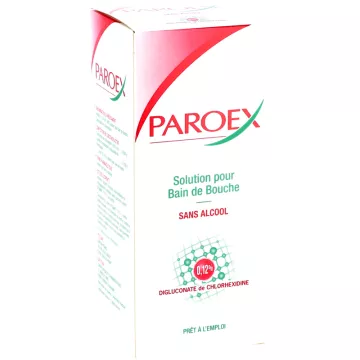
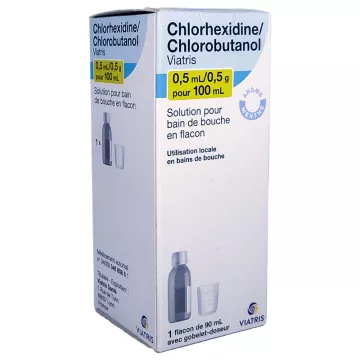
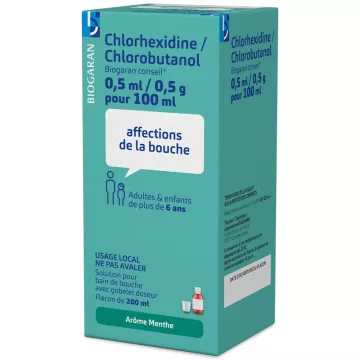
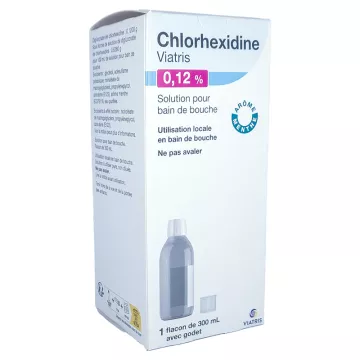
- Antiseptic mouthwash: the most well-documented application — 15 mL of a 0.12–0.20% solution for 30 to 60 seconds, twice daily, after brushing and flossing — do not swallow — do not eat or drink for 30 minutes afterward — reduces bacterial plaque by 50–60% and gingival bleeding by 30–50% in clinical studies — the standard adjunctive treatment for gingivitis and periodontitis
- Recommended duration of use: 2 to 4 weeks maximum as an active treatment — beyond this, there is a risk of brown stains on the teeth, tongue, and dental restorations (deposits of tannins and chromobacteria activated by chlorhexidine) — possible dysgeusia (altered sense of taste) — these effects are reversible upon discontinuation of treatment or after professional scaling and polishing
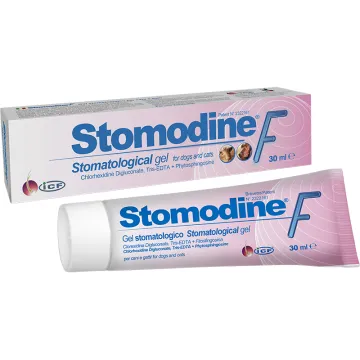
- Chlorhexidine gingival gels: applied directly to the gums — used after periodontal surgery, following tooth extraction, and for canker sores and oral lesions — 0.2–1% concentration in gel form — more suitable than mouthwashes for postoperative use (prolonged, targeted contact)
- Toothpastes and varnishes: certain specialized toothpastes contain low concentrations of chlorhexidine (0.05–0.12%) — periodontal varnishes (Chlosite, Periocline) — controlled release into periodontal pockets — procedure performed by the dentist
What are the topical applications and precautions for use?
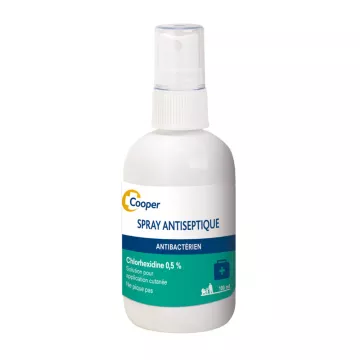
- Disinfection of superficial wounds: 0.05% (aqueous) or 0.5% (alcohol-based) solution — cleaning of wounds, cuts, abrasions — for infected wounds, see the “Infected Wounds” page — do not use on deep mucous membranes, the eardrums, or the meninges (documented neurotoxicity) — avoid contact with the eyes
- Important precautions: never inject — never use in the ears (ototoxicity) — incompatible with anionic soaps, sodium lauryl sulfate, and certain excipients (precipitation) — use before or after washing with soap (rinse thoroughly in between) — rare but possible allergic reaction (hives, anaphylactic shock — note any history of allergy to chlorhexidine before any medical procedure)
- Use in pregnant women and children: oral chlorhexidine — acceptable at low concentrations if medically indicated (pregnancy gingivitis) — avoid prolonged use as a mouthwash — children < 6 years old: risk of accidental ingestion → prefer targeted topical gel formulations under supervision
- Complementary natural alternatives: propolis (natural antibacterial and anti-inflammatory—proven activity against oral bacteria)—tea tree essential oil (tea tree—antifungal and antibacterial; must be diluted)—these alternatives are less well-documented than chlorhexidine but can complement daily oral hygiene or be used between treatment courses
How to use chlorhexidine properly and avoid its side effects?
- Optimal mouthwash protocol: brush and floss first (reducing mechanical plaque allows chlorhexidine to act on less biofilm) — do not use toothpaste containing SLS immediately beforehand (interaction reduces effectiveness) — Allow a 30-minute interval between toothpaste and mouthwash if possible — Rinse vigorously for 30 to 60 seconds — Spit it out without rinsing with water (rinsing with water removes residual chlorhexidine)
- Minimize tooth staining: avoid tea, coffee, red wine, and pigmented foods within one hour of use—chlorhexidine molecules attached to the teeth bind to food pigments (tannins)—professional scaling and polishing quickly removes these stains at the end of the treatment course
- Synergy with professional care: Chlorhexidine is not a substitute for scaling—it complements professional care by maintaining an antibacterial environment between appointments—its use is most effective within 4 to 8 weeks following scaling or periodontal surgery
- Management of dysgeusia: Altered taste (bitter or metallic taste) is often reported—this is temporary and reversible upon discontinuation—and can be mitigated by choosing flavored formulas (mint) or lower-concentration formulations (0.12% rather than 0.20%) — appropriateoral hygiene products are available in the store