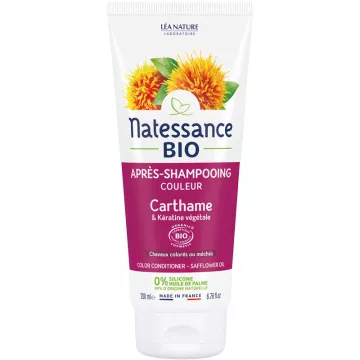
What is safflower oil?
Safflower oil is extracted from the seeds of Carthamus tinctorius, an oilseed plant with bright yellow flowers. Highly valued in both cosmetics and nutrition, it is rich in essential fatty acids, particularly linoleic acid (omega-6), as well as vitamin E, which gives it moisturizing, restorative, and antioxidant properties. It is used to nourish dry skin, strengthen brittle hair, and support a comprehensive wellness routine.
How does safflower oil moisturize the skin?
Thanks to its high omega-6 content, safflower oil strengthens the skin barrier and helps maintain long-lasting hydration. It soothes dry, sensitive, or irritated skin, including skin prone to redness and eczema. Its soothing effect helps alleviate skin discomfort and supports the skin’s natural regeneration.
Is safflower oil effective against wrinkles?
Yes, its high vitamin E content makes it a popular natural anti-aging treatment.
- It protects the skin from the effects of aging thanks to its antioxidant action.
- It improves skin elasticity and visibly reduces the appearance of wrinkles and fine lines.
- It supports cell renewal for smoother, more radiant skin.
Is safflower oil suitable for blemish-prone skin?
Yes, safflower oil is a great choice for combination to oily skin.
- It helps regulate sebum production without drying out the skin.
- It can be used for acne-prone skin as part of a targeted skincare routine—check out our guide onacne.
- Non-comedogenic, it absorbs quickly, doesn’t clog pores, and leaves a light finish.
Is safflower oil beneficial for hair?
Yes, it works deeply on dry and damaged hair.
- It penetrates the hair shaft to nourish and repair it.
- It adds softness and shine to the lengths while reducing frizz.
- It strengthens fine, brittle hair, making it more resistant to external stressors.
Does safflower oil improve blood circulation?
Safflower oil is traditionally used in massage to support skin microcirculation thanks to its phytosterol content.
- When applied through massage, it provides a noticeable local toning effect, which is beneficial for heavy legs.
- It works well in lymphatic drainage massages when combined with other suitable vegetable or essential oils.
- Its cosmetic use in massage is never a substitute for medical advice in cases of confirmed venous disorders.
Does safflower oil support cardiovascular health?
Safflower oil is rich in linoleic acid, an essential omega-6 fatty acid. As part of a varied and balanced diet, linoleic acid helps maintain normal cholesterol levels (recommended daily intake: ≥ 10 g). The balance between omega-3 and omega-6 remains essential: for more information, see our fact sheet onomega-6. This information is strictly nutritional and is not a substitute for the advice of a healthcare professional.
How can you use safflower oil in your daily life?
Safflower oil can be used both topically and as a cooking oil, with three main applications.
- Skin application: Apply a few drops to your face with a gentle massage in the morning and evening, mix it with your moisturizer to enhance its effects, or use the oil undiluted for a full-body massage.
- Hair care: Apply as an oil treatment to the lengths of your hair for 30 minutes before shampooing, add a few drops to your shampoo, or massage it into your scalp to stimulate circulation.
- Culinary use: Ideal for dressing salads, vegetables, or cold dishes; consume raw, as it is sensitive to heat. It provides essential fatty acids that are central to a balanced diet.
What precautions should be taken with safflower oil?
Although natural, safflower oil requires a few precautions to ensure its effectiveness and your safety.
- Not recommended if you have a known allergy to Asteraceae (sunflower, daisy, chamomile).
- Consume in moderation to maintain an appropriate balance between omega-3 and omega-6 fatty acids.
- Never heat it to high temperatures, as this may alter its essential fatty acids.
- Perform a skin test on the inside of your elbow before applying it to your face or body for the first time.
How to Choose a High-Quality Safflower Oil?
To fully enjoy its benefits, choose a high-quality safflower oil by checking several key criteria.
- Cold-pressed extraction, ensuring a pure, unrefined oil.
- Certified organic, free of pesticides and chemical solvents.
- Packaged in a dark glass bottle to preserve its antioxidant properties.
- 100% pure and natural composition, free of additives and preservatives.
A true ally for beauty and well-being, safflower oil provides hydration, radiance, and antioxidant support. Whether used in skincare or as a seasoning, it naturally fits into a balanced daily routine.